
Syracuse benefit concert inspires ICE resistance: ‘No one is getting left behind’
Syracuse benefit concert inspires ICE resistance
May Memorial Unitarian Universalist Society and the Syracuse Community Choir hosted the “Songs of Hope and Resistance” concert to raise funds and call for community action.
Dozens of Syracuse residents filled the pews of May Memorial Unitarian Universalist Society Wednesday evening, their voices joining in a single, echoed phrase: “No one is getting left behind this time.”
The Syracuse Community Choir hosted a “Songs of Hope and Resistance” benefit concert brought amid heightened U.S. Immigration and Customs Enforcement tactics across the country. Together musicians, activists and writers showed their support for the Syracuse Immigrant and Refugee Defense Network and the Workers’ Center of CNY, two of the event’s sponsors.
This wasn’t a typical concert. It was a call for change.
“ICE is only ramping up in Syracuse. It is our responsibility as people of faith or no faith to protect our neighbors…We have privilege and power and we need to use that for good,” said MMUUS minister Rev. Jo VonRue.
So far in President Trump’s second term, ICE arrests in Syracuse have surged to at least 162 people.
The concert was funded through a ‘pay-what-you-can’ sale, with prices ranging from $5 to $50. Proceeds will go to SIRDN, a volunteer-run organization that provides immigration resources and rapid-response support for ICE presence in Syracuse. The event raised more than $5,000.
“We’re a nation of immigrants and therefore I think immigrants should be protected,” said Jeanne Finlayson-Schueler, a Syracuse City School District psychologist. “If they have committed a crime, then they should be punished but there is no reason to deport immigrants anywhere, let alone countries they did not come from.”
Though retired, Finlayson-Schueler continues working with children in the district, many of whom are immigrants and have disabilities. The possibility that their families could be separated weighs heavily on her.
“Just to think that their parents could be deported at any time just really frightens me,” she said.
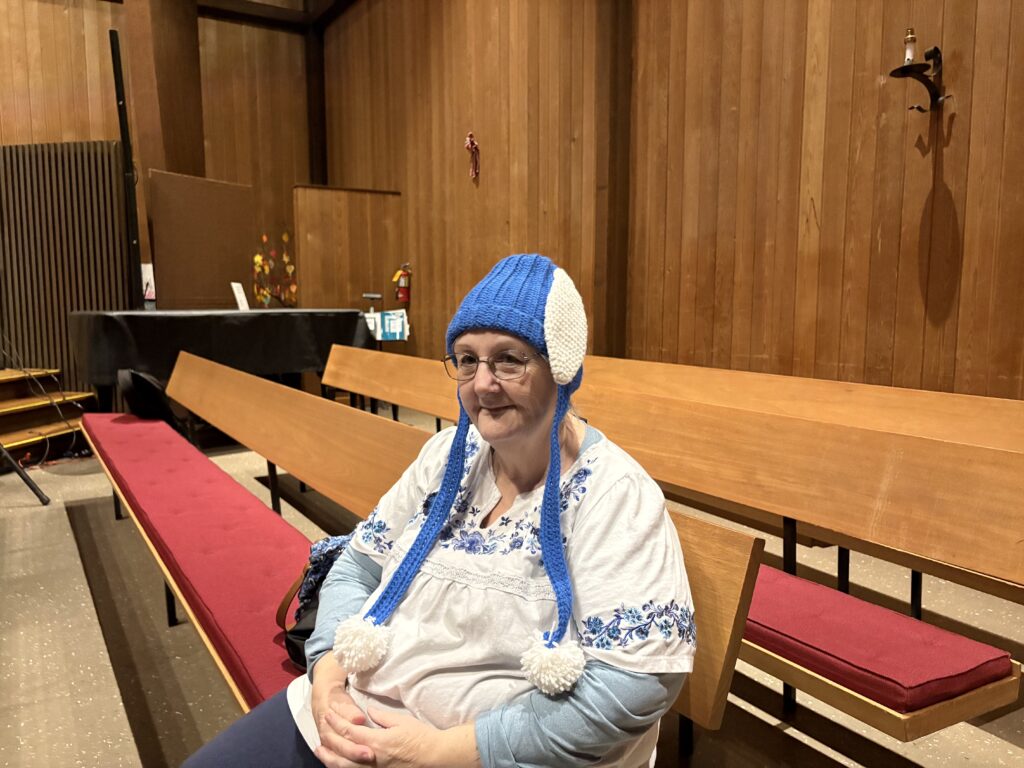
“We have thousands and thousands of immigrant children right now in detention centers, with and without their parents being mistreated, being fed unwell, not having good health care,” said Deborah Robinson, who attended the concert wearing a bunny hat in solidarity with Liam Conejo Ramos, a 5‑year‑old boy who was briefly detained by ICE.
During the time of his arrest, Liam was wearing a knit hat with bunny ears.
“It came to me that we could get crocheters and knitters to make a bunch of these hats and sell them and donate the proceeds to a legal fund for the children and we could call it ‘Liam’s Justice League’,” Robinson said.
For attendees like Robinson, the concert was not only an opportunity to learn how to help, but also to teach others and raise awareness of actions already being done to respond to ICE in the local community.
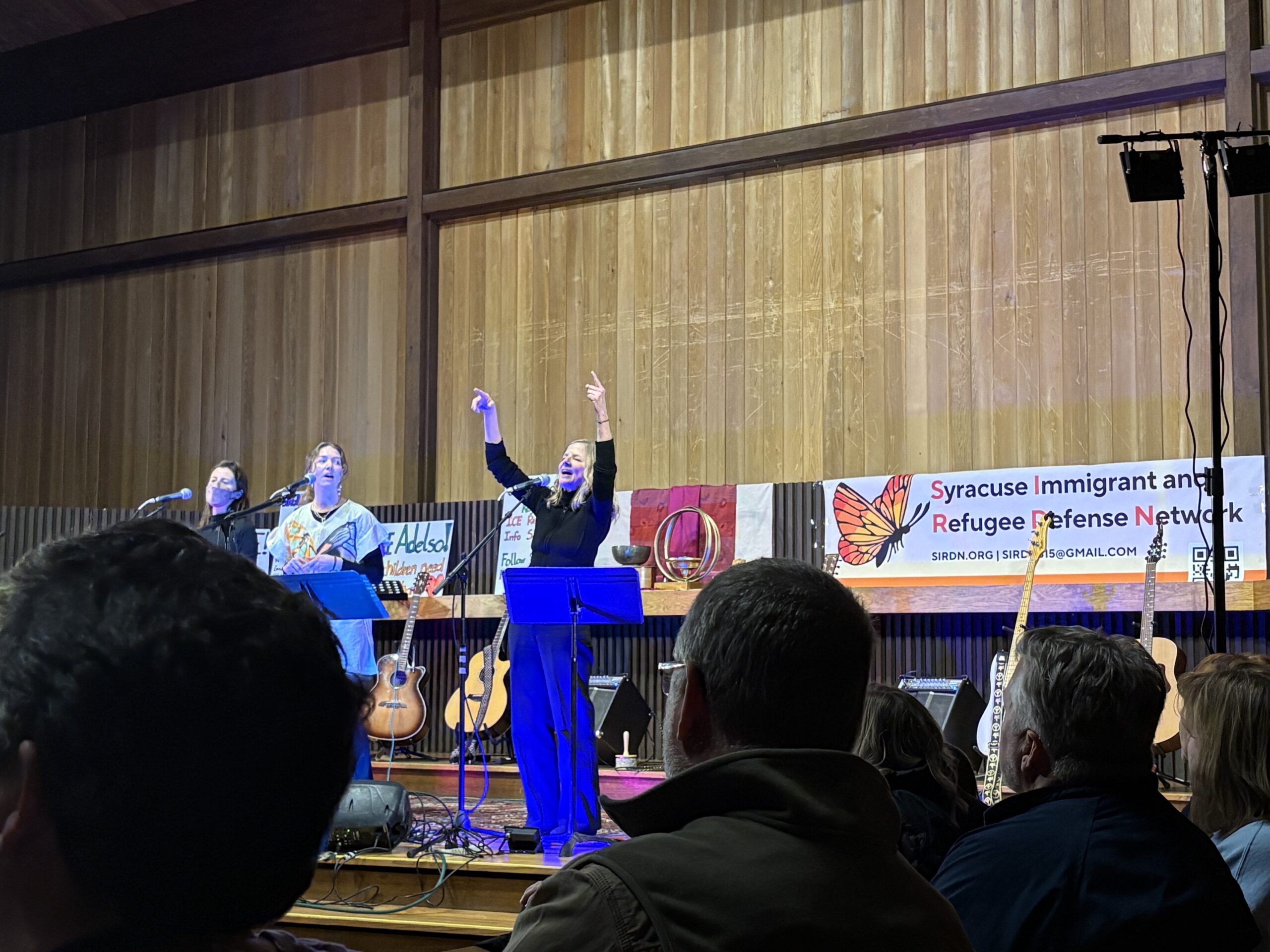
For two hours the MMUUS sanctuary filled with music, applause and calls to action. Five performers took the stage, singing both solo and in groups, offering a mix of well-known folk songs and original pieces.
The songs shared a common theme of resistance. Some included explicit anti-ICE lyrics, such as Jessie Elizabeth’s original protest song, which features the line, “Melt the ice and freeze the devil.” Others carried broader messages, calling on the community to rise together and stand in solidarity.
“I wanted to specifically do a song about what’s happening to immigrant communities, which is our community,” said Colleen Kattau, the event organizer and performer.
One of her originals called for the abolition of ICE. She adapted it from a Spanish song about gender-based violence in Mexico to reflect the current moment in the U.S., with immigration raids affecting families across the country.
“I really wanted to do a Spanish piece to echo the ancestors, the shoulders of the ancestors,” Kattau said.
While some of the performers’ pieces called for direct action, others sought compassion and community building.
“I picked ‘It’s Okay to Change Your Mind’ because I really resonate with that idea of compassion for ‘the enemy’ and that it is possible for people to change their minds,” said performer Alison Mullan-Stout.
“We won’t reject them. If someone chooses to defect or quits their job and says ‘no I refuse to pull neighbors out of their household’, we want to be ready for that,” Mullan-Stout said “We want to let them know that it is okay. You are still human.”.
The theme of peaceful resistance ran throughout the evening. Performers avoided slanderous rhetoric, instead drawing the audience’s attention to the importance of community during a time of division.
Elizabeth said that she chose to write “Melt the Ice” to honor Renee Good, a Minneapolis woman who was fatally shot by immigration enforcement earlier this year.
“The killing of a white woman in broad daylight in public was just an undeniable metric of how we treat everyone else who’s not white and doesn’t have privilege in this country,” Elizabeth said.
“I feel like in our western culture, we tend to lean towards individualism and isolate ourselves,” Elizabeth said. “That’s never going to fix anything. It’s when we come together and we look for the people that need support that change happens.”