
SU’s NeurodiversiTEA group urges students to ‘come as you are’
‘Come as you are’ at SU’s NeurodiversiTEA
The weekly event, also included in this year’s Disability Pride Month programming, welcomes neurodivergent and ‘neurocurious’ community members.
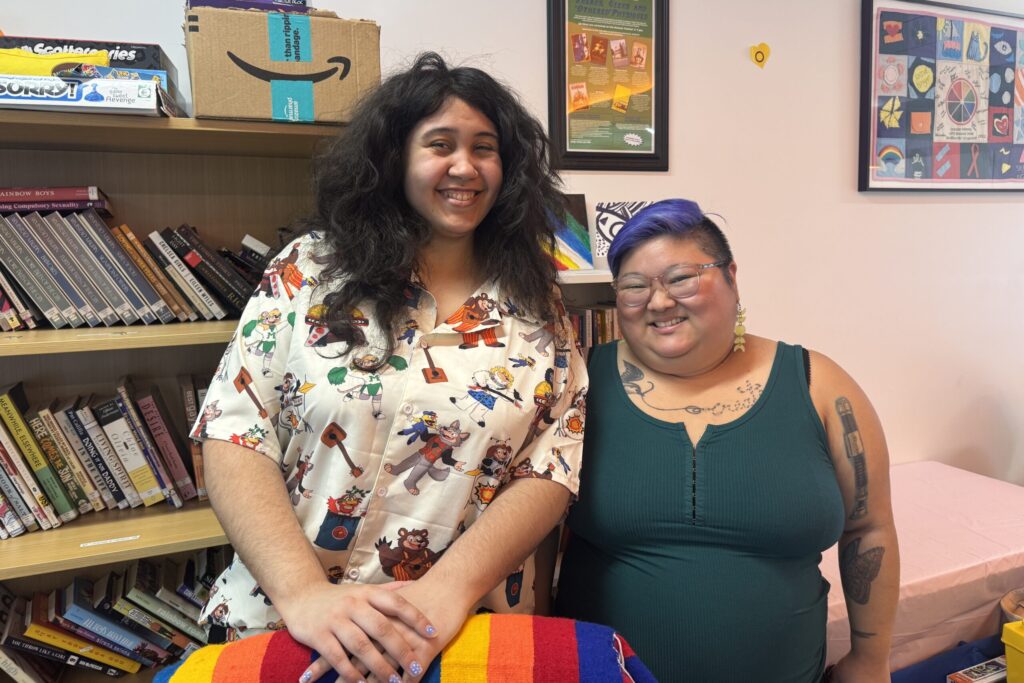
When stopping by the Intercultural Collective’s lounge, tucked inside the Schine Student Center, Syracuse University students are greeted by a window-lined room filled with rainbow posters and hearts, motivational sayings like “We Exist,” “Fight for Trans Lives” and “Neurodiversity is for Everyone,” sensory items and bright orange accent walls.
For some members of SU’s neurodivergent community, the space is one of the only places on campus where they feel free from the confines of a campus “built for” neurotypical students — because of “NeurodiversiTEA.”
That was the vision of SU doctoral candidate Teukie Martin when they co-founded NeurodiversiTEA, a weekly meet-up for neurodivergent and neurocurious students, in 2023. Now, three years later, Martin said they hope to continue creating a calm environment where students can “come as they are.”
“We just wanted a space that was peer-led, where folks could make of it what they wanted and use it for support,” Martin said. “It’s just a place to chill, unmask and learn more about your own neurodivergence.”
NeurodiversiTEA is part of this year’s SU Disability Pride Month programming, though the group meets regularly year-round, Martin said. While Disability Pride Month is celebrated nationally in July — in honor of the July 26, 1990 signing of the Americans with Disabilities Act — SU’s celebration aligns with World Autism Month, Limb Loss and Limb Difference Awareness Month, Paralyzed Veterans of America Awareness Month and Parkinson’s Awareness Month.
Martin said it’s important for SU and other universities to recognize “invisible disabilities” in broader conversations about accessibility. While the group has just around four regular attendees, Martin said, there is a strong “sense of community” between them — as it feels like an escape from what they described as perceived “sameness” across neurotypical spaces.
The term “neurodivergent” describes people whose brains “develop or work differently,” according to the Cleveland Clinic. While not a medical term, it is commonly used to refer to people with conditions such as autism, ADHD and dyslexia, among others.
An estimated 10–30% of college students are neurodivergent. On college campuses, many report struggling with overstimulating environments, social interactions and executive functioning, which can make it more difficult to adjust to academic demands.
But while NeurodiversiTEA often creates space to discuss daily challenges, the group just as frequently “info-dumps” about special interests and shares favorite songs and stress coloring.
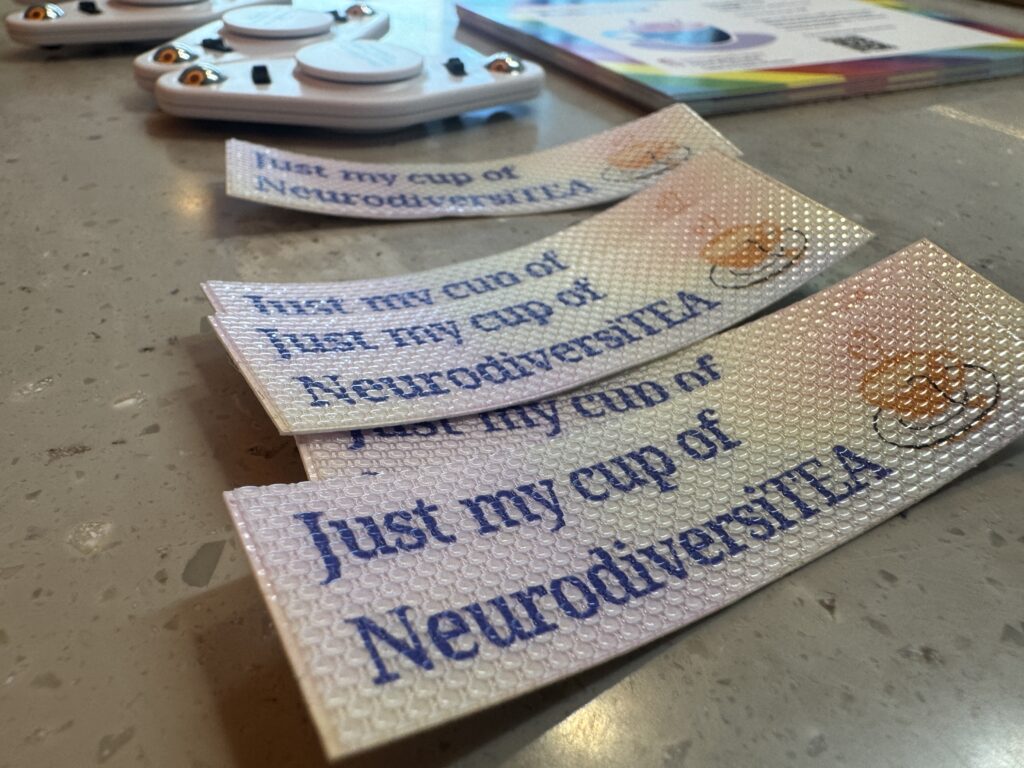
At its April 22 meeting, Emma Norman, a first-year master’s student, shared her interest in music by hosting a “Feel the Beat” edition of NeurodiversiTEA. She showed peers a website where users can adjust elements like bass, reverberation and panning to make songs more sensory-friendly and “pleasing.”
Norman said she first heard about NeurodiversiTEA at a graduate student event fair at the start of the fall semester. She’s been going ever since.
“It was a very cozy space … it was my first time being in this space at all,” Norman said. “Now, I’m coming back every single week, if I have a time where I just need to chill out for a moment, this is the space.”
One thing that drew Norman to NeurodiversiTEA was its inclusion of “neurocurious” students — those who think they may be neurodivergent but lack a formal diagnosis — like herself. Martin said this has always been central to the group, given barriers such as cost and gender disparities that can prevent people from receiving diagnoses.
Martin said NeurodiversiTEA gives attendees the chance to be curious about neurodiversity and break down some of the societal stigmas surrounding it. Martin said they and other attendees often feel pressure to fit a “really narrow norm” in everyday college life, which gets lifted when they walk into the intercultural collective.
“It’s actually really easy, right, to create spaces where people can do their own thing,” Martin said. “We’re all together, and sometimes we’re having five different conversations, sometimes having a conversation that’s a complete tangent from where we started … but we’re still there together.”
Along with planned activities, Martin brings sensory items — including fidget spinners, slinkies and Pop-It toys — to allow participants to “stim” freely during the hangout. The room itself also holds a variety of games, relics from past meetings and a mini-library. Snacks and tea, as the name suggests, are also a key fixture of NeurodiversiTEA.
Norman said that, while she has a “Rolodex” of favorite memories from NeurodiversiTEA, the ones that stick out most are the different activities and crafts they worked on together. She recalls one time when the group made designs out of Perler beads. Despite the fact that she kept accidentally dropping her design, she made it work.
Both Martin and Norman said NeurodiversiTEA has become a safe and “affirming” space for themselves, as well as other neurodivergent students. The group has one more event slated for next Wednesday at 5 p.m., also in the Intercultural Collective’s lounge.
“Whether or not you have formal accommodations or not, this university and higher education in general was not really built with you in mind. So it’s okay when you do face barriers. It’s okay when things are hard. It’s okay when you have trouble finding community,” Martin said. “There is a space that exists for you.”
is a digital producer for The NewsHouse.