
“Willingness to adapt”: How Syracuse University is evolving with new minors in AI and Creator Economy
How SU is evolving with new AI, creator minors
In a time of deep reflection for academic institutions across the globe, Syracuse University is blazing a new path in higher education.
When Ryan Schram first heard about influencer marketing in the early-aughts, he was blown away. Social media was still new— even the concept of platforms like MySpace was still a novelty.
As early social media accounts started gaining notoriety, companies began offering brand deals for users to promote their products. “People thought it was literally nuts,” Schram said.
Right around the same time, Schram got to know Ted Murphy, “the godfather of modern day influencer marketing” and now his close friend. Murphy had recently launched PayPerPost.com, a website dedicated to lining up these deals for social media users. Many considered the venture absurd. Schram, however, thought the idea was fantastic.
“People were straight up screaming at him,” Schram, Syracuse University’s (SU) executive director of the Center for the Creator Economy (CCE), said. “And what’s ironic is that many of those people went on to create businesses in what we now know to be a creator economy.”
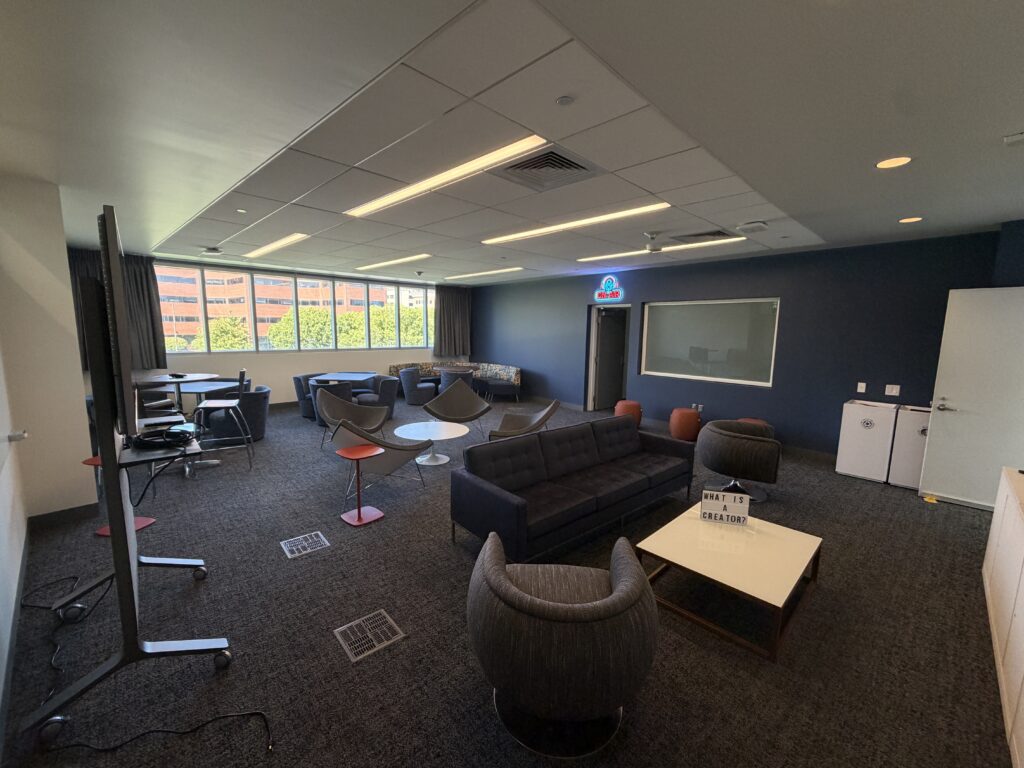
Last year, Syracuse University announced its historic Center for the Creator Economy, a new academic opportunity for students interested in careers in social media, multimedia marketing and content creation.
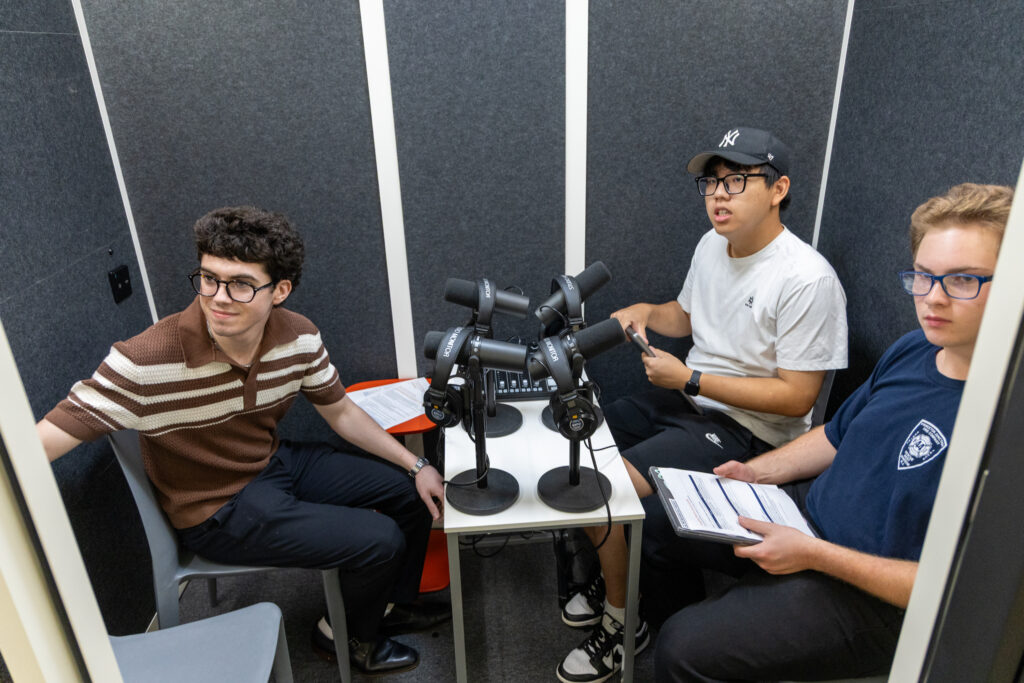
This fall, the first batch of SU students are beginning their studies with official academic minors in the creator economy.
The news of this novel academic track came in tandem with the launch of seven minors focusing on artificial intelligence, paving new tracks for students in perhaps the two most notable developments of the century: social media and AI.
In an era when many Americans are questioning the need for a college degree, S.I. Newhouse School of Public Communications Dean Mark Lodato sees these new opportunities as a “responsibility.”
“All of this stems from our desire to ensure that our students are consistently ready to tackle what’s happening out in the world once they graduate,” Newhouse School dean Mark Lodato said. “We are focusing our attention on emerging technologies and what we can do to make all Syracuse University students more prepared to enter the workforce.”
Yahoo Finance estimates the global creator economy’s market impact at over $310 billion this year. AI spending is expecting to hit over $3 trillion by 2027. Lodato and Schram both said these numbers shouldn’t be ignored. Millions are now gaining employment in these industries, and the numbers will only increase, Schram added.
In an Aug. 31 campus-wide email responding to concerns about the university’s declining enrollment, SU Chancellor Michael Haynie called AI and CCE an “investment in our future,” and expressed confidence in the university’s ability to continue adapting.
“The jobs our graduates will pursue are changing. What students want from their education is changing. Their reasons for pursuing a degree are changing,” Haynie wrote. “Higher education has a long history of moving slowly. We do not have the luxury of that pace right now. We will move with urgency because the institutions that do not adapt will be the ones left behind.”
SU is joined by Quinnipiac University and Colorado State University as the only academic institutions in the United States offering a minor track in the Creator Economy, according to the Business Journal. Arizona State University and St. Bonaventure University both offer majors. The New York Times found that at least 89 and as many as 103 schools are offering minors relating to AI.
Whether learning skills in developing learning language models, utilizing them or simply exploring the creator economy, Schram is ecstatic about the interdisciplinary, campus-wide involvement in the new minors.
Students enrolled in the creator economy minor, for example, will work with professors from Newhouse, the Whitman School of Management, the College of Visual and Performing Arts and the Falk College of Sport — an unprecedented level of overlap between schools in a single academic track, Schram said.
SU Professor Edecio Martinez is also excited by the unconventional accessibility of the minor in emerging media and AI, and called it “a chance to build skills outside the traditional boundaries of a single major.”
With a faculty of widely varying expertise that will teach students in the new minors and spaces dedicated to these studies across SU’s campus, Schram also noted the rare opportunity for students of all backgrounds and interests — regardless of academic track.
There is no “home college” requirement or other major block to exclude students from these tracks, either. As long as they pass either “Introduction to the Creator Economy” or “Business Toolkit for Creators,” any SU student can declare their creator economy minor. Similarly, any student can become an “Emerging Media and AI” minor, as long as their major coursework doesn’t overlap.
And it’s not just learning to talk at a phone on a tripod, Schram clarifies. Students will learn about all facets of the industry: brand-side marketing, technological support, business and law.
“It’s fun to be at the tip of the spear in an emerging area,” Lodato said. “Frankly, I bristle a little bit when someone says, ‘Oh, you’re just training influencers,’ because that couldn’t be farther from the truth.”
Martinez, a Newhouse professor who has worked on the technology and implementation side of AI and emerging media minor, sees these new tracks as natural and necessary additions to the traditional skills taught to communications students. As AI and emerging media change communications, students must also develop new skills while building on pillars of the profession: strong communication and storytelling.
“The industry is changing quickly. AI, automation and new distribution platforms are already changing how content is researched, produced and distributed,” Martinez said. “Students need to understand how to use these tools, but just as importantly, when not to use them and how to evaluate their output critically.”
Lodato echoed Martinez’s focus on ethical usage, particularly regarding AI usage in the professional world. Both agree that a major aspect of understanding these technologies is learning how they shouldn’t be used. As an inescapable part of life, however, They agreed that it’s crucial for students of all levels and paths to understand these models and learn good practice with them.
For Izzy Sy, an SU senior studying broadcast journalism, the only downside to the new minors is that he’s almost done with college. Sy, a passionate sports journalist and content creator, has had to blaze his own path in creating a quality social media presence. He frequently publishes on Substack and uploads content on various social media platforms.
When the CCE launched during his junior year, Sy jumped in and has remained involved in a non-academic capacity throughout. He’s been blown away by the opportunities students now have at their disposal. “I’m a little jealous. I wish I had the chance to minor in this,” Sy said.
Looking to the future, Lodato was non-committal on future academic opportunities in these fields. After all, most people even a decade ago would’ve called studying social media and AI, as Schram put it, “nuts.” It’s impossible to predict what’s to come. A few weeks into these minors’ first classes, the dean is excited by what students are showing.
“You can’t simply hold on to what always worked before. You have to be willing to look forward, and you have to be willing to take risks sometimes,” Lodato said. “When we’re talking about things like the creator economy minor and the AI minor, I have a lot of confidence.”

is a Flex Lead Producer for The NewsHouse.

is the Visual Lead Producer for The NewsHouse.

is a photographer for The NewsHouse.