
NBC News journalists discuss evolving industry at fourth annual Deanne Gebell Gitner Storytelling Symposium
NBC News journalists discuss evolving industry at fourth annual Deanne Gebell Gitner Storytelling Symposium
Panelists Brian Cheung, Emilie Ikeda and Angie Lassman shared insights on adapting to a changing media landscape and building careers in modern journalism.
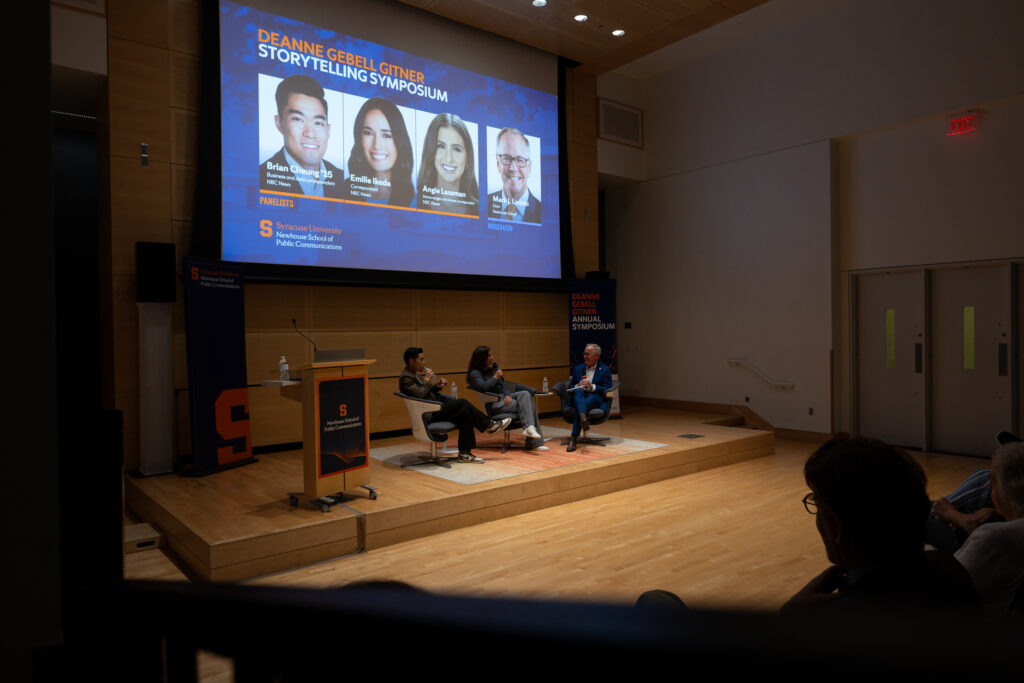
With a round of applause, students and faculty welcomed NBC News journalists Brian Cheung ‘15, Emilie Ikeda and Angie Lassman to the Joyce Hergenhan Auditorium.
The fourth annual Deanne Gebell Gitner Storytelling Symposium took place Monday at 6:30 p.m., focusing on bridging traditional journalism with digital platforms and reshaping how audiences consume news. The storytelling speaker series immortalizes Gebell Gitner and her belief that words and images make a difference. No one believes that idea more than her son, Seth Gitner, an associate professor and interim chair of visual communications.
“It’s about our students and our ability to be able to connect them with industry in a way that they can see themselves, and then hopefully this helps them chart their own course in their career,” said Newhouse Dean Mark Lotado, who moderated the symposium.
A prominent theme in the conversation among the panelists was that, “the finish line is much broader,” said Lassman, a meteorologist and climate correspondent. In the era of social media, journalists must meet audiences where they are, added Cheung, a business and data correspondent and a Newhouse School of Public Communication and Whitman School of Management alumni.
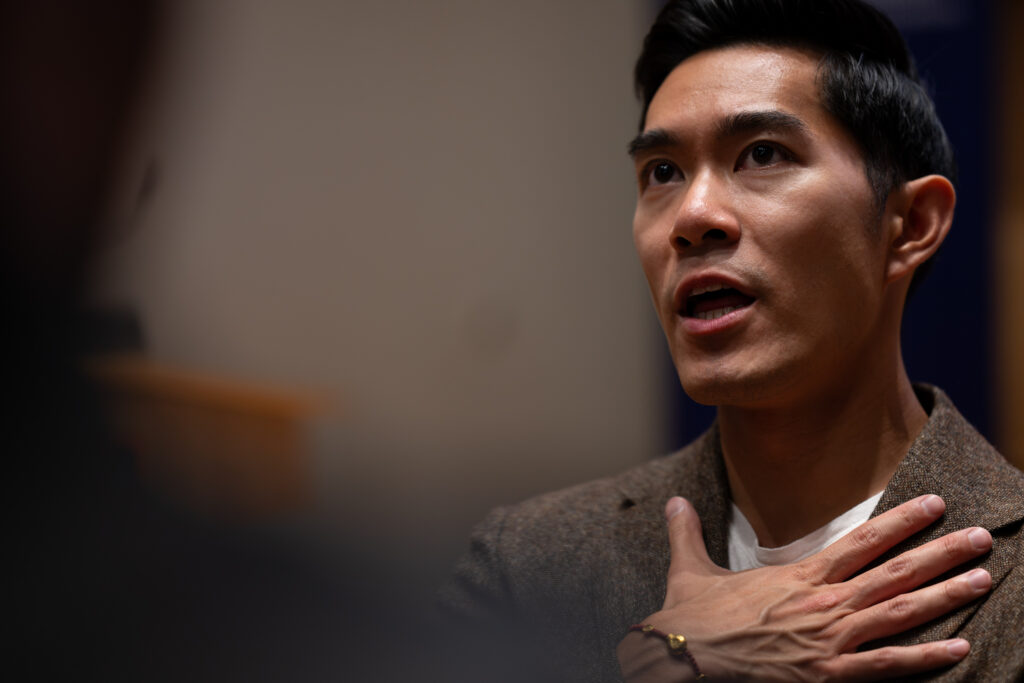
“The megaphone is in your pocket,” said Cheung, emphasizing how reporting can happen anywhere, anytime with a cellphone and that the industry is no longer reliant on massive broadcast studios.
These industry changes mean that aspiring journalists must now be versatile and have a range in skillset.
Zachary Glatt, a second-year broadcast and digital journalism major, said that after tonight’s panel, he’s going to try implementing strategies taken from the panelists and make more social media content.
Said strategies include emphasizing tone and personality into social media. Both Cheung and Lassman explained how one must tailor the story to the medium. While efficiency and accuracy are mainstays of the industry, using a more casual tone and letting one’s personality shine through is what makes social content successful.
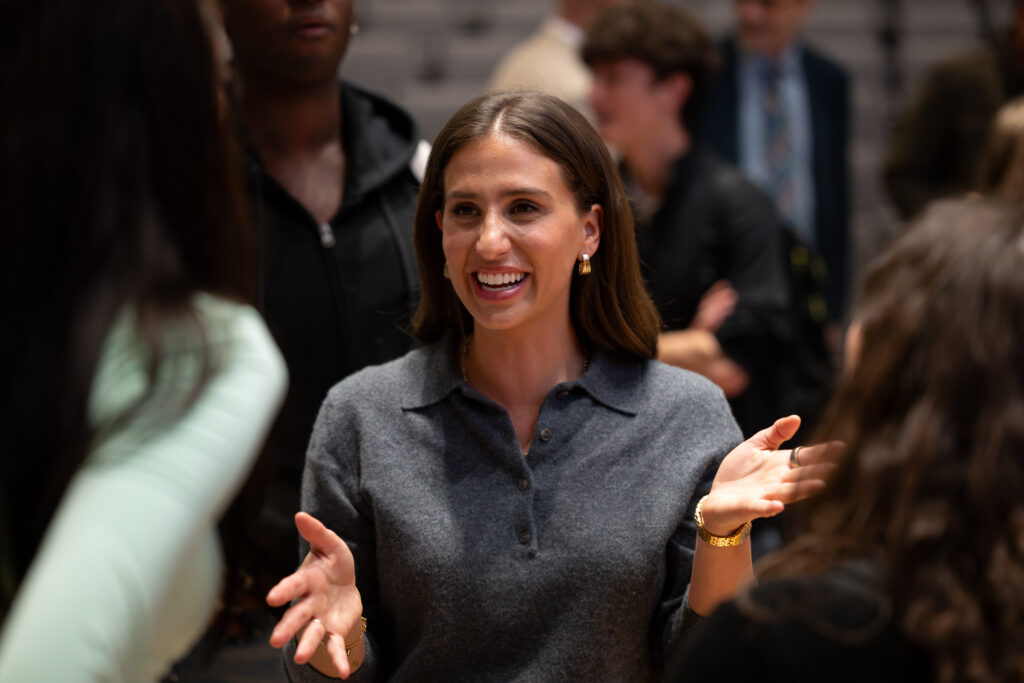
Camira Whitney, a third-year double major in political science and magazine, news and digital journalism, said she wants to implement her personality into her professional work.
“Being personable and building that network really matters for how you interact with potential clients or stories you come across,” said Whitney.
She was particularly inspired by how Cheung has built on his experience at Syracuse University to blend his diverse interests into his career. Whitney hopes to do the same.
Emilie Ideka joined for a portion of the conversation via Zoom, detailing how she was called in to report on the retrial of the Lindsay Clancy case yesterday morning in Massachusetts. She talked about how as a general assignment correspondent, she’s reported on everything from Taylor Swift’s Eras Tour to murder trials and natural disasters. For Ikeda, reporting on different beats has been creatively rewarding and has allowed her to work in different environments.
The panelists advised that emerging journalists not only be versatile in their abilities, but in how they approach the job market as well.
“Figuring out your career is part of your career,” said Cheung.
The symposium wrapped up with both Cheung and Lassman reassuring the audience that the first job post-graduation most likely will not be “the dream” and that’s okay.
When asked what advice she’d give her younger self, Lassman explained how the timeline of success she planned for herself was not realistic. A positive of the broader finish line she mentioned earlier in the evening is that there are many opportunities to seek out.
No matter what path a young journalist chooses to take, the panelists said they should always “chase the story”.
is a Digital Producer for The NewsHouse