
Will your mail-in ballot count? What SU students should know before the midterms
Will your mail-in ballot count? What SU students should know before the midterms
A blocked U.S. Postal Service rule raised concerns about mail-in voting. For students casting ballots from Syracuse, the rules of their home state take precedence.
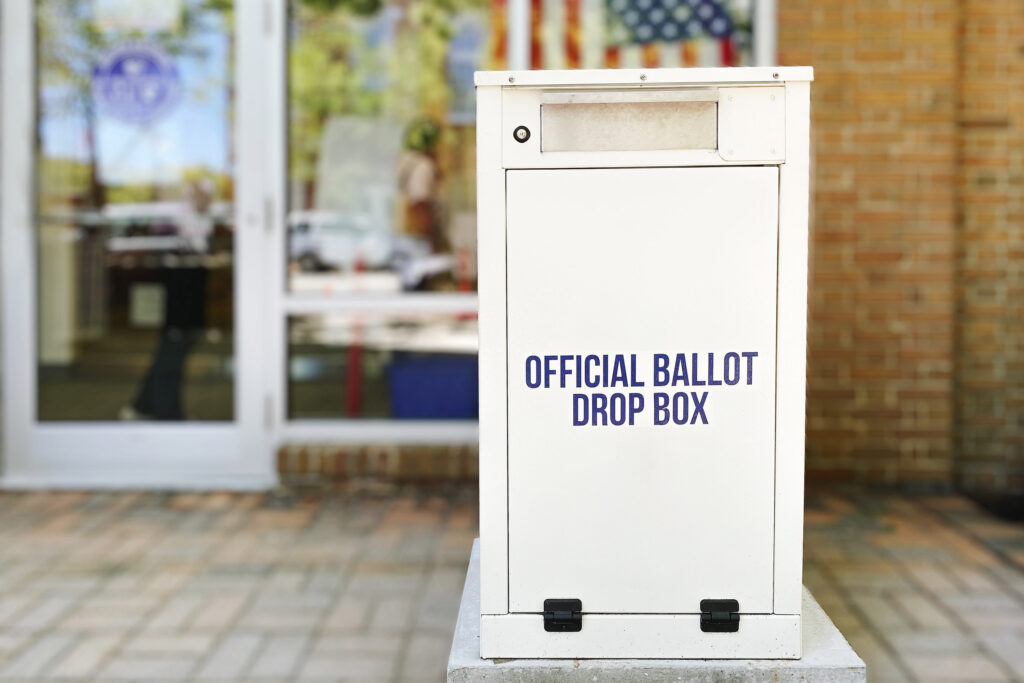
For many, mail-in voting is typically among the most convenient options for voters to participate because it saves time and accommodates millions of Americans. It also allows out-of-state registered voters, like students, an opportunity to participate in elections as well.
Syracuse University second-year student Nakhia Danielle Chapman, is one of the out-of-state voters choosing to opt in for mail-in voting in this year’s election.
“I am registered to vote in New Jersey. If voting by mail wasn’t available, the chances of me voting would be low but not zero,” Chapman responded during an email interview.
Similarly to Chapman, other students are planning to vote by mail in November. For students registered far from Syracuse, receiving a mail ballot can be the difference between participating in the midterms and sitting them out. According to the 2026 data from the Onondaga County Board of Elections, nearly 70,000 people are currently registered to vote in Syracuse.
On June 2, the U.S. Postal Service proposed new requirements for mail-in ballots sent from election offices to voters, following an executive order issued by President Donald Trump on March 31. The rule would have required election officials to use specific ballot envelopes and barcodes, enter voters’ information into a new USPS portal and have outgoing ballot mail checked against that information. Under these new requirements, the USPS could effectively refuse mailings that do not meet these requirements.
An anonymous federal whistleblower warned Sen. Richard Blumenthal (D-Conn.) that the new system is developing too quickly and could potentially disrupt the delivery of ballots to voters. The warning concerned whether students and other voters would receive their ballots.
Mark Brockway, an assistant teaching professor with the Maxwell School, describes concerns about public confidence in voting.
“If students give up on the political process because it is more difficult or because they think their vote won’t matter, then that fulfills the same purpose. Both things accomplish the same goal of getting students not to vote,” Brockway said.
Brockway said the incident shouldn’t make students shy away from voting.
“I think something that students really don’t appreciate is how much of an impact they could potentially have with their vote,” he said.
On Sept.14, the Supreme Court denied the Trump administration’s request to put a lower court’s order on hold. That ruling leaves a preliminary injunction in place against a U.S. Postal Service rule. The new rule cannot be enforced for this year’s midterm elections while the case continues. The court said the administration was unlikely to succeed in challenging the injunction and that the other factors governing emergency relief did not favor a stay.
Because each state has its own rules for voting by mail, the process can oftentimes be confusing. Fourth-year student Caleb Habel is the president of Democracy Matters, an organization on campus that tries to make voting information readily available to students.
Habel describes how his organization tries to help students vote in any way it can.
“We were able to direct multiple students who wanted mail-in ballots to their [National Voter Registration Day] website to figure out how to register in their own state,” Habel said.
Chapman describes doing research on her home state of New Jersey to stay informed on the state’s deadlines.
“For me personally, social media plays a huge role in keeping me updated on how long I have until my vote needs to be in,” she said.
Chapman is a part of a large majority of youth who receive voting information from online platforms. According to Tufts Center for Information & Research on Civic Learning and Engagement (C.I.R.C.L.E.), 77% of youth receive their election and voter information from social media.
For SU students who remain registered in their home states, voting by mail starts with understanding the rules unique to their home states. Students should visit their state or local election office’s website to learn how to request a ballot and when it is due, including whether it must be postmarked or received by a certain date.
If their state offers ballot tracking, they can use it to confirm the ballot arrived. Starting the process early leaves time to fix delays or mistakes. Students should note that New York’s voting deadlines only apply to those registered in the state.
With Election Day approaching, students shouldn’t count themselves out. For more information on where to start, visit the SU’s Office of Government and Community Relations page to learn more.

is a Digital Producer for The NewsHouse.