
African Student Union swaps royalty for streetwear at Rip the Runway
African Student Union swaps royalty for streetwear at Rip the Runway
Four designers and 22 models traded royalty and gold for hoodies and handmade pieces at the African Student Union’s annual show.
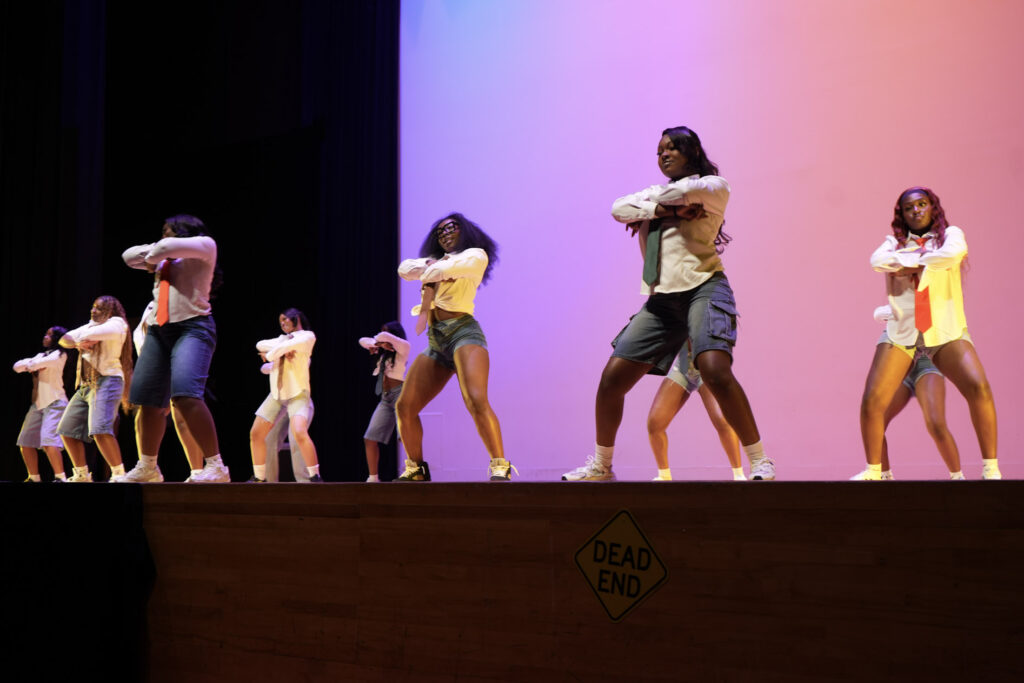
The first two models to walk the runway during the African Student Union’s Rip the Runway show wore black cropped T-shirts and hoodies with pink accents.
In the past, the African Student Union’s Rip the Runway show has focused on themes surrounding royalty, renaissance and riches. This year, they switched it up. Four designers put the 22 models in streetwear, with the theme, “City Made, African Worn.”
“African culture and African beauty is not about what we’re wearing, but how we wear it, and that’s why it became streetwear,” said Adwoa Serebour, ASU’s president, a fourth-year communication and rhetorical studies major.
Last December, after noticing how many Syracuse students hail from New York City, Serebour pitched this year’s theme. The concept pairs the streetwear culture synonymous with NYC and other major cities, with handmade traditional African clothing.
Previously, Serebour said, the shows were built to “tease what African culture was, the beauty, the gold, the glitz and the glamour.”
“Then we slowly realized that sometimes beauty is also not as prim and proper as a fashion gown,” Serebour said. “Maybe it’s a sweater.”
For the last three years, Rip the Runway has been co-hosted by the Fashion and Design Society at SU but due to scheduling conflicts, ASU hosted this year’s event solo. However, FADS still helped coach the posing for the event.
“FADS is always gonna be in our corner,” Serebour said.
Starting around 8 p.m., the lights dimmed red, the Afrobeats from artists: Asake, Rema, StarBoy and more that had been playing since 6 p.m. got turned up and the crowd began to fill in. Approximately 280 tickets had been sold according to Serebour, but she hoped that number would top 300 by showtime.
Emcee Alhassan Bangura filled the room with infectious energy, dancing across the stage, as Outlaws hip-hop dance group and an Afrobeats dance team, One World, kept the crowd entertained between the fashion segments.
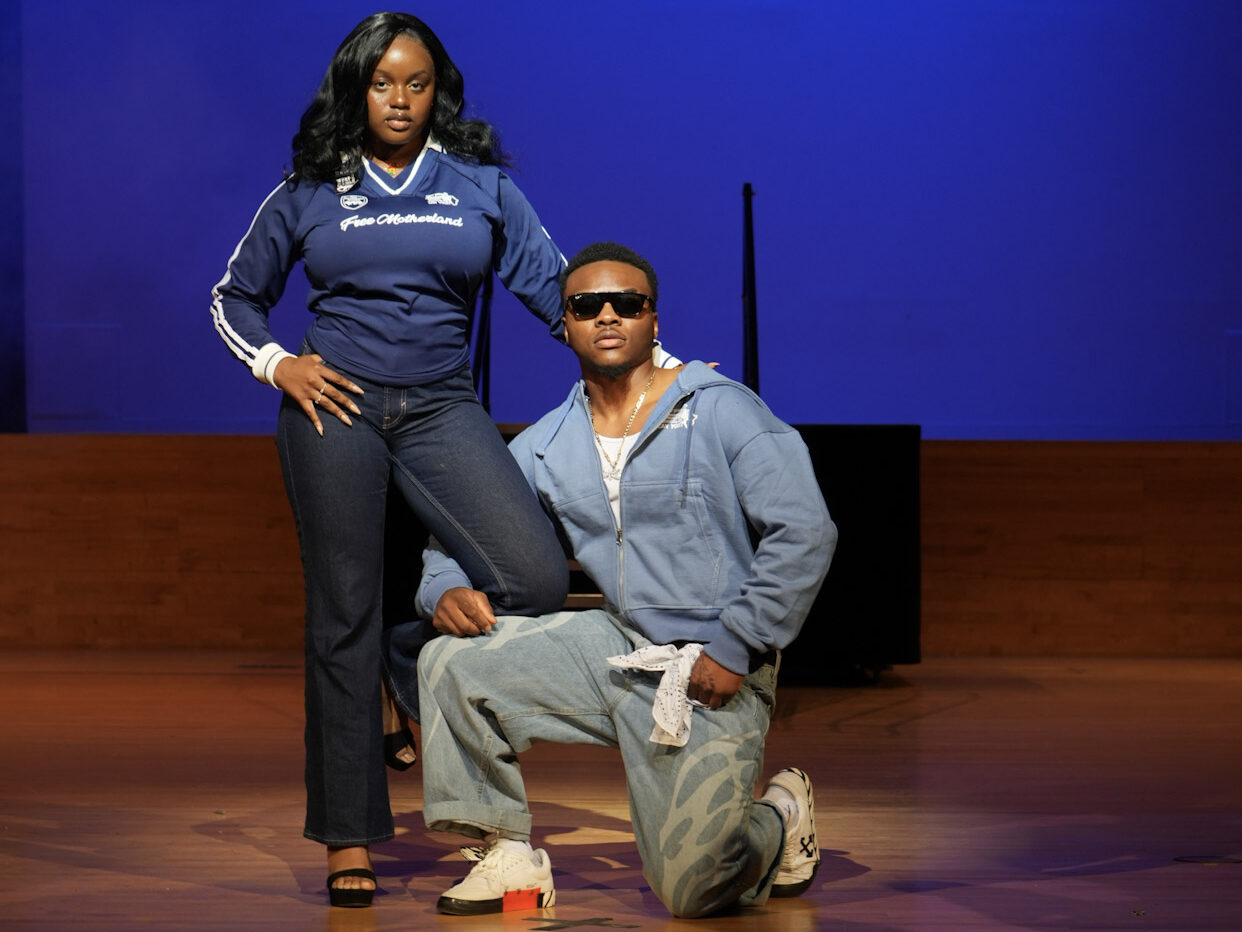
Imad Adam, the sole student designer and a first-year modern foreign languages major studying French and Arabic, was ecstatic about his first show. As a Togolese-American from the Bronx, Adam was eager to join ASU and has become their graphic designer. Adam’s brand, Ilhame, is family-centered and named after his younger sister. Each piece worked the word “étoile,” meaning star, into the designs.
Adam’s highlight piece was a pair of hoodies with different passports printed on the front.
“One is an African passport from Togo, redesigned in my style, and another is an American passport,” Adam said.
He shared that the pieces were commentary on “what a lot of our parents did and what they sacrificed to earn the power of the American passport,” but also what their children, like himself, have lost by not being born at home.
“I don’t meet many people who are Togolese-American, so to be able to put that culture inside the clothing, I feel like there’s a way for me to show, yes, I’m different, but there’s also that common thread,” Adam said.
Adam’s most exciting piece was a yellow and purple T-shirt with a picture of his mother printed on it. His most nerve-racking, a rainbow “family” piece, which he said was designed with men in mind, but was modeled by a woman.
Wearing one of the passports was Sheldon Birthwright, a first-year television, radio and film student and first time model.
“Imad is a little friend of mine I met on campus this year,” Birthwright said, “I love to rep my man’s brand.”
On the familial theme, Birthwright said the designs remind him of his mother, who provided him with opportunities she did not have.
Christian Ngeleza, a second-year first-generation Congolese student from Virginia, shared that he interpreted Adam’s work as a step forward, remembering the past. However, as another first time model, he was focused on two specific things: looking good and not tripping.
Serebour said the kind of show she wanted was one where everyone felt welcome, whether dressed up or not. A mentor told her that at a fashion show, the audience is walking the runway too.
“It is not the ASU fashion show,” Serebour said. “It’s the Syracuse fashion show.”

is a digital producer for The NewsHouse.