
Tossed too soon? Keeping good food out of the trash
Tossed too soon? Keeping good food out of the trash
Food waste can contribute to climate change. Here’s how to reduce your footprint.
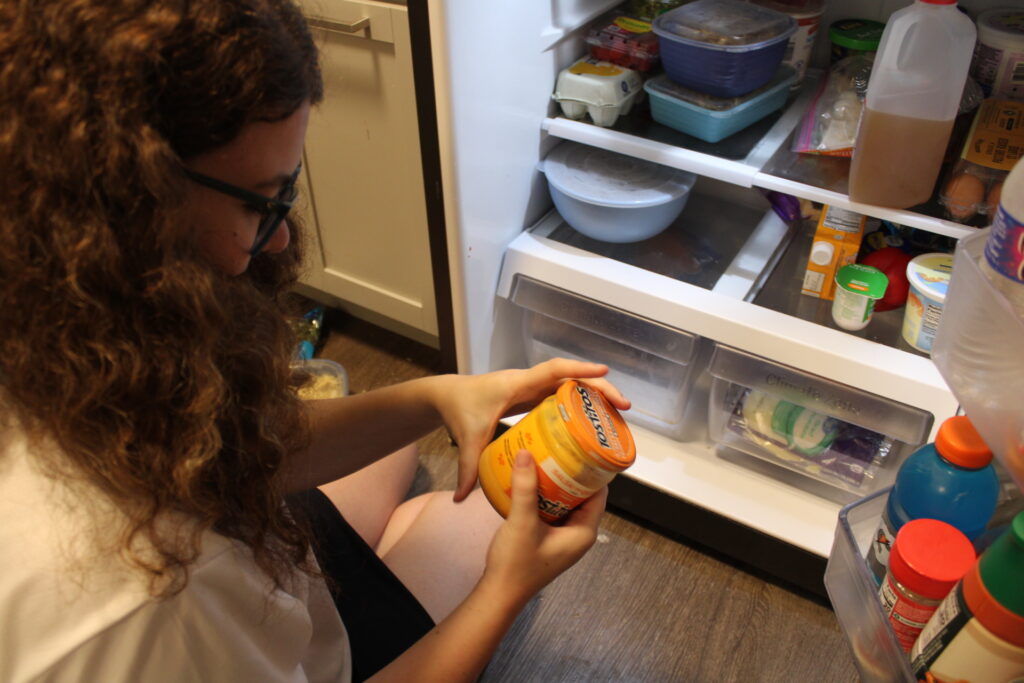
Caroline Cornely sits on her apartment’s kitchen floor in front of the fridge, her eyes scanning the shelves. She reaches into the back, between egg cartons and plastic leftover containers, and pulls out two full containers of bacon, zucchini and parmesan pasta.
“This pasta just wasn’t good, and I made too much of it,” Cornely said. “There’s actually two things of pasta. That I feel bad about.”
Cornely, a graduate student at Syracuse University’s Newhouse School, meal-prepped the pasta two weeks ago during a recipe experiment gone wrong. Now she reaches for a can of Tostitos cheese dip from a shelf on the door. She screws off the top. With one quick look, she shuts the jar, no smell check needed.
“It’s still technically good, but I don’t think it is. Look check, it was bad,” Cornely said.
Cornely walks over to the trash with her food waste haul for the week, dumping it all in. The pasta is now served with a brown, shriveled-up cilantro garnish, a side of cheese dip, on top of an old Chipotle bag.
Food date labels vary and aren’t regulated, which leaves shoppers unsure of what’s good to eat and sends edible food to the trash. That confusion costs more than the price of expired cilantro. Food waste is a major contributor to climate change when it ends up in landfills. A New York State bill awaiting the governor’s action could finally clear up confusing expiration dates, while an Onondaga County food rescue organization has already saved thousands of pounds of food before it ever reaches the trash.
Food waste breaks down fast in landfills and releases methane emissions, a potent greenhouse gas that traps heat in the atmosphere and speeds up global warming. Food waste causes 58% of methane emissions from municipal solid waste landfills, according to a 2023 Environmental Protection Agency report.
“The systems that are in place in a landfill don’t have the opportunity to collect [food waste] just because of how rapidly it breaks down,” said Níamh Moore, director of healthy communities at Environmental Advocates New York, a nonprofit based in Albany. “If we just stopped that food from entering there and recycled it in an appropriate way, like composting, we could significantly reduce those emissions that are coming out.”
In February, EANY, along with City Harvest, Island Harvest Food Bank and Earthjustice, launched the New York Food Waste Action Network, a statewide coalition addressing food waste and hunger. Moore said their top priority was drafting legislation for the Food Date Labeling Act, modeled after a California law that took effect in July, which regulates food date labels allowing only the terms “best if used by” and “use by.”
“The only place we see [food date] regulation in New York State or at a federal level is on infant formula and shellfish,” Moore said. “Folks are throwing out very nutritious and edible food based on a label that doesn’t carry any regulation or enforcement behind it.”
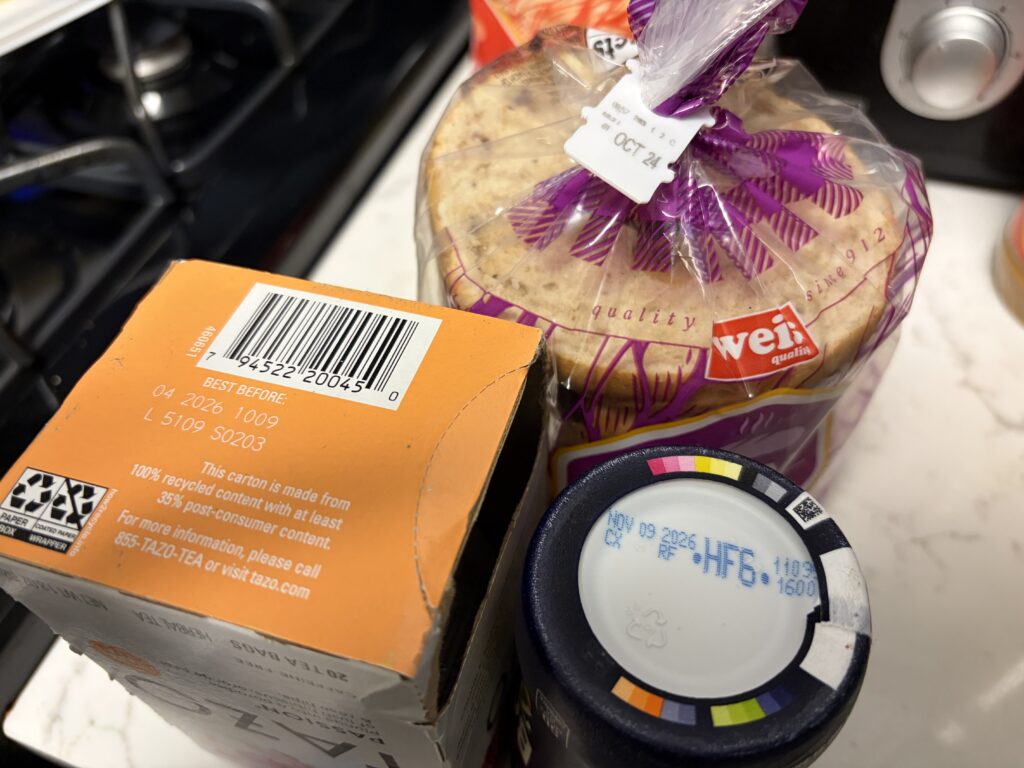
The bill passed the state Assembly and Senate this spring and awaits Gov. Kathy Hochul’s action by the end of the year, Moore said.
Homes aren’t the only source of food waste. The Onondaga Food Rescue Network works with larger suppliers, like farms with extra produce at immediate risk of being tossed, by diverting surpluses to food pantries.
The network organizes gleanings, where volunteers harvest leftover farm surplus crops for donation. Elise Springuel, community steward of the Onondaga Food Rescue Network, worked with Salt City Harvest Farm to set up an apple gleaning in October. Volunteers harvested 500 pounds of apples, Springuel said, and delivered them to the Southside Food Pantry and the Interfaith Community Collective.
“When I talk to the different emergency food providers, everyone always needs more,” Springuel said. “Food insecurity just keeps growing.”
Since the network began in 2022, Springuel said over 17,000 pounds of food have been saved. The network is fundraising for a permanent spot at the Central New York Regional Market next year, to collect extra food from vendors each Saturday. She estimates the partnership could save an average of 300 pounds of food per week at the market.
“I get to see good food make it to people instead of the trash, and that’s a really encouraging thing,” Springuel said. “I love getting people involved in this work because I think it helps people understand the food system and understand their impact on the environment around them and the need in their community.”
The rescue network started as a pilot program under the Syracuse-Onondaga Food Systems Alliance. Micah Orieta, SOFSA’s movement-building organizer, has seen the network grow to become its own organization. Last year, after a salmon farm closed in Auburn, the Food Bank of CNY, the Onondaga Food Rescue Network, SOFSA and other groups coordinated a rescue to save more than 40,000 pounds of salmon.
“Us collectively being involved ensured that all of the salmon didn’t just go to the food bank,” Orieta said. “We’re connected with Onondaga Nation, so we called them up. Because they’re so nimble, they just showed up with a couple trucks and took a couple hundred pounds of salmon.”
While rescuing salmon from a farm may not be the most practical way for a busy college student like Cornely to reduce waste, there are small everyday steps students can implement at home.
Springuel recommends meal prepping and using recipes from the zero-waste cookbook “Perfectly Good Food” by Margaret and Irene Li.
“Doing some prep work ahead of time to help ensure that food stays good in your fridge, that can look like pre-chopping things or properly storing it,” Springuel said.
Moore said she suggests composting food scraps and planning what to buy in the grocery store to reduce overconsumption.
“I keep my compost bin in my freezer so that I don’t need to empty it every day. It’s not getting smelly on top of my counter,” Moore said.
Back in her kitchen, Cornely said she’s sticking to her meal plan, including a routine of two or three New York Times recipes a week, though the bacon, zucchini and parmesan pasta is off the menu.
For those pantry expiration dates, she said she’s a bit laissez-faire.
“I follow my grandma’s wisdom, which I probably shouldn’t,” Cornely said. “‘If it doesn’t look bad, it’s probably fine. Best-by dates are a lie.’”

is a contributor to The NewsHouse.