
Latine Heritage Month panel examines the integration of journalism and content creation
Latine Heritage Month panel examines the integration of journalism and content creation
Industry professionals discuss using new platforms and navigating the creator economy while holding to core journalistic principles.
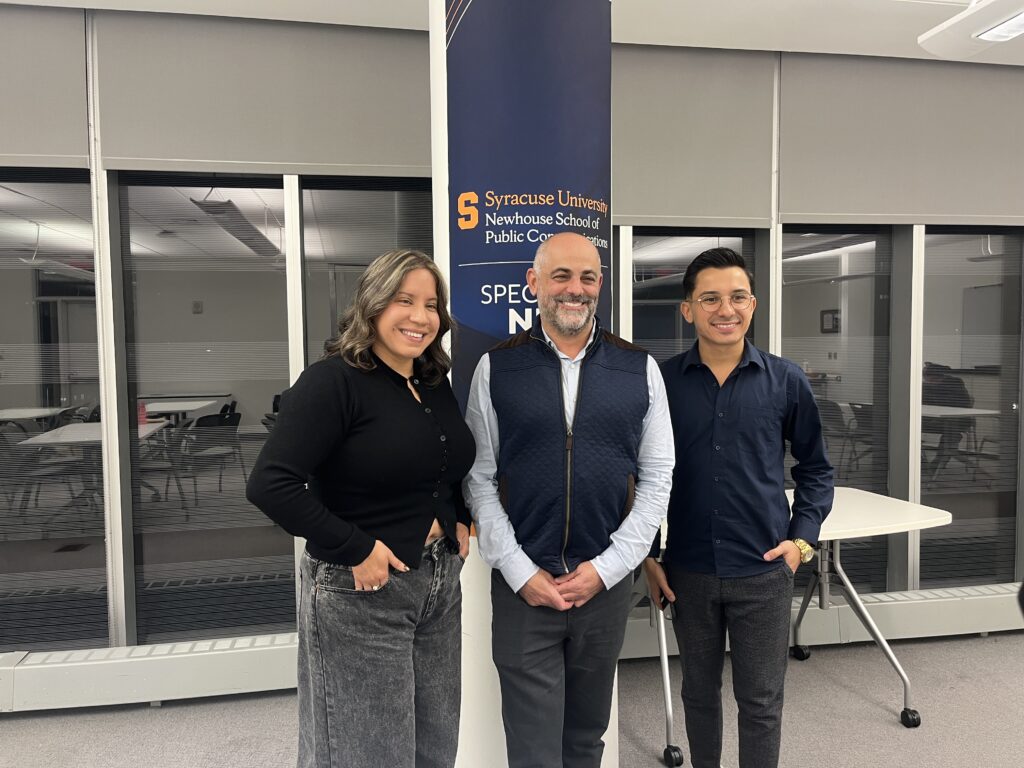
As newsrooms rethink traditional roles and journalists build audiences on social media, industry leaders urged Syracuse University students not to let new platforms come at the expense of journalism’s fundamentals.
On Wednesday evening, The Newhouse School hosted “From Newsrooms to New Platforms: Journalism in the Creator Economy”, a panel that brought together industry professionals and media executives to discuss the opportunities and challenges young journalists face. The event, part of Newhouse’s Latine Heritage Month programming, included dinner followed by a panel discussion where students were given the opportunity to ask questions regarding any uncertainties or fears they have about the industry.
Wesley J. Pérez Vidal, a Newhouse MND graduate student and reporting fellow at Syracuse.com, moderated the discussion with Aaron Fernandez-Wische ’97, vice president of content creation and distribution at Fox Stations Inc.; Lupe Llerenas, an independent culture journalist and content creator and Ramón Escobar, senior vice president of talent recruitment and development at CNN Worldwide, who joined remotely.
The panel focused on how journalists can maintain credibility and strong reporting practices as social media and independent content creation reshape the news industry. Escobar emphasized that changing business models and technology should not overshadow the fundamentals that employers seek in prospective hires.
“The fundamentals still are key to everything,” Escobar said, highlighting intellectual curiosity and cultural literacy as essential skills.
He encouraged students to look beyond their immediate interests and learn how to frame stories for specific audiences. Panelists also spoke about the importance of becoming an expert on a specific subject.
Fernandez-Wische echoed the importance of adaptability, describing how newsrooms are rethinking traditional roles to meet audiences’ expectations for information throughout the day. At Fox, he said, employees have taken on new responsibilities, from presenting information on camera to producing segments for digital streaming.
“Every opening, there’s an opportunity to do something different,” Fernandez-Wische said.
For Llerenas, adapting to social media was an intentional part of her journalism career. She entered her master’s program knowing she wanted to bring content to social platforms while maintaining traditional journalistic ethics and skills.
“I wanted to take my journalism platform and the ethics behind that in the form of content creation on social media,” Llerenas said.
Her work spans music, Latino culture and sports, including recent coverage surrounding the World Cup. Rather than treating social platforms as an afterthought to traditional reporting, Llerenas said she developed stories tailored to those platforms, focusing on how audiences consume online content.
Llerenas also emphasized the importance of maintaining credibility regardless of a story’s platform. Whether working independently or within a corporate newsroom, journalists must prioritize accuracy and audiences’ trust.
The discussion reflected findings from the Center for the Creator Economy’s October 2026 Industry Flash Report, which examines how Americans access and evaluate political news.
According to the report, 6 in 10 Americans trust a well-known independent news creator as much as a well-known journalist on politics.
The panel addressed how journalists can navigate professional relationships, cultural identity and evolving newsroom expectations.
Pérez Vidal, a native of Puerto Rico, said the event allowed students to learn from leaders involved in hiring and shaping the industry.
Before the panel, Pérez Vidal believed the conversation would reinforce the importance of foundational skills while encouraging students to create content for their own platforms. He said journalists can extend their work’s reach by producing multimedia stories and building an audience beyond their primary newsroom assignments.
Pérez Vidal also believes students should be strategic about developing their professional identities and continue practicing the skills they learn in the classroom.
“This was a call for the students that, yes, we are learning the foundational skills of our profession, but be strategic with elevating yourself as a personal brand,” Pérez Vidal said.
Hua Jiang, a professor of teaching in the public relations department and associate dean for community, culture and engagement at Newhouse, said the event connected cultural celebration with the school’s academic expertise. She expressed that the goal of Heritage-Month programming is to make it “meaningful and impactful” while giving students opportunities to learn from successful professionals and industry leaders.
For students preparing to enter an increasingly varied media landscape, the panelists’ message was that adapting to new platforms does not mean abandoning journalism’s core principles.
Instead, strong reporting, thoughtful storytelling and an understanding of audiences remain essential as the ways people consume news continue to change.

is a contributor to The NewsHouse.