
Mayor Sharon Owens calls out SU, faces questions in student government town hall
Mayon Sharon Owens calls out SU, faces questions in student government town hall
Owens spoke during the SGA’s regular Monday evening session as part of their “Assembly Speaker Series,” addressing housing affordability, poverty rates and property taxes.
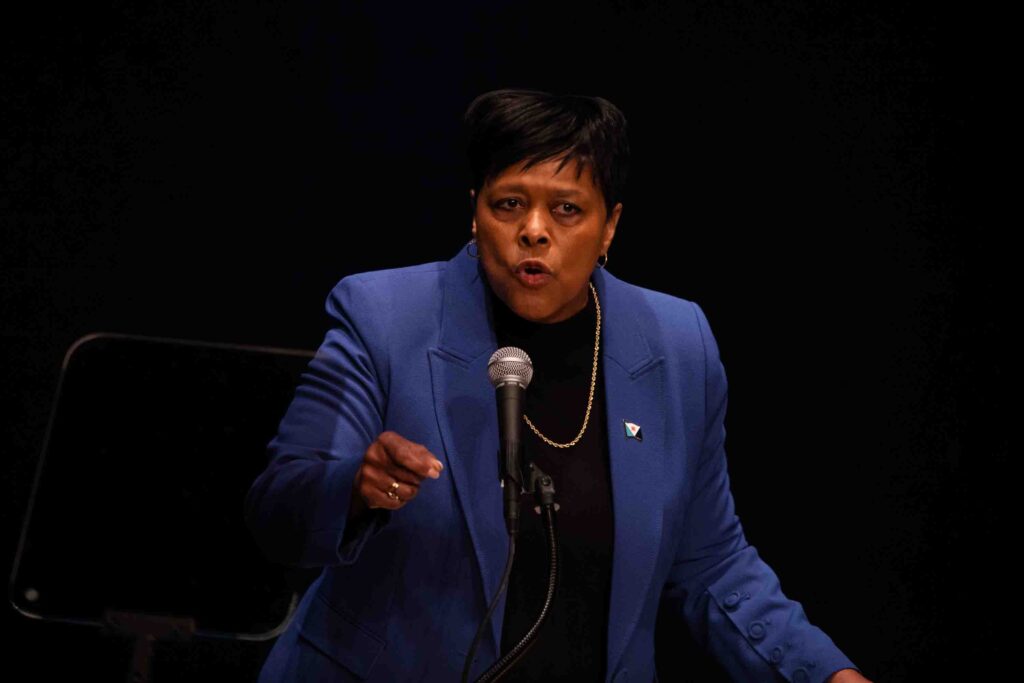
Mayor Sharon Owens visited the Maxwell School Monday evening and faced questions from Student Government Association representatives and other students.
The 55th mayor of Syracuse spoke for over an hour to a packed auditorium filled with students, many interested in government. Owens took wide-ranging questions on issues concerning the Salt City, from child poverty and housing affordability to food deserts and “bad corner stores.”
Owens even called out the university for under-contributing to property taxes. SU is exempt due to its not-for-profit status.
“51% of the property in Syracuse is not taxable,” Owens said. “So that means property owners like me and my neighbors, they are 100% of the burden for the services that taxes pay for.”
But it isn’t just SU; hospitals are also exempt and do not contribute to city property taxes.
Owens acknowledged that the university is an economic driver for the area, but said she doesn’t think it is paying its fair share. Owens said the city and the university are negotiating “soon” on a new agreement to improving funding for city services.
Owens also spoke about the challenges of childhood poverty, specifically among people of color.
“Syracuse flops between No. 1, two and four as a city with over 100,000 people. We’re No. 1 in the nation of childhood poverty amongst black and brown children,” Owens said. “We’re comparing ourselves to New York, to Chicago, to Philadelphia, to LA, to Syracuse in the mighty state of New York.”
To alleviate poverty, Owens said her administration is focused on preparing workers for the “Micron moment.” She said people working multiple jobs cannot afford to attend training for the incoming Micron facility in Clay without compensation, so the city has shifted its strategy to pay those in training a wage that allows them to take a more skilled job.
Raising people’s incomes is the only way to tackle poverty, Owens said.
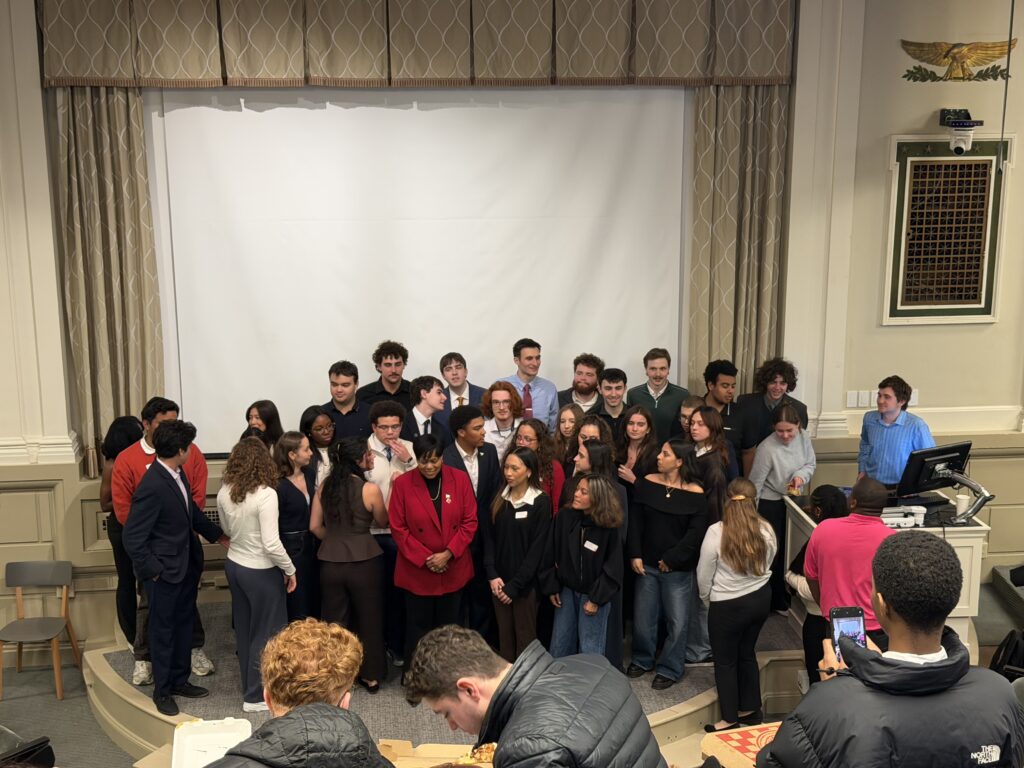
Kaden Clark, a Syracuse native and political science freshman, is interested in housing affordability. He found that Owens’ speech and Q&A “inspired a bit more hope.”
“Hearing her talk about (housing) a lot was very nice. It’s a very big issue in the city,” Clark said.
Owens took an aggressive stance on building housing during the town hall. She touted the city council’s 2023 housing affordability law, which requires that 12% of any new building be affordable units.
Owens also referenced the high cost of living downtown, claiming the building across from City Hall goes for $3,000, almost double the average rent of the city, according to Zillow.
“At least if you want to build, build, but don’t look for pilots, payments and little taxes,” Owens said. “Don’t look for community benefits to build if you’re building luxury housing. If you’re building affordable housing, the city is here to work.”
Owens said she wants to go after “bad corner stores,” which take advantage of food deserts by buying items in bulk and overcharging residents. She says they also sell sugary foods with little nutrition and act as a front to sell drugs.
“I’m not anti-corner store, I’m anti-bad corner store,” Owens said. “If I’m walking into Costco’s and I see a man that owns a corner store buying the same milk as me, and I bought it for $3, but you’re selling it for $9? No.”
Some students who attended the SGA event took the opportunity to learn about local governance and the city of Syracuse outside of the Hill.
“I learned a little bit more about … the duties of the mayor,” Hailey McGruder, a policy studies freshman, said. “Knowing about every policy in a city seems like a lot to handle, but she seems to be doing a great job with it.”

is a digital producer for The NewsHouse.