
Syracuse officials consider new e-bike partner as Veo contract expiration looms
Syracuse “likely” to consider new e-bike partner as Veo contract ends
Veo has provided e-bikes in Syracuse for five years. The city is ready to consider alternatives in the future.
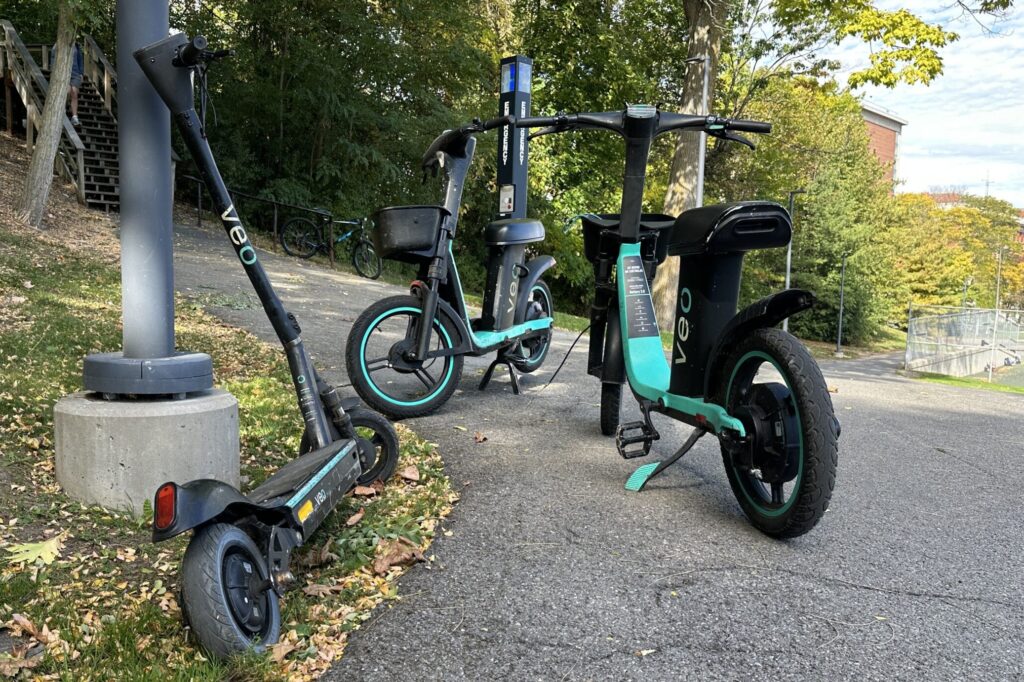
It’s been over five years since Syracuse entered an exclusive service agreement with Veo, bringing a fleet of e-bikes and e-scooters to the city. In January, the deal is set to expire.
As the contract comes to an end, city officials now face a decision.
During the warmer months, residents have become accustomed to the utility of quick, relatively cheap transportation. District 1 Common Councilor Marino Nave ensured the city would bring a similar service to its citizens; however, he isn’t certain that Veo, specifically, is Syracuse’s best option.
In Veo’s initial contract and in its subsequent year-long renewals, councilors feel that some of the deal’s safety and regulatory terms have not been upheld to an acceptable bar. From bikes left in dangerous places to high usage from underage riders, Nave believes it’s time for Syracuse to explore alternatives.
“I’m looking at the safety of each rider. It’s not that I’m against Veo. My number one goal is that they are safe and reliable,” Nave said. “We have too many people, children, I see them weaving in and out of traffic like it’s a toy.”
In 2025, Veo recorded just under 650,000 individual rides and 1 million miles traveled in Syracuse alone, according to a city press release in March.
Jeff Hoover, Veo’s director of government partnerships, said the company’s Syracuse program saw 31,000 unique riders from early March to August this year. Over 400,000 trips were logged, and every vehicle was used more than twice daily — all figures representing significant increases from previous years. Hoover says these numbers reflect a strong, yet still growing market that has real need for the service in Syracuse.
In the 2024 amended agreement, Veo assured it would “help educate users about safe and respectful riding and the importance of obeying traffic laws, riding location information, proper parking, encouraging helmet use.” In Nave’s observations, the e-bike service has come up short in upholding this. He’s seen bikes piled on sidewalks, blocking traffic and causing chaos on the roads. Nave is ready for the city to move on.
It’s not always Veo’s responsibility when riders improperly park bikes or leave them in dangerous locations, said Sgt. Tom Blake, Syracuse Police Department’s public information officer. Regardless, Hoover acknowledged the need for better safety measures, and expressed excitement about new strides the company is making to circumvent these challenges, including rider age verification and adding new bike models to its Syracuse fleet, such as the balanced “Rover” tricycle.
“It’s been five years since the last (Request for Proposal), and the program is very different from what it was essentially bid as,” Hoover said. “Five years represents more than half of the industry’s lifespan.”
Hoover has no issue with city officials calling for an RFP but also believes many of Veo’s recent advancements may satisfy concerns while continuing to serve the city’s significant need for e-bikes.
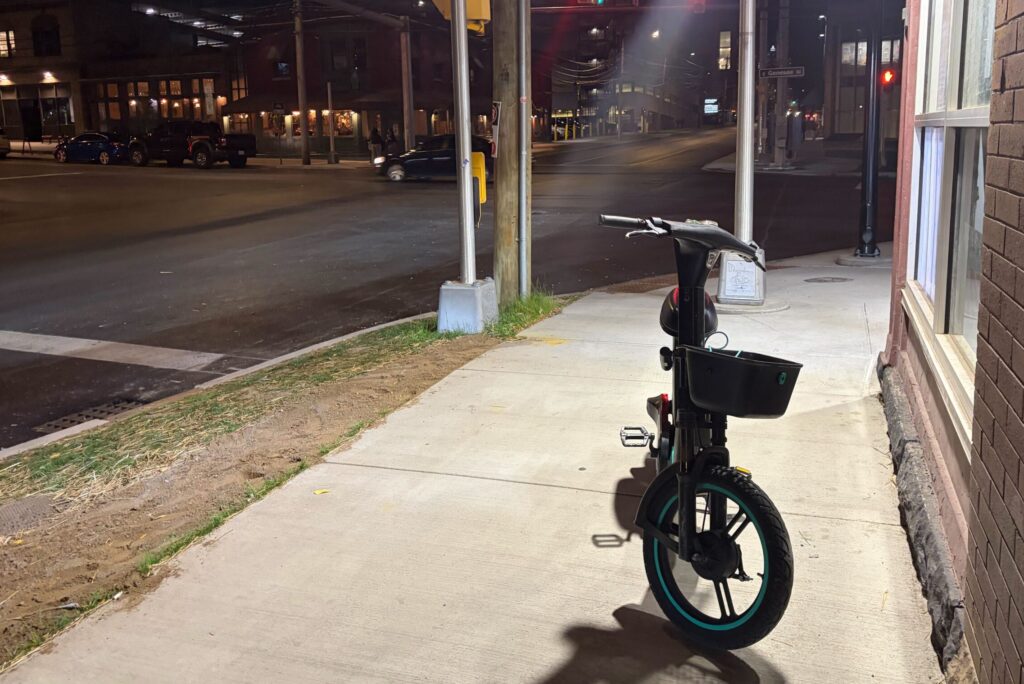
Behind the scenes, Veo has worked to improve its response time to calls about dangerously parked vehicles, damaged and dysfunctional units and make rules clear on its app. While there are instances that the company has no power, such as “bikes getting thrown in a lake,” as Nave said. Hoover believes technological advancement on their end will improve some common issues.
Blake thinks the bikes are fantastic. As class 2 e-bikes, their top speed is capped by law at 20 miles per hour, and they offer cheap transportation to people who may not be able to afford a car, have a driver’s license or live within walking distance from essentials. For Blake, the biggest change needed is in rider safety and education.
According to Veo policy, riders must be 18 years or older to operate one of their e-bikes. However, Blake said, many kids have found ways to dodge this requirement. SPD has observed many instances of underage riders making poor decisions on the bikes, in some cases leading to damage and harm.
“They’re great tools. I think amongst most people, they’re very welcomed,” Blake said. “E-bikes in general are a great source of transportation when they’re used appropriately.”
Hoover acknowledged the challenge of upholding the company’s age policy and sees educating parents and families as an important step in addressing the issues — as well as implementing age verification measures. In a meeting with common councilors last month, Veo expressed interest in partnering with public schools to help teach children safety standards and expectations, CNY Central reported.
Additionally, the Veo app will use face recognition on first-time riders to confirm their age, Hoover said. Riders will also be able to show photo ID as an alternative.
For Nave, these new solutions don’t totally satisfy. Considering the many years Veo has been the exclusive e-bike service in Syracuse, he doesn’t understand why the company hasn’t addressed these problems already and worries the proposed improvements either won’t happen or won’t be effective in mitigating the challenges. He’s been quite public in his belief that the city should look to new partners in the future.
In the last contract renewal, Veo states it will “implement a cutting-edge, AI-powered Virtual Parking Coach (VPC) coinciding with seasonal relaunch to improve proper parking by providing real-time feedback and enforcement of rider parking,” language Nave found vague.
In practice, the VPC requires riders to take a photo to prove safe and appropriate parking — a measure that can be avoided by changing the angle of the camera and often only gives a few warnings about unruly parking before approving, regardless of improvement.
Nave hasn’t found Veo’s previous changes to solve problems thus far. He feels it’s time to allow other companies the chance to serve Syracuse.
“The city council seems to have made its opinion clear that it wants to have an RFP, which is of course its prerogative,” Hoover said. “But they certainly see the value of the program and recognize that a lot of people can get to a lot of places very conveniently that they otherwise wouldn’t be able to, and (can) do so in a very affordable way.”
Veo’s contract with the city expires January 31, 2027 and can be extended for one more year under the current agreement through January 2028. If the city releases an RFP, as Nave and Hoover both expect, other ridesharing companies will have the opportunity, along with Veo, to present city officials their own programs.

is a Flex Lead Producer for The NewsHouse.