
‘Wuthering Heights’ 2026 offers a muddled, sensual adaptation
‘Wuthering Heights’ 2026 offers a muddled, sensual adaptation
Review: Bold visuals melded with tonal whiplash characterize the ‘Saltburn’ director’s third feature.
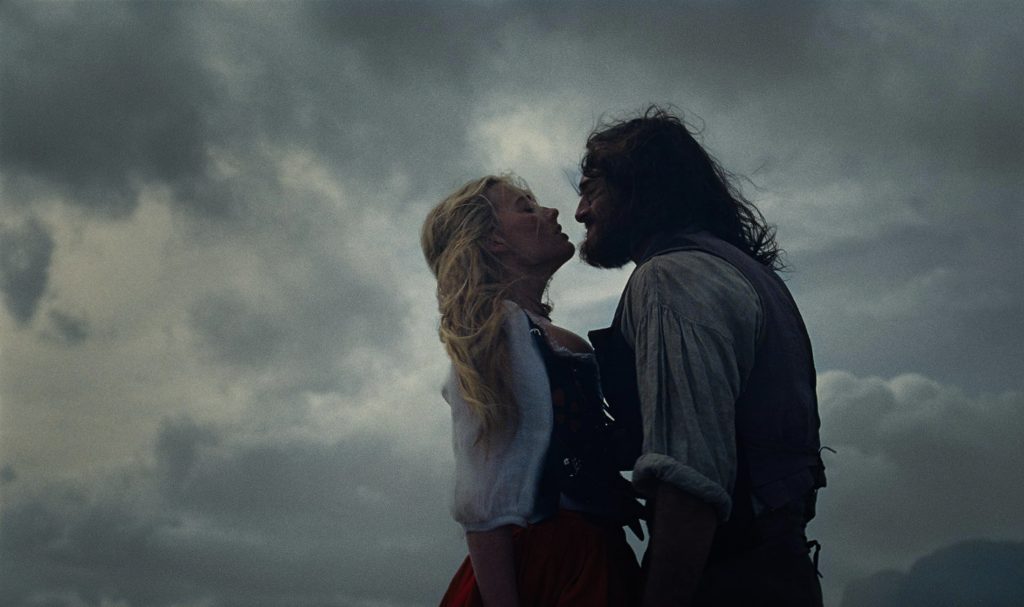
With its “Galentine’s Day” release, a viral trend of people posing in front of the movie poster, an audio excerpt from the soundtrack spreading like wildfire and marketing that calls its source material the “greatest love story of all time,” Emerald Fennell’s Wuthering Heights (stylized with quotation marks) arrived in theaters with ample hype.
But did the film really live up?
While Wuthering Heights is ambitious, leading it to top the box office on its opening weekend, this ambition may very well be its downfall. The film struggles to balance its desire to function all its genres. Attempting to simultaneously appear as a period romance, a grimy drama, an experimental music video and a raunchy satire. The result is tonally inconsistent and, at times, lacks a clear direction.
Although I wouldn’t describe myself as a Wuthering Heights purist, I found that the 2026 adaptation’s disjointed storytelling sanitizes the portrayal of obsession and cyclical abuse that makes the original a classic.
Wuthering Heights follows a Gothic-era, twisted romance between Catherine Earnshaw (Margot Robbie) and Heathcliff (Jacob Elordi), a boy her father (Martin Clunes) takes in from the streets. The two grow close in childhood, but are separated in adulthood due to their different standings in society.
The film makes it immediately clear that this isn’t a faithful adaptation. It opens with the sounds of moaning and gasping, only to reveal that they come from a man being executed in a public hanging. The crowd become entertained and slightly aroused by the man’s involuntary erection as he dies. The opening proves right away that this isn’t your high school English teacher’s Wuthering Heights.
It is clear from the beginning that Fennell struggles to definitively decide how she’s adapting the 1847 classic. This leaves the film in a state of aesthetic chaos.
The way Anthony Willis’ and Charli xcx’s score, interacts with the plot perfectly exemplifies this dissonance. For the most part, the score is engaging. It adds energy to the stylized visuals and supports its attempts at modernizing the almost-180-year-old narrative. But other times, it does the opposite.
A striking example comes after one of Robbie’s most grounded, emotionally charged scenes. This takes place in Cathy’s wedding montage and features an extremely literal Charli xcx song with the lyric, “I shouldn’t feel like a prisoner.” Rapid, dreamy visuals make the segment feel like a Lana del Rey music video rather than an historical film. It’s admittedly bold, but disorienting.
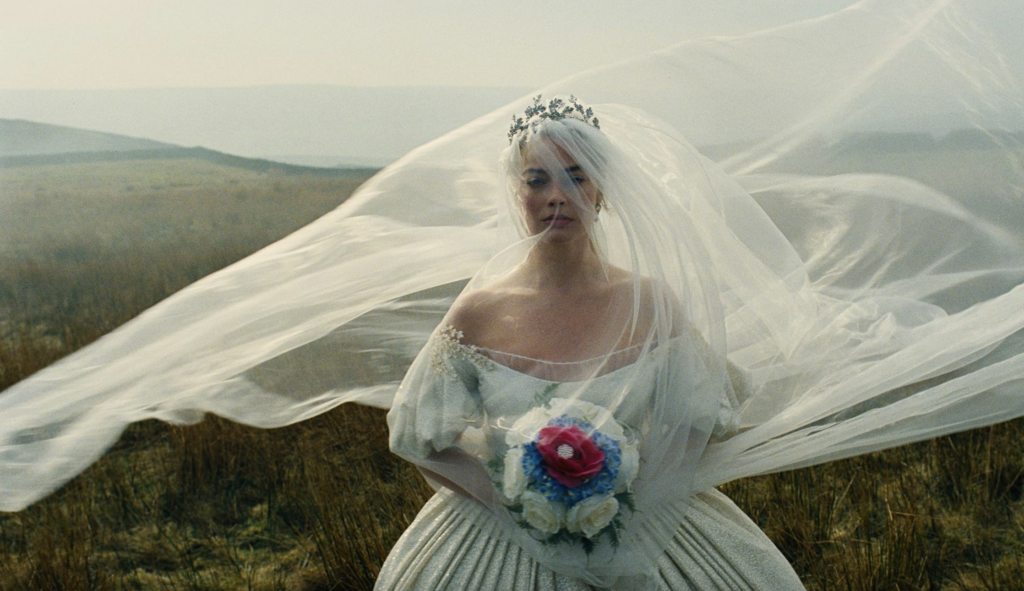
At times, the film leans into the unsettling mood of its source material with repeated grimy visuals. From the slime of cracked eggs to a corset tightening against sweaty skin, Wuthering Heights occasionally succeeds in demonstrating the moral decay underlying the book’s relationship dynamics.
Visually, Wuthering Heights has a consistent aesthetic. The set design is reminiscent of a live-action Tim Burton movie, mixed with exaggerated twists on traditional gothic-era decor. The costumes are flashy and intentionally non–period accurate. The cinematography includes a handful of striking visuals. The color grading leans heavily on the spectral contrast between blue and red.
At times, however, this boldness becomes overwhelming. In some shots, the blues were so extreme that the entire frame felt muddled. This is much like how the tonal inconsistency muddles the emotional impact of the plot.
Robbie and Elordi’s performances as the romantic leads are believable and nuanced. Their chemistry doesn’t fully click until the second act, when Heathcliff returns after accruing wealth (and a gentlemanly makeover). Unlike the book, where Cathy and Heathcliff never explicitly have sex, the film depicts several steamy encounters between them. Rather than being a romance for the ages, their dynamic feels more like an ambiguously incestuous, friends-with-benefits type situation.
Both Robbie and Elordi’s casting were previously surrounded by controversy. Brontë’s novel repeatedly describes Heathcliff as “dark-skinned.” While the “whitewashing” of Heathcliff is not new, Elordi’s casting further undermines the book’s racial undertones and removes context behind the character’s isolation.
Robbie, 35, similarly faced criticism for being older than her literary counterpart, who is written as 18. Although both the actress and director said they deliberately aged up the character to better contextualize Cathy’s pressure to marry for modern audiences. Despite this, her character retains the same naiveté, stubbornness and immaturity from the novel, creating another layer of dissonance.
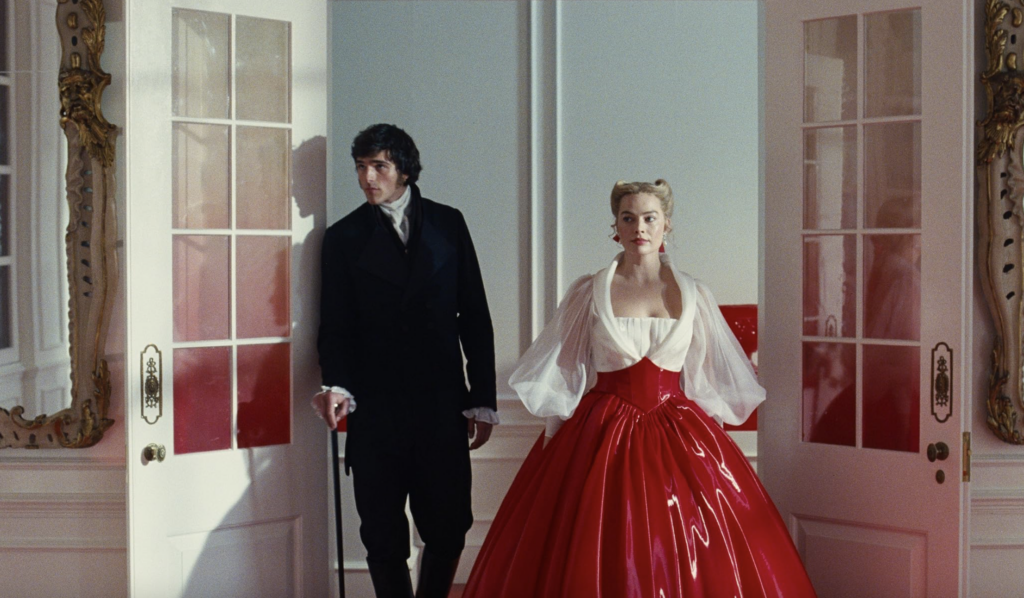
Other characters such as Edgar and Isabella Linton and Nelly fall flat. However, this felt more like a limitation of the story than a reflection on the actors themselves.
Standout performers included the two actors portraying the young versions of Cathy and Heathcliff. The pair’s innocent connection laid a believable groundwork for their adult counterparts to reminisce on.
Despite the strong performances, the film’s attempt to deliver a tragically romantic finale fails. The end of Wuthering Heights feels the most tonally-similar to its source material, but it came after putting its audience through a rollercoaster of muddled tonal shifts.
The film’s objectively emotional ending didn’t feel earned, nor did it leave a lasting impact. However, based on TikToks showing viewers bawling at the film’s conclusion, and the (slightly more subtle) sniffles I heard in the theater, it’s possible I may be in the minority when it comes to the ending.
The film held my attention with its creative visuals and provocation, and if you’re interested in this kind of stylized storytelling from the former Saltburn director, you may enjoy it. But if you’re looking for a story that leaves you carrying an emotional weight out of the theater, Wuthering Heights’s inconsistent tone may leave you with the wrong kind of longing. A longing for more.

is a digital producer for The NewsHouse.