
Winter warriors: A guide to safe driving in the snow
Winter warriors: A guide to safe driving in the snow
When dealing with snowy and icy roads, it’s best to be prepared.
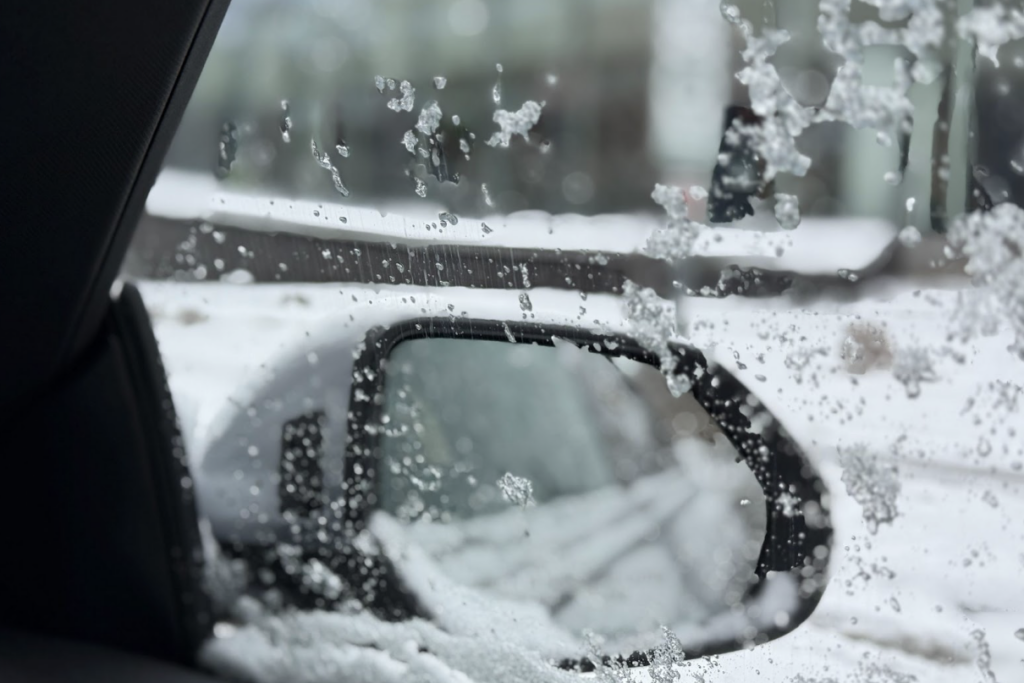
The first snowfall transforms Syracuse University’s campus into a picturesque scene, but for many students facing their first winter behind the wheel, that beauty quickly turns to anxiety.
Navigating snowy and icy roads requires a different skillset than fair-weather driving. Experienced student drivers and safety experts offered essential tips for staying safe during Upstate New York’s notorious winters.
Before you drive in the snow
The most important preparation you can make is choosing the right tires. Standard all-season tires effectively become “three-season” tires once temperatures drop below 45°F, as their rubber compound hardens and dramatically reduces essential grip on snow and ice.
“Last winter, I slid through a stop sign in my car with all-season tires,” said senior Samantha Lee. “After switching to proper winter tires, it felt like driving on a different planet; the control was incredible.”
Before turning the key, make sure that you have properly prepared your car:
- Clear all snow from your vehicle, including the roof, hood and lights. Snow blowing from the roof can create whiteout conditions for drivers behind you.
- Allow extra warm-up time for both your engine and windshield clarity.
- Check your wiper blades and fill washer fluid with a winter-grade solution that won’t freeze.
- Pack an emergency kit with a blanket, gloves, flashlight, snacks, water and a small shovel. Cat litter or sand can be used for traction if your car gets stuck.
Slow is smooth, smooth is fast
When getting onto the potentially icy or snowy roads, it is essential to take note of your speed and every action you make on the road.
“Winter driving isn’t about being timid, it’s about being smooth and intentional,” said SU alumni Junyi Zhang. “Every input, steering, braking, accelerating, needs to be gradual. I make it a rule to increase my following distance to at least eight to 10 seconds behind the vehicle ahead, which gives me the crucial time to react if they brake or skid suddenly.
Before getting on the road, Zhang ensures that there are no distractions.
“Before I even start the engine, I put my phone in the glove compartment,” Zhang said. “The last thing anyone needs on slick roads is the distraction of a notification.”
What to do when you lose control
Despite perfect preparation, skids happen. The key is knowing how to respond quickly and efficiently. Make sure that you stay as calm as possible. Keep your hands on the wheel and your eyes on the road. If your front wheels skid, gently take your foot off the gas and move the wheel back into position.
If your rear wheels begin to skid, avoid hitting the brakes and instead lean into the skid, turning the wheel in the same direction the rear is skidding.
“Practice makes (it) better,” said Carlos Rivera, a Syracuse native. “Find an empty, snow-covered parking lot to practice controlled skids. Understanding how your car feels when it loses traction is invaluable.”
Technology and tools, use them wisely
While modern vehicles offer helpful features, understanding their limitations is crucial. For anti-lock brakes, press down firmly and don’t pump them as the system does the pumping automatically. Using traction control helps prevent wheels from spinning during acceleration, but it will not help to slow down or stop quicker. Using all-wheel drive helps get you going on the roads, but does not aid in stopping or turning your vehicle.
“Technology assists a skilled driver; it doesn’t replace one,” Syracuse driving instructor David Zou said. “No system can overcome physics on ice.”
The best safety tool: Good judgment
Sometimes the safest decision is not to drive at all, especially in intense weather conditions.
“I had to cancel my trip to the mall during the lake-effect snow band that struck last December and stayed on campus,” said freshman Jerry Yun. “I watched three cars get stuck on Marshall Street from my window. No sale is worth that risk.”
Before driving under bad conditions, ask yourself if you really need to make this trip. After all, nothing is worth risking your health or potential life.

Digital Producer from The NewsHouse