
A toxic chemical impact: How Micron’s chip plants could affect CNY residents
How Micron’s chip plants could affect CNY residents
With Micron Technology moving into their backyard, residents and local advocates are concerned about the environmental effects, including chemicals known as PFAs.

Paul Doody’s advocacy for the environment runs in his family. Growing up, he watched his dad stop a hazardous waste incinerator from coming to his town in Upstate New York. He pursued a degree in chemical engineering from Clarkson University, but didn’t get his ideal environmental job after graduation. Doody first worked at IBM’s semiconductor facility in East Fishkill, New York, in the marketing and facilities departments, learning the internal business process of the semiconductor industry.
A few years later, Doody got a position closer to his passion. He moved to Syracuse in 1989 with Blasland, Bouck and Lee Inc., a small environmental consulting firm focused on water quality, wastewater treatment and hazardous waste cleanup.
Doody’s primary project for the firm was the Hudson River PCB sediment cleanup. From roughly between the 1940s and 1970s, General Electric had been dumping polychlorinated biphenyls, or PCBs, into the Hudson River. PCBs are chemicals that strongly bind to sediment in aquatic environments. Because of the contamination, there had been restrictions on certain commercial fisheries as well as limiting the fish that recreational fishers could catch and eat in the river’s affected areas.
Doody was the lead engineer for his client, General Electric, and handled managing engineers in the field and meeting and negotiating with the EPA on concerns surrounding the cleanup. One of the reasons this project was so “controversial,” according to Doody, was the fact that PCBs had been a problem since the ‘70s, and everyone had different opinions about what the best remedy was for cleaning the river.
“It was full time and my boss at the time called me ‘Mr. POTS’ for ‘Mr. Point of the Sword,’” Doody said. “My boss called me ‘the point of the sword’ because I was the guy as General Electric’s lead engineer that would go to public meetings, go meet with the EPA.”
He felt the stakes of this project, which received extensive news attention, and the majority of the public was not happy with the EPA’s decision to dredge the river.
Over the eight years Doody worked on the project, he prioritized what needed to be done for the community and the environment. He attended meetings with public officials and local residents to discuss the current practice of PCB environmental cleanups that were working successfully and what could be done logistically.
“A lot of the public’s concerns were concerns that I had and General Electric had as well,” Doody said. “And yes, we brought those to EPA’s attention.”
Doody moved to Baldwinsville, a suburb near Syracuse, in 2001, and has lived there with his kids and grandkids ever since.
Doody retired in 2012. More than 10 years later, Doody has found himself at the intersection of problems he is familiar with. Doody has jumped back into the field to learn about his new neighbor, Micron Technology. But now, he identifies more with the community on the other side of the issue.
Micron started construction in early January on four microchip plants in Clay, New York, north of Syracuse and east of Baldwinsville. The $100 billion dollar semiconductor manufacturing complex is a beneficiary of the CHIPs and Science Act, which gives a federal incentive for companies such as Micron to produce chips for electronic products.
The project is projected to bring 50,000 jobs to the area and will have one of the largest cleanroom spaces in the U.S. semiconductor industry, contributing to “building opportunity for a generation of New Yorkers” and putting “Upstate’s economy on a permanent upswing,” Gov. Kathy Hochul said in a statement about Micron.
The U.S. semiconductor industry directly contributes $246.4 billion to U.S. GDP and employed over 277,000 workers as of 2020, according to research from the Semiconductor Industry Association.
“So my angle has really been more what can I do to try and make this project successful and make sure primarily that the community is aware of what to expect, mainly from the environmental area,” Doody said.
Figuring out what to expect has been a source of consternation for some of the community since Micron and city officials first announced the factory in 2022.
In November 2025, the Onondaga County Industrial Development Agency released Micron’s Environmental Impact Statement. The approximately 20,000-page draft outlined a variety of environmental impacts, including the affected landmass and water areas, greenhouse gas emissions, and waste disposal and industrial byproducts.
Doody said he was particularly discouraged by Micron officials’ reluctance to share what types and the amount of per- and polyfluoroalkyl substances, or PFAs, they were planning to use at the plant.

The impact statement included information about how PFAs would be used in the creation of chips, especially with the materials used and packaging. Doody said the statement’s lack of details on PFAs pollution and prevention and treatment options is concerning because preventing issues and accidents is something that he dealt with in IBM’s facilities department.
“One of the biggest irritations with their response to our comments on the Environmental Impact Statement was, I said, ‘Where is your list of chemicals that you plan to use at the plant? What are the quantities you’re going to have transported to the plant and stored at the plant?’” Doody said. “And their response was, ‘We’re not going to tell you. Our chemicals are proprietary.’”
According to the Centers for Disease Control and Prevention, about 98% of Americans have PFAs in their blood. While research is still ongoing, according to the Environmental Protection Agency, certain high exposures to PFAs can increase the risk of some cancers, reproductive effects in pregnant women, and developmental effects or delays in children.
Micron did not make a representative available for comment and referred questions on community concerns about the impact statement back to the statement as the “most complete and authoritative source of information on environmental topics” for Micron’s project and mitigation plans in Clay.
While it offers a great economic boost and opportunity, about 5-25% of PFAs used in electronic manufacturing find a way into the environment, according to a study done by ADEC Innovations, a consulting firm focused on sustainable business solutions.
Le Moyne chemistry professor and environmental advocate Don Hughes said he originally was optimistic about Micron’s arrival to the CNY area.
“I’ve been here long enough to see the demise of manufacturing in Central New York,” Hughes said. “There’s been so many companies here, and they’ve just up and left … This can be a real positive thing to bring back manufacturing jobs to Central New York.”
He also joined the same environmental consulting group as Doody and came to Syracuse in 1985, but he switched his career to focus more on academia after about five years and received his doctorate in environmental chemistry.
While Micron offers an opportunity to boost the local economy, Hughes was concerned when he looked more into the details.
“My opinion got more skeptical of it as I learned more about what the semiconductor industry is like, what the manufacturing process involves and all the chemicals and electricity impacts,” Hughes said.
What are PFAs?
PFAs were nicknamed “forever chemicals” by Harvard associate professor Joe Allen in a Washington Post op-ed in 2018 because of their slow breakdown and virtual indestructibility.
They have been linked to many health issues and are largely unregulated, with limitations starting only in the early 2000s. PFAs are a subclass of persistent organic pollutants, or POPs, and only three were later added to the list of chemicals in the 2001 Stockholm Convention treaty to reduce and eliminate POPs production.
With initial pushback to Micron’s first impact statement draft released in the summer of 2025, the company added an appendix about PFAs, which provided structural definitions and case categories of PFAs planning to be used. The appendix didn’t list the specific PFAs compounds the company planned for production and emission in disposal, nor the total amount projected.
“I do believe they are motivated to contain it [PFAs],” Doody said. “But again, stuff happens, and things get away from you … If and when that happens, you want a community that’s going to trust when you tell them that this stuff isn’t bad [and] don’t worry about it.”
From the lubricants used, packaging and etching used for chips into a small, compact and nanometer level, PFAs are an integral and vital part in creating silicon and micro-chips. The process of photolithography, which is the “patterning process that defines where to add or remove materials in each step of the fabrication of integrated circuits,” incorporates PFAs compounds, explained by the Semiconductor PFAs Consortium.
Doody said that if Micron has to submit data for monitoring under their New York state and federal permits, baseline monitoring for the public is something that can be implemented in order to add to PFAs research and safety measures.
Baseline testing of people’s blood would also get the public comfortable with confidence in the company and whether there are environmental impacts that affect them, Doody said.
“I think it’s imperative that we understand the people who are closest to the facility that would be most exposed and that we understand what their blood levels are. It’s a hard thing to deal with because people have to volunteer to have their blood tested,” Doody said. “But if you don’t understand the baseline conditions and 15 years down the road, let’s say a cancer cluster comes up and people then start analyzing their blood – and lo and behold, there’s PFAs in their blood.”
Professor Hughes said he wants to ensure that Micron is accountable for eliminating PFAs after the production process.
“What I want to see from Micron is commitment to monitoring and ensuring that this stuff is not being discharged into the river, that’s No. 1,” Hughes said. “Then No. 2 is ensure that the PFAs that you’re pulling out of the wastewater and you’re concentrating it, destroy it, run it through a chemical process, or oxidizing, an oxidative process – whatever that actually destroys those compounds. It doesn’t just move them from here over to the poor community that has a landfill or incinerator or whatever. Just destroy it there, then and there, at the ground.”
Community response
As one of the founding members of the CNY United Coalition for Community Benefits through the Sierra Club Atlantic Chapter, Hughes is helping lead a coalition that formed to understand and educate the community about the impact of the Micron project.
While Hughes focuses on the environmental impact, the CNY United Coalition for Community Benefits is aiming to secure community benefits through commitments of Micron related to “environmental, workforce, and affordability concerns,” according to their press release on their website. CNY United consists of lots of different coalitions, including CNY Solidarity Coalition, Jobs to Move America, Greening USA and SustainCNY.
Hughes’s research about the semiconductor industry led him to the Chips United Communities, a coalition aimed at creating “an equitable and sustainable semiconductor manufacturing industry.” New information from that organization caused Hughes to question how manufacturers can still use PFAs in silicon creation. The answer he found was loopholes in PFAs legislation at the NY state level.
“The regulations are just behind,” Hughes said. “That is part of the problem.”
Two main types of PFAs have been restricted in use for Micron: PFOS, which is commonly used in firefighting foam and photoimaging; and PFOA, which is commonly used for non-stick kitchenware. The analytical EPA method used to analyze PFAs restricts the use of 40 PFAs chemicals further, but there are still hundreds of PFAs that have not been obtained and analyzed for restricted use.

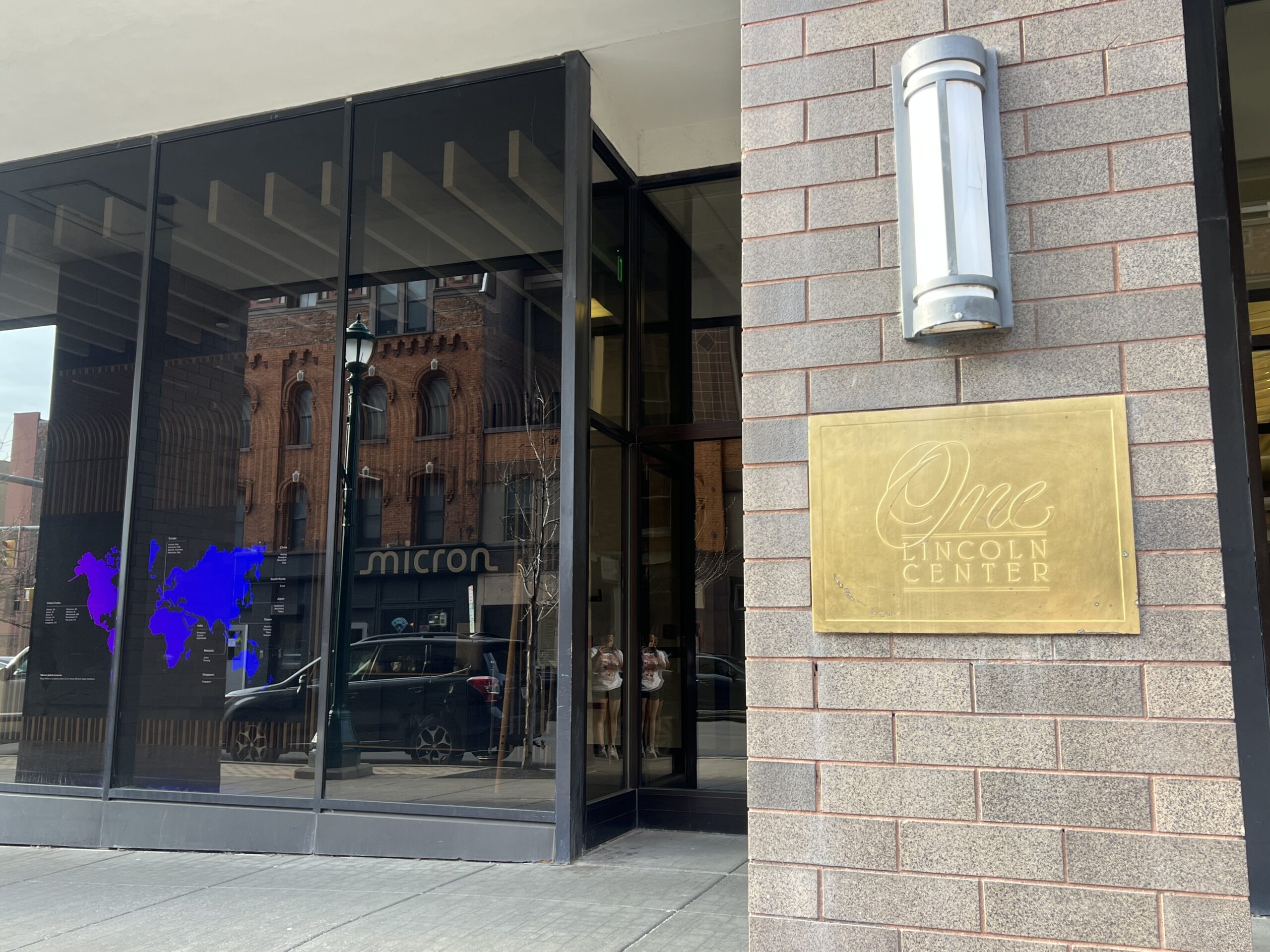
Because the limited PFAs legislation in New York does not specify the use of unregulated PFAs, Micron plans to move forward with using PFAs in its production of advanced microchips at the Clay semiconductor campus. This could open the community to health risks that have not been fully explored and addressed.
Hughes pointed to the State Pollutant Discharge Elimination System permit that Micron was issued for its industrialized wastewater treatment plant. This specialized permit requires mandatory monitoring of 40 PFAs compounds that are tested by method by the EPA. But Hughes said that leaves hundreds of compounds unregulated that could be produced under the radar with no specific limits to the amount.
Kate Donovan, a senior attorney and also the Northeast Regional Director for Environmental Health at the Natural Resources Defense Council, has been working in the state advocacy division specifically focusing on PFAs legislation in New York State. She and her coalition have worked on several pieces of legislation, with their legislative agenda and mission statements available on their website, PFAs-Free NY.
“So when we talk about PFAs, there’s not one policy solution that will really solve the problem. It’s multiple different policy triggers that will kind of address different parts of the life cycle. So the legislation of our coalition kind of addresses all of those parts, upstream and downstream.”
Donovan explained that because it is so integrated into our everyday use, getting rid of PFAs entirely is going to be difficult immediately.
“We are continually finding its use and lots of different applications as well as of course, now it’s so ubiquitous that it often just finds its way into the supply chain of products,” Donovan said. “Even when we’re not intentionally using it, it shows up in water, it shows up in soil, it shows up in air.”
One of the proposed pieces of legislation that PFAS-Free NY and the Natural Resources Defense Council have not fully been instated is the PFAS Discharge Disclosure Act, which would require manufacturers that have the State Pollutant Discharge Elimination System permit to test and disclose PFAs that they are discharging in New York’s lakes, groundwater and rivers with updated EPA guidelines.
PFAs research is still continuing to grow as experts are working to find answers in all places where PFAs are found.
Everyday impact
With construction for Micron starting this past January, the community has already seen the impact of the construction already.
One of the disposal sites that Micron is planning on using and expanding for chemical and PFAs disposal is the Oak Orchard Wastewater Treatment plant, about 2 miles from the semiconductor campus.
Brad Santee, an engineer working in cyber defense who also worked at Blasland, Bouck and Lee Inc. on the Hudson River clean-up, has lived across the street from the Oak Orchard plant for 10 years.
“I’ve seen small chip fabs that are not a negative impact on land,” Santee said. “We can only hope that that’s how Micron will play it.”
A recent issue that Santee had to deal with was that Micron was planning on building pipes to Oak Orchard that could potentially be in his own backyard. Santee said he was grateful there was a decision to move the pipe construction to one of his neighbors’ backyards.
With the added waste from Micron now, interactions with the plant may be even more challenging. Right now, Santee still struggles with the constant vibrations coming from the plant. But with the county’s plan to expand Oak Orchard to accommodate the waste coming from Micron, Santee fears it may get worse.
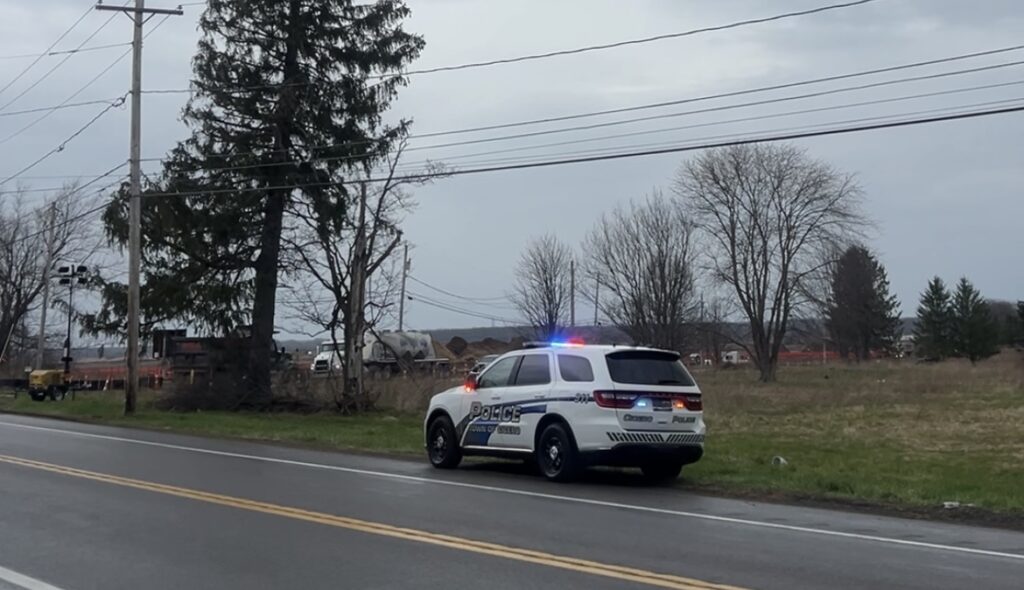
While Micron’s impact statement did outline noise monitoring for the actual Micron facility, noise testing for the pending expansion of Oak Orchard has not been taken into account, as they work to use it as one of the disposal sites for Micron.
“You can hear and feel the vibration that the current plant puts out,” Santee said. “There’s been no acoustic or vibration studies done, no impact assessment. … None of these things were taken into account.”
Santee lives with his wife and two children, ages 10 and 12.
“You know, my kids being young, I want them to have a healthy environment around, and you know the vibrations from this plant are going to be enormous compared to what we have now,” he said.
Looking forward
While Micron’s immediate impact is top of mind to many in central New York, there are wider-reaching efforts being made to develop legislation that will decrease and eliminate PFAs production. The Natural Resources Defense Council is working on a cohesive policy agenda focusing on phasing out PFAs in everyday items with the Consumer and Household Products bill. Donovan, the Natural Resources Defense Council attorney, explained that they are working to get PFAs out of all areas, including the manufacturing industry.
“Ultimately we want to get to a space where there are safer alternatives available for all sorts of uses in industrial and manufacturing settings,” Donovan said. “And, you know, a full comprehensive transition away from using this dangerous, toxic chemical, where it’s absolute and perhaps only allowing when it’s essential for very limited circumstances.”
Hopeful for a good future with Micron’s initial plant opening in 2030, Doody’s reflection of his past projects, especially the Hudson River cleanup with Blasland, Bouck and Lee Inc, has pushed him to advocate for a positive and safe experience with Micron for the greater community.
“That particular experience to me and some other projects as well is kind of informing me today on what we should do with Micron to make this more successful,” Doody said.
Doody acknowledges that this is a great opportunity for an industrial community that has lost hope, especially having the “largest industrial development in the state of New York” in the Syracuse area. But he still wants Micron officials to be open about the challenges and accidents that can happen and honest with the community they are affecting.
“I’ve urged Micron to get out in front of the public on this because you’re a new neighbor,” Doody said. “I just worry that people have not fully thought through those impacts, and if they have and I am just not aware of it, then I would feel much better.”

is a flex producer and digital editor for The NewsHouse.