
Lawmakers consider “Protect College Sports Act” after bill passes U.S. Senate
Replace this text with a shorter more mobile friendly headline
The Protect College Sports Act just passed its first test in the Senate with bipartisan approval. If enacted, here’s how it will impact Syracuse Athletics.
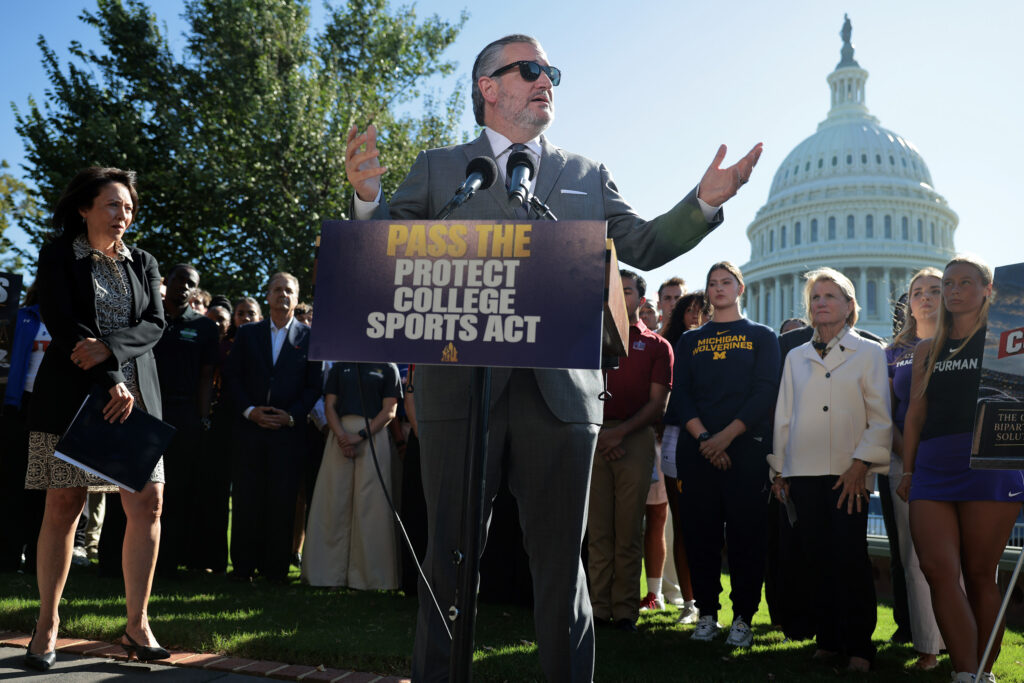
The United States Senate passed the Protect College Sports Act (PCSA) in a sweeping vote last week. If enacted, the legislation would reshape how Syracuse University pays and retains its athletes, strengthening health and academic protections. It now waits for approval from the House of Representatives and White House.
The bill aims to stabilize college athletics, changing the national standard for compensation, transfers and eligibility. Syracuse could have room to increase payments to returning players, limiting roster turnover. While athletes would face new transfer restrictions, they would receive stronger scholarship and medical protection.
The PCSA legislation is significant because it is the first of its kind to move into the House. It would give schools, conferences and the NCAA, stronger legal backing to enforce its rules while creating federal protections for athletes. Those legal protections would make the rules enforced harder to legally challenge.
For programs like Syracuse, the bill could increase its ability to attract recruits and compete with weather opponents. For the athletes, the bill would expand their opportunities to maintain their earnings as agents fees would be capped at 5% of each contract’s value.
“College athletics needs a national framework. Right now, schools are competing under a patchwork of rules that changes from state to state and court to court. Only Congress can provide the comprehensive reform needed stabilize college sports and preserve the many programs and opportunities that make college athletics in America so special,” Adam Hepburn, SU’s associate vice president for strategic initiatives and government engagement, wrote in a statement to the NewsHouse Thursday. “Federal legislation is the best way to level the playing field, and Syracuse intends to be a leader in this next era of college sports.”
The PCSA remains only a proposal for now, requiring House approval and the president’s sign off before becoming law. But, the 77-22 vote from the Senate gives it a major push forward. For now, the terms remain proposals and can be revised on the floor of the house.

If enacted, how would PCSA impact Syracuse Athletics?
David Meluni, a professor of practice in Syracuse’s department of Sport Management, said increasing what schools can pay leaves SU with a challenge: raising enough money to compete in recruiting.
Today, the current cap limit installed through the House Settlement last June is set at $21.5 million to be dispersed around across all sports. However, ESPN estimates that 30 schools have a payroll of more than $30 million and about half of those programs exceed $40 million in athlete spending, specifically on football.
Under the PCSA, schools would annually spend $22.5 million more than the current revenue sharing cap to retain athletes. Those athletes must have completed at least one full competitive season at their institution. A further allowance of $5 million would be allocated to non-revenue sports, Meluni said.
Financial support is critical to the major revenue-driving sports like football with an estimated roster of $17- $22 million and men’s basketball which was reported at $8 million for the 2025-26 season.
The bill would allow Syracuse to spend more money to bring back athletes, but SU will have to find a way to fund those payments while competing with schools that can also increase their spending.
“We cannot lose our current student athletes,” Meluni said. “That’s numero uno. We have to be able to retain those athletes.”
Beyond funding, the PCSA would change how collegiate athletes move between schools, aiding the retention process. Student athletes would be granted one free transfer between four-year academic institutions without delaying or losing eligibility. A second transfer would lead to a loss of eligibility during the first academic year. There are exceptions to the second year transfer rule such as a head coach’s departure and a pursuit of a graduate degree.
These rules not only help schools like Syracuse, but all programs with an increased opportunity for roster stability.
The bill also gives athletes protection that ensures students wouldn’t be allowed to take away their scholarship due to poor play, an injury or if they were cut from the roster. The exception of that rule applies to transferring or failing to meet academic or conduct requirements.
Division I schools would be held accountable for covering qualified out-of-pocket medical expenses for sports related injuries and illness for five years after an athletes final competition.
As schools are pressured to spend more money on football and men’s basketball the bill also strives to protect and preserve scholarships and roster opportunities for women’s and olympic sports.
Meluni said Syrcause’s ability to compete also connects to a larger concern: maintaining its position in a power conference as college athletics seems to be on the way towards a realignment.
The PCSA would restrict certain mergers and acquisitions involving football conferences generating more than $700 million in annual revenue. It will prevent Power 4 conferences from growing beyond a total of 20 teams and will also force any school wanting to realign to another conference to spend three years as an independent before joining the new league. Meluni said not many teams could act independently because of the television revenue they are getting, Syracuse included.
These terms are placed to limit mergers and partnerships amongst wealthier teams. For Syracuse, its place in the Atlantic Coast Conference (ACC) directly affects its financial rewards and media exposure.
Meluni said SU has the foundation it needs to succeed in the ACC and needs to advocate for its right to stay.
“We’re okay,” Meluni said. “Don’t let somebody make a decision when it gets to the point of realignment that we don’t have a seat at the table.”
Maintaining that position requires financial support and visibility.
Meluni pointed to the Newhouse, Whitman, Maxwell and Falk programs that provide critical resources to build the brand of Syracuse and provides experiential opportunities for students, leading to a drive of entrepreneurship for SU students.
“We all have to buy in on this campus to help our student athletes,” Meluni said.
The buy-in starts from the administration and Meluni believes Syracuse found a great leader for the new era of college athletics. SU Chancellor Michael Haynie pledged to confront “the age of acceleration” during his inauguration on Sept. 18. Meluni said Haynie was at the forefront of creating his NIL course and now those issues discussed are more prevalent than before.
“Now we have to execute it,” Meluni said. “Chancellor Haynie has an incredible entrepreneurial spirit.”
While Haynie rose up the ranks at Syracuse through a background in entrepreneurship, his vision for athletics comes with an expectation for success.
“I want to make it very clear we also have to win,” Haynie said in an interview with Syracuse.com.
The future of the Protect College Sports Act now rests with the House, where the terms can change. How Syracuse would fund athlete payments and balance spending across the athletic department will remain an open question.
For all sections and provisions of the Protect College Sports Act of 2026: read here.

is a contributor to The NewsHouse.