
Folk artists Haley Heynderickx and Max García release their second collaborative album
Haley Heynderickx and Max García release album ‘What of Our Nature’
‘What of Our Nature’ is a protest against American society, capitalism and an artificial world.
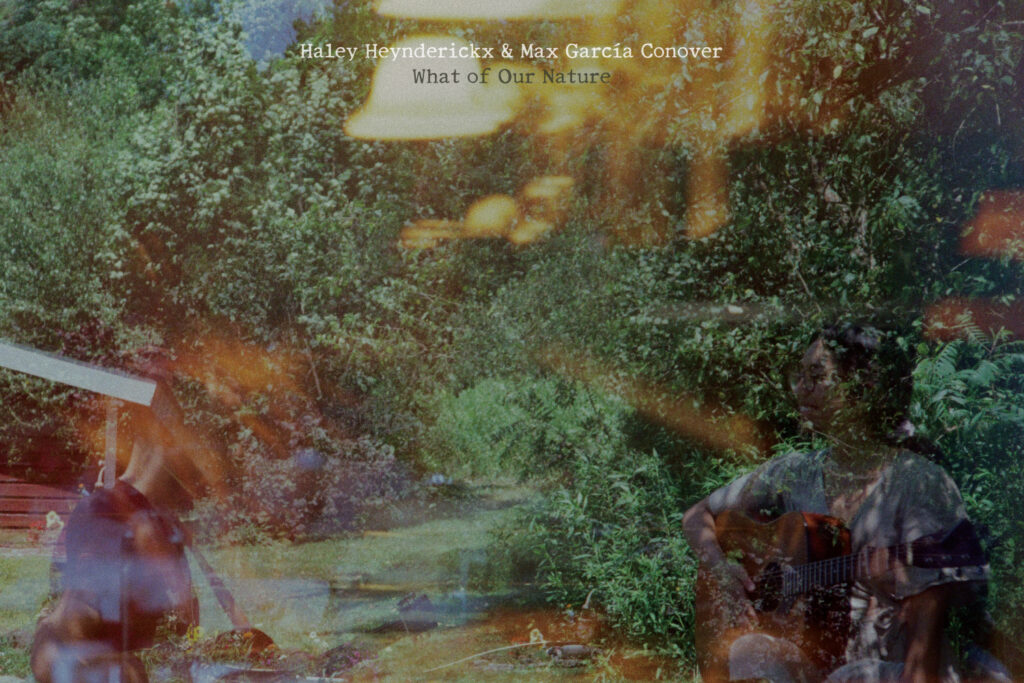
Haley Heynderickx and Max García came together again for their second collaborative album, What of Our Nature. The LP features ten tracks of classic indie-folk music exploring themes of American society, protests and creativity under capitalism.
The album wasted no time, diving right into these themes with the opening track “Song for Alicia.” The track is about Puerto Rican activist Alicia Rodríguez, who was arrested in 1980 and sentenced to 55 years in prison for conspiracy-related charges. Her incarceration was widely viewed as unjust. This song echoes that sentiment, as the singers reflect on their family members who held similar radical political views. Here, they introduce the theme of artists within society, as the singers face the self-awareness that their music is unlikely to have the same impact on change as Alicia’s.
“Mr. Marketer” continues with this theme, examining what it means to be an artist in a capitalist society and the pressures artists face to make their work commercially viable. The song has some of the most interesting instrumentation on the album, as these quick, high-pitched guitar notes echo throughout the track.
“In Bulosan’s Words” creates commentary on how American society talks, or more accurately, does not talk about poverty and the current political state. The repeating line “Oh, it’s easy being quiet” implies that it is easier to remain silent about issues than to speak up. The rest of the song reflects how this keeps the American people isolated, unaware, and complacent. Bulosan was a Filipino-American writer and poet who was known for promoting middle-class solidarity and protesting against racial and economic discrimination.
Furthering this commentary, “Fluorescent Light” shifts the focus to how American society has become increasingly cheap and capitalistic. Fluorescent light is artificial and bright and the fact that we “live in it” means that Americans now spend most of their time in that artificial place, deciding their lives around it.
“Buffalo, 1981” continues with themes of poverty and hunger in America, as well as the government’s role in addressing these issues. This song was likely written before the government shutdown and subsequent pause of SNAP benefits, with lines like “The USA hates you being poor.”
The last song, “Red River Dry,” tells a more abstract story. The dryness of the river could be a reference to how industrialization has destroyed many of the Earth’s natural resources and environments. The concept of the red river could also be a reference to blood, meaning that people have been bleeding under the current political system, but now, no one has any more blood left to give. The album hauntingly ends with the repeated line of “Red river dry” and echoing guitar strums.
What of Our Nature is a protest album. A protest against capitalism, artificial society, false-American promises and the spiral so many feel in the strange time everyone lives in. While most of the songs have a cohesive acoustic guitar-heavy album, the point of What of Our Nature is fundamentally in its lyrics.
In an era where the fate of true art seems increasingly threatened, amid concerns about artificial intelligence, capitalist society and wealth disparity, an album with a clear message and artistic foundation is a gift.

is a contributor for The NewsHouse.