
‘The Bride!’ revives the iconic horror characters but ultimately falls flat
‘The Bride!’ revives the iconic horror characters but ultimately falls flat
Review: Maggie Gyllenhaal’s “The Bride!” offers intriguing visuals while shifting the focus from Frankenstein to his reanimated spouse, but lacks an exploration of deeper themes.
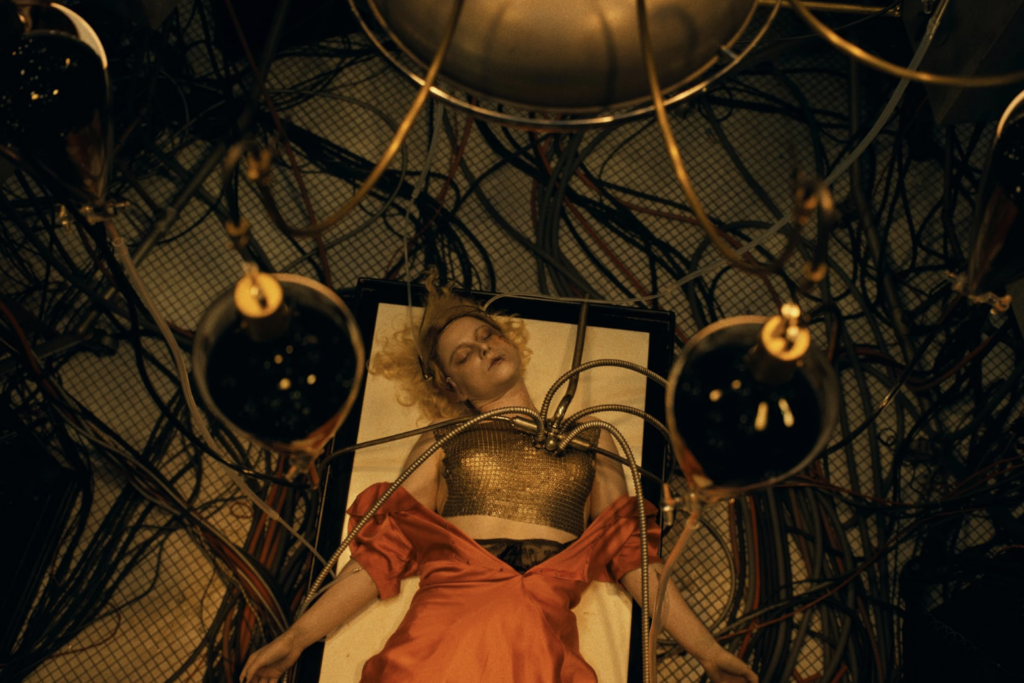
Frankenstein has certainly earned his place as an iconic monster with Halloween decorations, movies and countless media references in his name. The much less adapted story is that of Frankenstein’s reanimated bride… until now.
Maggie Gyllenhaal’s “The Bride!” delivers great performances and entrancing visuals, but ultimately fails to deliver any real exploration of its themes. Its lack of focus on the main characters renders the potential of emotional impact and social commentary wasted.
The movie acts as a continuation of Mary Shelley’s “Frankenstein” and borrows its broad concept from James Whale’s 1935 film “Bride of Frankenstein.” The story begins with a lonely Frankenstein (Christian Bale) looking for a relationship. He goes to Dr. Euphronius (Annette Bening) where together they dig up the body of a woman named Ida (Jessie Buckley). After Frankenstein brings Ida back to life, she doesn’t remember who she is, and Frankenstein tells her that she is his bride. The pair run off together after facing trouble with the law, moving through cities, reckoning with their actions and learning what it means for society to deem them “monstrous.”
Set in 1936, the film doesn’t concern itself with period accuracy. Instead, it creates its own striking visual world. A scene in a nightclub features bright neon lights, strange camera angles and quick cuts. The visuals of the scene matching the feeling of liberation Ida gets while dancing.
Another scene contracts this by featuring black-and-white clips from a fictional film which Frankenstein imagines himself being in. The use of vintage clips bring in an Old Hollywood feel. Another scene at a graveyard features an almost comical amount of fog and a dark, dreary atmosphere. All of these contrasting styles give the movie life, bringing in surrealist and theatrical elements. This allows the audience to accept somewhat unrealistic characters and situations, and lean into the drama of it all.
Buckley, a nominee for Best Actress at this year’s Academy Awards, gives a performance that is bold and unrestrained. Her character, Ida, speaks largely in cryptic word-association monologues, which could easily grow tiring. However, Buckley delivers them with the believability to make the character deeply sympathetic. Her movements, from knocking glasses off of a table to just walking down the street, are large and wild. Adding to her sense of becoming reacquainted with her body.
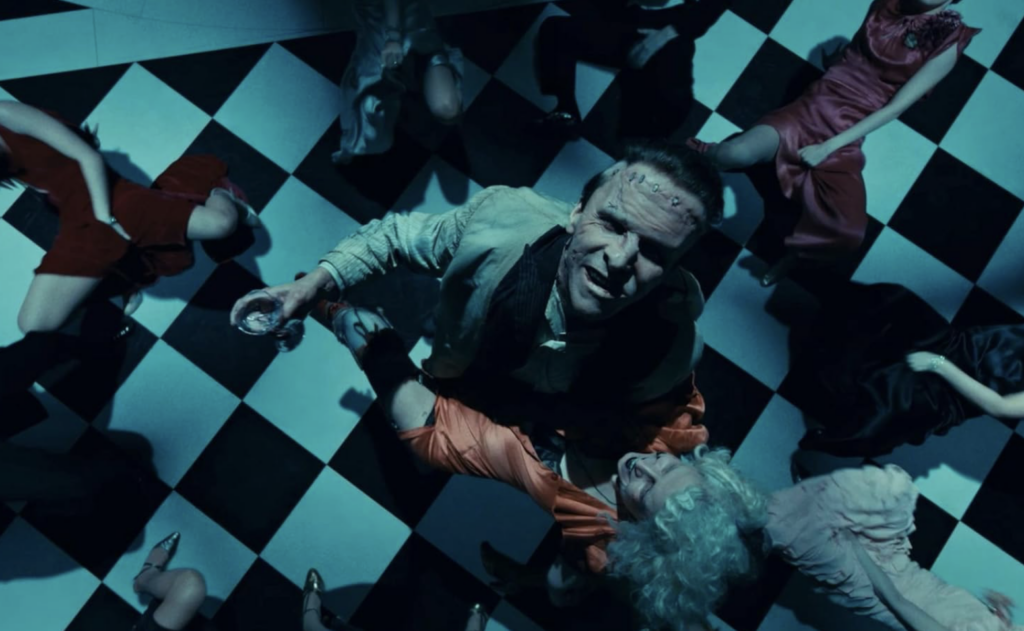
Bale also gives a good performance as the lonely, movie-loving, cast-out-of-society Frankenstein. In one scene, Frankenstein meets his idol, actor Ronnie Reed (Jake Gyllenhaal), who disregards and laughs at him. Bale brings an emotional depth to his character that makes that moment, and his reaction, incredibly heartbreaking.
Where the movie struggles, however, is its ability to follow through on its premise.
As expected from a movie about bringing someone back from the dead, the issue of consent arises. By taking Ida’s body and revitalizing it without her input, her bodily autonomy is taken away. Initially, the movie leans into this idea. Ida explicitly says, “I didn’t want this, I didn’t want any of this.” The line “I would prefer not to” is recurring, drawing focus to this theme of consent. Additionally, by lying to her about who she is, Frankenstein takes advantage of her memory loss. This results in him manipulating her ability to make her own choices.
However, in the end, the harmful actions of Frankenstein to Ida have no effect on their relationship. Ultimately, the movie is framed as a love story between the two of them, dampening the message of autonomy.
What really hurts the movie is the lack of focus on the main characters. A mafia/detective sideplot overshadows any interpersonal action, resulting in the characters not getting internal arcs. They are people to whom things happen, rather than the driving force of the film. The dynamic between Ida and Frankenstein, had it been given more thought or time, had the potential to say something meaningful, but it doesn’t. They start in love and end in love.
Ida’s struggle with her identity could have been something meaningful as she tries to discover who she is, but she too is the same at the beginning of the movie as the end. The only change is she now decides to go by “The Bride,” which is supposed to be empowering but falls flat as her story continues to be dependent on Frankenstein.
Overall, the movie has cool moments and is technically impressive, but disappointingly serves more as a collection of scenes than a cohesive and evolving narrative.

is a contributor for The NewsHouse.