
Former VPA Professor, Northeastern Law Professor lead fireside chat on “Telling Hard Stories”
AANHPI chat focuses on “telling hard stories”
Through conversation and workshops, two professors share their experiences and history as Asian American storytellers.
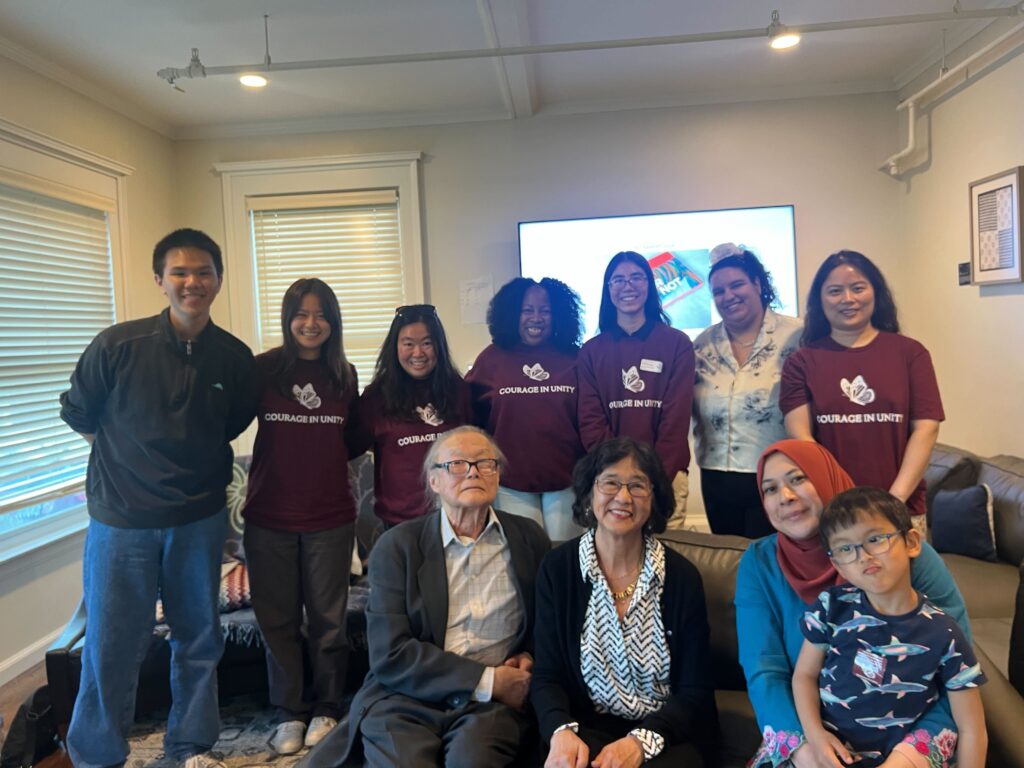
As a part of the University’s Asian American, Native Hawaiian, and Pacific Islander Heritage Month Programming, the Native Student Program, located at 113 Euclid Ave., hosted “Courage in Telling Hard Stories: AANHPI Heritage Month Keynote Event”.
The event on Friday evening highlighted two speakers, Margaret Woo, a former law professor at Northeastern Law, and Stephen Zaima, Syracuse University VPA art professor emeritus. Syracuse University playwright and College of Visual and Performing Arts (VPA) faculty member Zizi Majid was the moderator of the conversation.
Both shared their inspirations for their creative work, largely coming from the legacies of their parents and grandparents, and the desire to continue creating after retirement.
“My grandfather kept very detailed records,” Woo said. “I always had in mind that someday I should document all of this, but what really jump-started this project is the recent immigration debate.”
The project that she is referencing is her upcoming book “The City of Jade Trees,” set to release in November.
The conversation shifted to talk about narratives of immigration in the United States and what it means to be forced to choose an allegiance.
“The 442nd battalion, which was an all-Japanese infantry brigade, mainly fought in Europe. Most, if not all came back damaged … They were the most decorated infantry group,” Zaima said. “One of the medals that they got the most of were Purple Hearts, and that’s when you’re wounded. It was about showing that … you were a real American.”
The two touched on challenges they faced being some of the first Asian American faculty members at their institutions, and Professor Zaima gave some advice to the faculty present.
“Be understanding, forward-thinking, and try not to mess up.” Zaima said, later speaking on feeling the need to be perfect.
Similarly, Woo added, “You feel the weight of having to speak on behalf of your race and ethnicity.”
Majid wrote a play about the concept of “homecoming”, and asked the two guests about what the word means to them. Zaima and Woo had differing experiences with their own “homecomings.”
Zaima, who is of Japanese heritage, is not fluent in the language, which caused barriers when he traveled to Japan in the past.
When discussing an interaction with two men in Japan, Zaima said, “Something was different; they weren’t sure that I was really Japanese. I go up to them and say something and they burst out laughing. I confirmed their suspicion that there was something wrong with me.”
Woo, who was born in Hong Kong, still found difficulty with her “homecoming” because what she remembers is no longer present.
“The China that was enshrined in stories my parents told me from the 1940s… When I went back to China, which is now socialist, communist China, it was a home I did not recognize. My search was for an imagined homeland, but one that I can’t return to, or perhaps only existed in my mind.”
While it was a small group that attended, the event made an impact. Patrick Tran, a student serving on the committee, planned the event.
“It’s amazing to interact with someone with so much knowledge and wisdom,” Tran said. “It was wonderful to hear their stories and hear them being vulnerable, talking about their families in the past and how that has impacted them in the present.”
Following the fireside chat style conversation, Zaima and Woo led workshops on telling hard stories. Zaima focused on image and Woo focused on text.
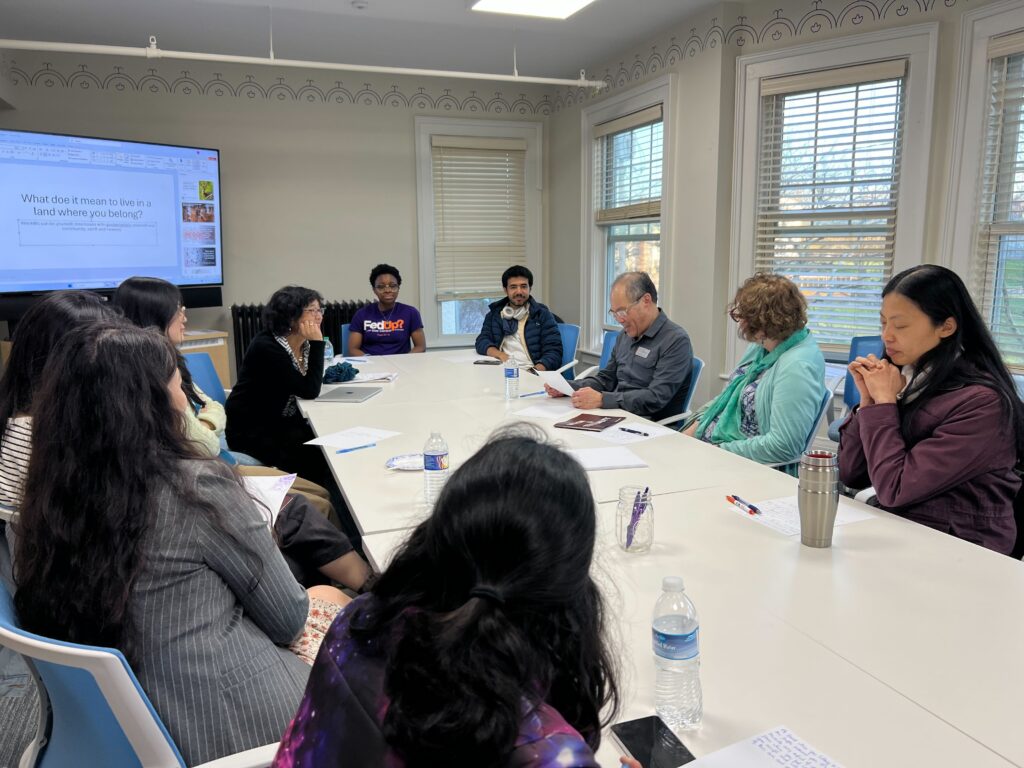
During Woo’s workshop, participants took part in a writing exercise where they answered: “What does it mean to live in a land where you belong?”
Participants answered with words and phrases including “warmth, where you can be yourself, spirit, and heaven.”
Woo closed with an excerpt from her upcoming book, where she answered the question herself.
For Tran, these events provide an important space for Asian students.
“I hope that these events continue because it provides more opportunities for students to understand who they are if they are feeling unsure about themselves,” Tran said.
As a call to action, Woo encouraged participants to hold onto their personal stories.
“Stories need to be kept. Memories need to be preserved, and narratives are the best way of lending a human voice to the harshness of law and the black and white of statistics. All of you have that within you,” Woo said.
The rest of the AANHPI Month programming can be found here. Upcoming events include Flavors of the Philippines on Saturday, April 18th, and the final event for the month, Real Talk: Solidarity in Action on Thursday, April 23rd.

is a digital producer for The NewsHouse.