
Pulitzer Prize-winning journalist Jodi Kantor offers SU students advice on surviving failure
Investigative journalist Jodi Kantor offers SU students career advice
Kantor discussed her new book, “How to Start: Discovering Your Life’s Work,” coming out April 21, and shared career advice.
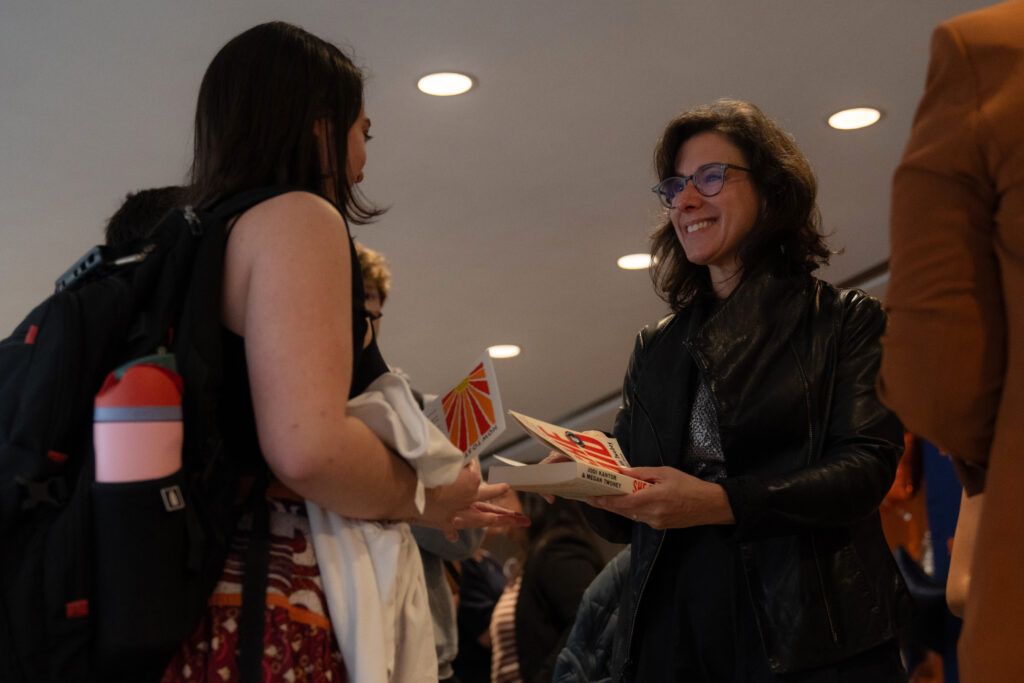
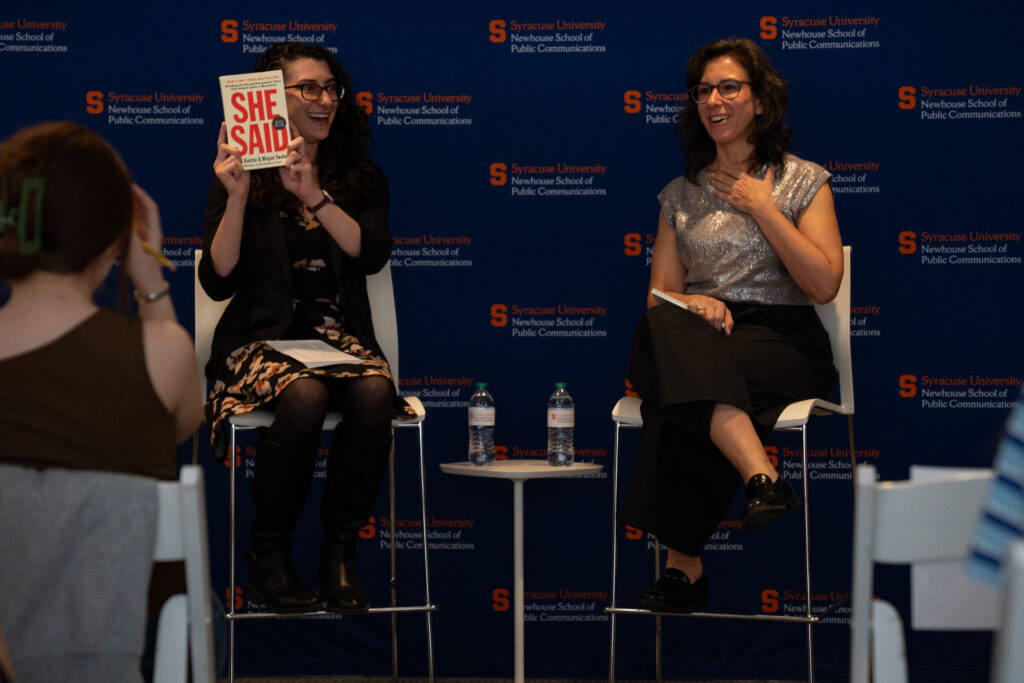
Jodi Kantor, one of the journalists who broke the Harvey Weinstein sexual abuse story in 2017, spoke at the Newhouse School on Tuesday. The event is a part of Newhouse’s Leaders in Communications series, which brings media leaders to speak with students.
“There is nothing that I love more than a room full of journalism students,” Kantor said. “There is very little that I do that is more important than connecting with people like you because I want you to feel invited into journalism.”
Kantor spoke about her new book, “How to Start: Discovering Your Life’s Work,” primarily focusing on her journey in the journalism industry. Students asked Kantor about topics ranging from mental health, the most important factors for a good investigative story and how to deal with professional failure.
Mikayla Melo, a magazine, news and digital journalism senior, said she felt that the conversation helped her feel more certain in her path as a journalist.
“As a graduating senior, Jodi gave the reassurance and comfort that I’ve been looking for as I’m getting ready to start my career,” Melo said. “Sometimes journalists can be kind of negative, so it was really reaffirming to hear how much she still believes in the work and in young reporters.”
Kantor said that speaking with students at Columbia University who were uncertain about beginning their careers sparked the idea for the book. She added that the book includes everything she wished she knew when she was in college.
Her book touches on “finding your life’s work” in a time of artificial intelligence and the country’s current political state.
“Even though starting has always been hard, this era is making it harder,” Kantor said.
Kantor also touched on how she maintains a good headspace while dealing with difficult topics.
“The day you get to confront Harvey Weinstein in the office is the best day ever,” Kantor said. “There is so much joy in journalism … the empowerment that we can actually discover the truth and offer accountability … I find that very helpful.”
After being fired from the school newspaper in at Columbia University and dropping out of law school, Kantor found herself back in journalism.
“Going to law school was not a crazy thing to do but I had given up (on journalism) before I started,” Kantor said.
She asked the seniors in the room who were uncertain about their post-graduation plans to raise their hands, then handed out a card to them with advice directly from her book.
“Frustration and disappointment are certain. Failure is possible,” the card read. “But if you abdicate the search for satisfaction now, you will put it further out of reach.”
When asked about how to deal with failure and rejection, Kantor answered, “take a beat and ask yourself, ‘What can I sincerely learn from this experience?’… You absorb that lesson and you throw the rest into the Hudson River.”
For Kantor, there’s two categories of relevance in investigative journalism: harm and scrutinizing power.
“If it’s in the harm category, there really needs to be harm,” Kantor said. “In order for an investigative story to have an impact, you need something to be concerned about.”
She added that the best investigative stories are surprising and enthralling. It’s necessary for reporters to have “gettable” stories and must consider what evidence there would be to ensure that it can be proven, she said.
Kantor also offered personal advice on finding what other skills in one’s life can translate to journalism. She discussed her experience with her grandparents who were Holocaust survivors and the importance of understanding levels of comfort people have with discussing trauma. While her grandmother was open about her trauma, her grandfather was not, she said. She said this experience helped her understand the survivors of assault more deeply when conducting interviews.
When asked about how female journalists should deal with toxic, male-driven work environments, she looked around the room in front of her — nearly a fully female audience.
“I look around this room and I see the future of journalism is female,” Kantor said. “All of you are worthy of dignity and respect in the workplace. You have to know that, you have to insist on it, and you have to hold on to it,”
Television, radio, and film senior Faith Bolduc is a long-time fan of Kantor.
“What stood out to me was her being empowered to take a leap that was daunting but served her so well,” Buldoc said.“Having the opportunity to hear from her in Newhouse was incredible.”
Kantor’s visit to Syracuse also included a talk at the Oncenter Crouse Hinds Theater as a part of the Friends of Central Library’s Author Series. Her book, “How to Start: Discovering Your Life’s Work,” will release on April 21.