‘Roommates’ adds another layer of mediocrity to Netflix’s comedic catalog
‘Roommates’ adds another layer of mediocrity to Netflix’s comedic catalog
Review: Netflix leans into the age of college comedy with a new film that stumbles in its first half and never fully recovers.
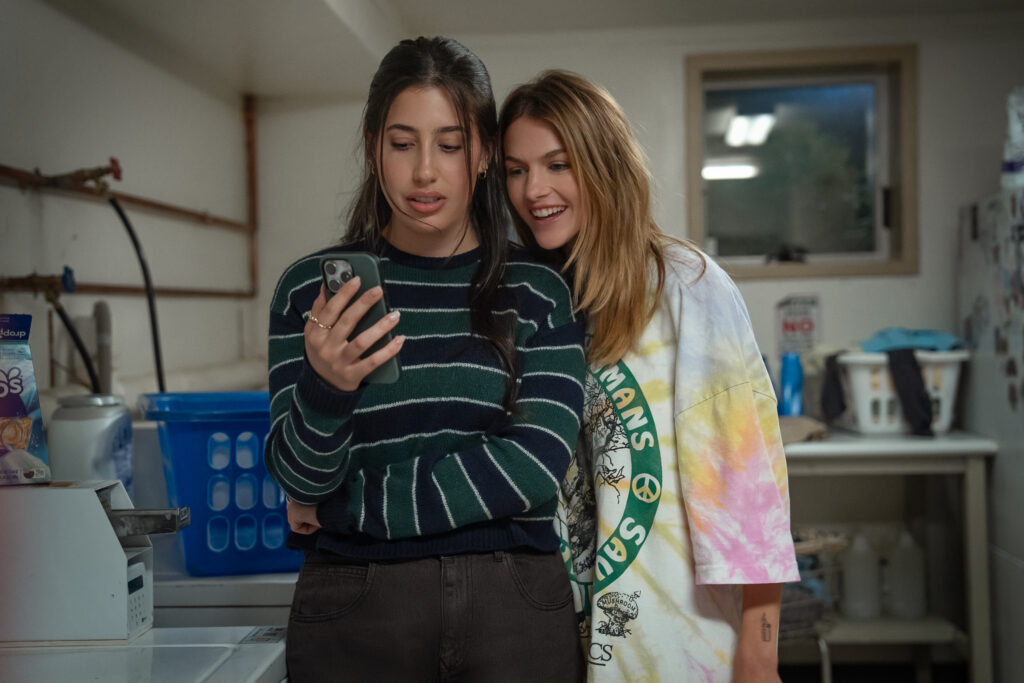
Shocker! Netflix releases a comedy about a college freshman who navigates the horrors of living on their own for the first time. A “never-seen-before” plot that plays out exactly how you would think it would until the crazed end – drab, dull and deeply scattered with cliches.
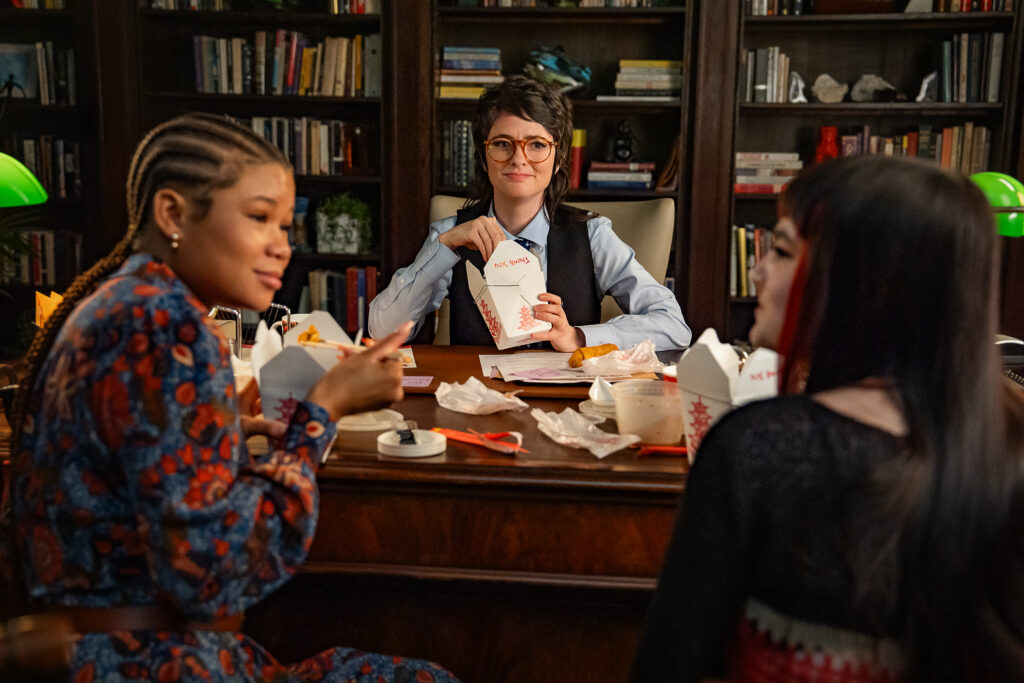
Directed by Chandler Levack and featuring Sadie Sandler (Adam Sandler’s daughter), “Roommates” is crafted as a story-within-a-story. The film opens with a guidance counselor’s (Sarah Sherman) confrontation of a pair of disgruntled freshmen-year roommates (Storm Reid and Ivy Wolk) in the middle of their spat, with a story about another pair of roommates who also quite literally hate each other. The movie sporadically interrupts the main story of Devon (Sandler) and Celeste (Chloe East) with cheesy reaction scenes of the side story featuring the guidance counselor and the angry freshman pair.
The main story frames Devon as a lonely incoming freshman, hoping to rewrite her story and start afresh in college. This includes making friends, going to parties and being everything that her high school self was not. At the freshmen orientation, she meets Celeste, an outgoing and free-spirited rebel, with whom she connects with and hopes that their newfound friendship (and bunker-ship) will be the antidote to push her out of her “loser-dom.”
However, as the story progresses, Devon soon realizes the tried and true lesson that “opposites do not attract” and the two start to clash. Celeste’s free-spiritedness starts to bleed into crazed instability as major cracks form in her friendship with Devon. Celeste using Devon’s credit card freely, having intercourse on her bed, stealing her underwear and an incredibly shady poem are all boundary-pushing events that Devon bottles up until it all combusts – literally – in her face in an absurd, almost out-of-place final act.
By the second half, the film starts to feel disjointed, as if the writers were piecing together fragments of familiar college cliches without fully developing the true plot of the story. With the script only skimming the surface of each character, their actions feel abrupt and confusing. A key part of this was with the relationship between Devon and her TA (Billy Bryk), which did not add anything to the movie – except for the same exact song that plays during every one of their scenes. The chemistry between the two was stale to say the least, as the “budding” relationship was placed solely to add another shocking sin for Celeste to commit against Devon. The sub-plots of Martin Herlihy’s character really loving frisbee and Olivia (Jaya Harper) having a clingy boyfriend are largely forgettable, and reduced to tired comedic gags that run just a little too long.
The film does have some warm moments, especially when it comes to the early development of Celeste and Devon’s friendship. Devon begrudgingly invites Celeste over to her home during Thanksgiving Break and the two go to a bar where Celeste sticks up for Devon in front of her horrid hometown “friends.” However, the third act is where the film starts to take an uneven turn as the feud between Celeste and Devon escalates to an almost cartoonishly evil point and prompts the question a full hour in: “Where did all of this even come from?”

“Roommates” becomes a mess during the final act as the plot scrambles all over the place. The movie takes the last 20 minutes to try and pick it back up again with a brief montage of “happy endings.” The film ends up almost as absurd as it is mundane with only a brief touch on the character development of both Celeste and Devon and a certain confusion of chaos as comedy.
The film tries to position itself in the terrain of comedic college classics, teetering on the brink of shows like “Overcompensating” or “The Sex Lives of College Girls.” However, the movie ultimately falls flat in the humor department. “Roommates” has this essence of trying to be a warm, feel-good movie, but never getting that push to bubble over its superficial terrain.
“Roommates” has the makings of a relatable college classic: the awful roommate, the endless struggle of establishing boundaries and the growing pains of adulthood. Sadly, it falls short of those expectations, dragging on as a lesson so familiar it feels redundant. If you’re still tempted to watch, you may be better off revisiting your own first year of college; chances are, that version is more coherent.