
Why NY’s tool for barring bad officers from law enforcement is broken
Why NY’s tool for barring bad officers from law enforcement is broken
Thousands of NY police and peace officers were flagged for decertification, but some of them keep finding ways to don the badge again.
A joint investigation between the S.I. Newhouse School of Public Communications, Central Current and USA TODAY Network-New York.
Thousands of New York law enforcement officers had misconduct cases that warranted revoking their training certification over the past decade, spanning from cops fired for excessive force to college security workers deemed unfit for their job.
The disciplinary outcomes marked a crucial step towards barring the worst officers from working in law enforcement again.
But untold ranks of these decertified officers ultimately found ways to don the badge again, compromising public safety and eroding trust in the law enforcement system, records show.
At the same time, efforts to close the legal and regulatory gaps that allow these so-called wandering officers to stay on the force have been shrouded in secrecy and embroiled in court battles. And measures aimed at improving police transparency and accountability are falling short of the lofty goals promised by elected officials in Albany and Washington.
Those findings and the data supporting them are part of an investigation from the USA TODAY Network-New York, Syracuse University’s Newhouse School and Central Current into New York’s law enforcement system — an effort that started with the pursuit of police discipline records, made public in the state in 2020.
New reporting underscored the stakes of this historic moment for policing in New York, starting with an in-depth look at peace officers who were decertified but kept working in law enforcement, including seven officers at the University of Rochester who lost their jobs for “incompetence or misconduct.”
As all this came to light, some officers also asserted they deserve a second chance despite their prior misconduct.The revelations expand upon USA TODAY Network-New York’s years-long commitment to making police misconduct and discipline available to the public and to raising questions about how institutions like our police are serving — or endangering — public safety.
The winding path of decertification in New York
For decades, New York lacked a formal mechanism to revoke the certification of law enforcement officers for their misconduct, said Anthony O’Rourke, a professor at the University at Buffalo School of Law. By contrast, some other states had forms of a central decertification body with the power to do just that.
Then, in 2016, administrators at New York’s Division of Criminal Justice Services, or DCJS, enacted regulations to revoke the training certificates of problematic police officers. The New York State Professional Policing Act of 2021 allowed for permanent certificate revocations and gave DCJS investigatory powers.
Under state law now, a police or peace officer automatically loses their training certificate if they’re fired for misconduct or if they quit or retire because of misconduct accusations, in the process called decertification. It differs from a typical termination of employment, which allows an officer to remain a valid candidate for future jobs in law enforcement.
The 2021 reform also required law enforcement agencies to perform background checks on prospective employees aimed at preventing previously decertified police officers from being rehired. If they don’t comply with these requirements, they risk their own certification and ability to operate in the state of New York.
“Decertification balances the scales,” said Carlton T. Mayers II, an attorney who has worked on police reform across the country, including for the NAACP. “It allows for democracy to operate the way that it’s supposed to.”
Decertification has also received support from law enforcement, Mayers added, asserting some agencies embrace a tool for keeping unfit candidates from public safety jobs that can have life-and-death stakes.
“It’s not a systemic problem. It’s not the police department. It’s these individual bad seeds, and this is our process for weeding them out,” Mayers said.
Decertification gaps that let ‘bad seeds’ sprout in law enforcement
Still, peace officers who are decertified are permitted to be rehired as police or peace officers once they retake training, unlike police officers who no longer have the option of retaking the state-mandated training if the decertification occurred after 2021.
Put differently, some police officers with misconduct cases serious enough to be decertified between 2016 and 2021 continue to work in law enforcement. And peace officers with histories of similar offenses or allegations are still tasked with patrolling college campuses, courts and other public places.
Reporters uncovered 12 cases of police and peace officers who were decertified only to retain their jobs or be re-hired in law enforcement at a later date, raising questions about the effectiveness of this accountability tool.
In an exclusive interview, USA TODAY Network questioned DCJS about the law and what it means for public safety. We found:
- DCJS only learns of a decertification when it’s reported by law enforcement agencies, as the state agency responsible for independent oversight of the process plays a limited role in proactively monitoring for violations of the law.
- A sheriff or police chief reporting a decertification is not required to and rarely does share records on the underlying case, leaving DCJS in the dark about key details that could help close gaps in enforcement and accountability.
- A state database of decertified officers maintained as a resource for law enforcement agencies to use during the hiring process has not been updated since April, raising concerns about its upkeep and role in preventing employee vetting mistakes during the past 10 months.
- When asked about loopholes in legislation, such as wandering officers or the lack of permanent decertification for peace officers, the state agency asserted it can only act within the authority given by statute.
Put simply, the current rules rely upon law enforcement agencies to self-police vital aspects of decertification, deepening conflict-of-interest concerns within a system that has a poor track record of disciplining bad officers.
Each law enforcement agency is responsible for checking a national decertification database as part of a full background check, DCJS noted, adding it also recommends agencies call its state Office of Public Safety to verify an officer’s certification status. If an employer attempts to register a decertified officer, DCJS also has a policy to send the agency written notice of their invalid certification.
And if an agency ultimately decides to hire a decertified peace officer or police officer under the current rules, that agency must still pay to have them retrained, which is a substantial investment and a disincentive, DCJS added
What NY lawmakers are doing to keep wandering officers out of law enforcement
Amid the investigation, some state lawmakers said they were seeking new tools to hold officers accountable for misconduct, while also pushing to close loopholes that let bad officers linger within law enforcement ranks.
But determining the total number of decertified officers who landed subsequent public safety jobs remains difficult. A main reason is because DCJS and state officials have declined to release a list of thousands of current officers, citing in part concerns about exposing undercover police. The Times Union in Albany has filed a lawsuit seeking the information, which has been released in some other states in various forms.
As that court battle plays out, the “Wandering Officers Act” seeks to prohibit the re-hiring of any police officers who have previously been fired or resigned in connection to misconduct.
State Sen. Luis Sepúlveda, D-Bronx, said the bill would be helpful for improving police accountability, calling effective use of decertification “critically important to stop the jumping around” by unfit officers between departments.
Another bill aims to overhaul qualified immunity that shields public officials from liability for misconduct in most cases. It would amend the civil rights law to end the defense of qualified immunity in situations where New Yorkers’ rights are violated.
State Sen. Jessica Ramos, D-Queens, called the protection of on-duty officials from personal liability unfair, asserting its repeal would “boost the groundwork” that’s already been accomplished.
“There’s still a lot of work to do in that respect to ensure that law enforcement understands that wearing a badge is a privilege,” Ramos said, noting public officials, including those in elected office, should be held responsible for their actions “when personal judgements have been made.”
Repealing qualified immunity would make it easier for alleged victims of police misconduct to bring their cases to court. Right now, there are high standards that must be met to overcome the legal protections afforded to officers, which has been shown to discourage people from suing.
“Ultimately, it’s really about consequences,” Ramos said
The struggle to improve policing in New York
In many ways, New York’s fraught history of police misconduct and discipline had been hidden behind section 50-a of the state Civil Rights Law for decades.
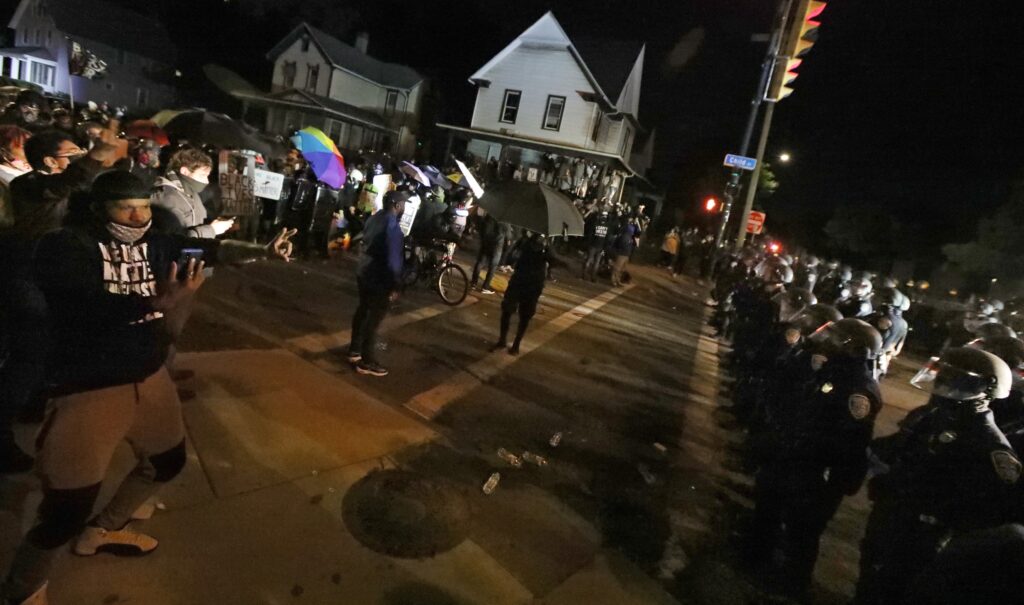
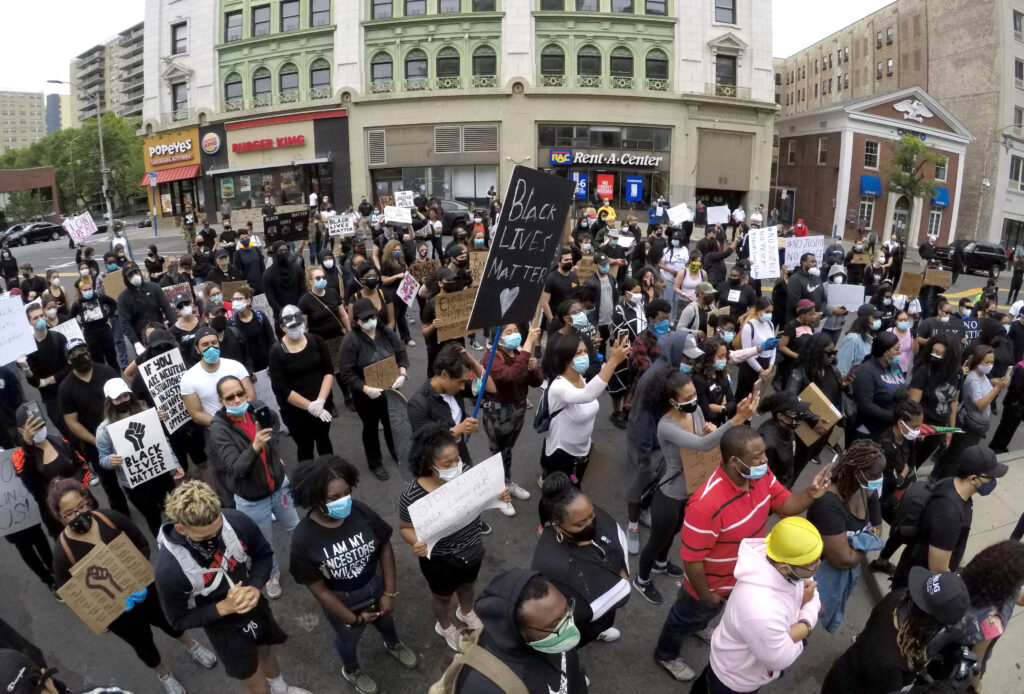
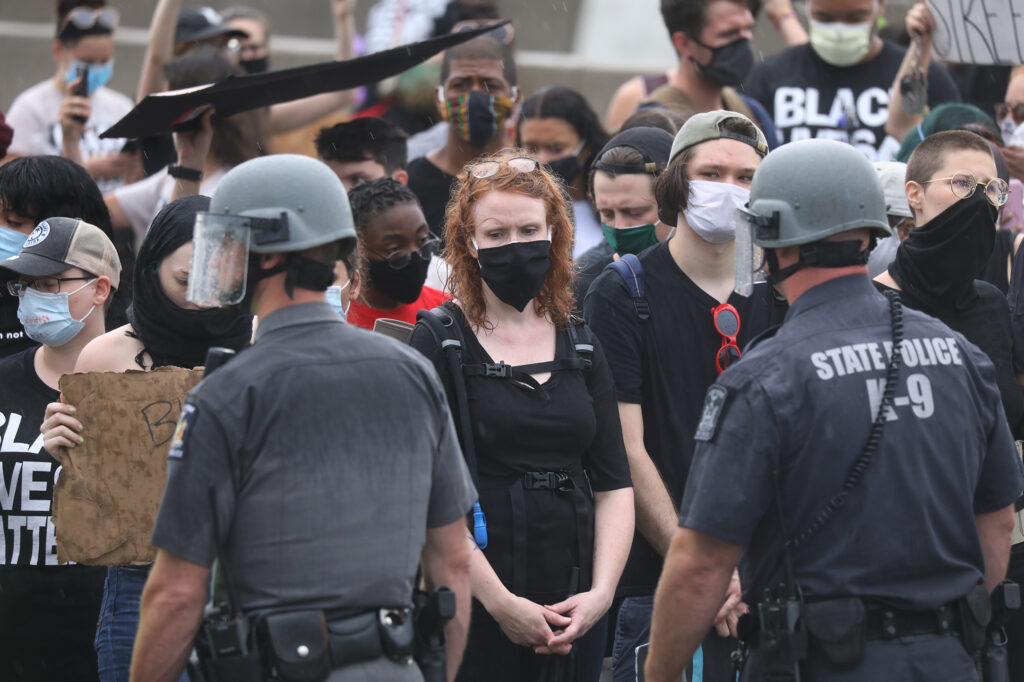
Then in 2020, state lawmakers repealed that measure in response to a social justice movement, as protesters in the streets chanted names of civilians who died at the hands of officers across the state. They spanned from Ortanzso Bovell’s fatal shooting in 2008 and Eric Garner’s chokehold death in 2014 in New York City to Daniel Prude’s restraint-related death in Rochester in 2020.
State Senators Jamaal Bailey, Sepúlveda and Ramos championed the 50-a repeal, with both Ramos and Sepúlveda specifically referencing Garner’s death as a catalyst for the reform in recent interviews.
Ideally, allowing public access to police disciplinary records should have made it easier to hold officers accountable. In practice, however, many departments have been slow to release full sets of records, hindering attempts to find ways to better prevent misconduct — or discipline officers when it occurs.
The 50-a repeal marked a step toward increased transparency, Sepúlveda said. But officer misconduct and discipline files should be more easily available, he added, asserting state officials could create an online portal to streamline the process, citing the city of Minneapolis’ public officer misconduct complaint dashboard.
Many records in New York are currently only accessible through Freedom of Information Law (FOIL) requests, which are often delayed or denied by departments, resulting in legal fights, including lawsuits pursued by the USA TODAY Network.
“You should be able to see if a particular member of law enforcement has complaints, things like use of force complaints, violation of constitutional rights complaints, it should be open and apparent,” Sepúlveda said.
“If I have a member of law enforcement who carries a weapon in my community, policing, I’d like to know if there have been many use of physical force complaints against this member of the police department,” he added.
Sepúlveda referred to transparency as the beginning and endpoint of police reform, using body cameras as an example.
“Most people are smart enough to know that if they’re being watched, or summarized, or reviewed — invariably, they’ll behave better,” Sepúlveda said. “With transparency, you cure everything else.”
Why transparency helped reveal wandering officers in NY
To understand the power of transparency, consider the fact that growing concerns about wandering officers surfaced after journalists, nonprofits and others began digging into discipline and misconduct records revealed due to the 50-a repeal.
The records have helped the public understand what types of complaints police departments are receiving about officers, as well as what they’re doing about those complaints, said Rachel Moran, a University of St. Thomas School of Law professor who researches police accountability.
The repeal — and subsequent case law — has also increased the availability of records for lawyers, allowing them to better assess the credibility of officers involved in cases, Susan Bryant, executive director of the New York State Defenders Association, said.
“The repeal of 50-a has allowed for greater awareness and transparency, not just among public defenders, but the public as a whole,” Bryant said in a statement.
Why decertification cases are difficult to investigate in New York
While some decertification details are made publicly available by DCJS through a database known as the Central Registry of Police and Peace Officers, it remains difficult to obtain key information about specific cases.
Employers are obligated to report removals for cause, or resignation or retirement due to allegations of misconduct, to DCJS to update its records and registry. The database is currently listed on its website and is said to be updated monthly, despite the nearly yearlong delay in updating it recently.
Once the state decertification information is verified, DCJS sends it to the National Decertification Index, Kirstan Conley, deputy director of public information for the Department of Criminal Justice Services, wrote in a statement to USA TODAY Network.
But this investigation raised questions about what information gets reported to DCJS — and whether law enforcement agencies are properly vetting candidates for public safety jobs.
One decertified peace officer was hired again in Oswego County just a few months after his case was closed, with the sheriff’s office then firing him during a probationary period amid questions from reporters about the vetting process. The agency asserted the firing was due to the officer failing to complete required training.
Nearly a dozen public-record requests seeking documents agencies provided to DCJS for decertified officers were also denied. Many law enforcement agencies asserted they didn’t have records, referring the request to the state agency.
But one sheriff’s office in Chenango provided its documents involved in an officer’s decertification, raising concerns about the overall process of reporting and tracking the information.
DCJS asserted it rarely receives more documentation and information related to a decertification, giving the examples of an officer who challenges their decertification or if an agency is making a correction.
‘The buck stops with DCJS’
Reporters also found a discrepancy between DCJS data and officers’ employment data involving a decertified Syracuse University Department of Public Safety officer.
Responding to questions about the situation, DCJS’ Conley said, “Records released by DCJS in response to a FOIL represent what was reported to, and received by, our agency.”
Previously, in October 2021, that same decertified officer filed a petition to appeal his firing and decertification, to which a New York Supreme Court judge ruled that Syracuse University’s report to DCJS contained “material inaccuracies,” but validated the decertification.
The state defense attorney group has also seen inconsistencies in various discipline and misconduct documents produced at different times, Bryant said.
The policing expert, Mayers, emphasized that DCJS is responsible for correcting any discrepancies or lack of transparency. If there is confusion with the state’s database, he said, they’re the ones responsible for making it more clear to the public.
“The buck stops with DCJS,” Mayers said.
Danielle Gilmore, a public policy expert who studies police accountability policies, suggested creating a federal database of records would benefit agencies during the hiring process, citing examples of officers who have been decertified and rehired in other districts because the agency did not check a decertification registry, such as the National Decertification Index, during the hiring process.
“From what it sounds like, even though compliance and reporting is formally and legally mandatory, it might not be happening to the extent that it should,” the law professor O’Rourke added.
Addressing questions about oversight and accountability, Conley said, “The decision to hire, discipline or fire an officer is subject to not only state law and regulations but also local law, agency policies and collective bargaining agreements with unions.”
“If an officer is removed for cause,” Conley added, “the employer is statutorily required to report specific information related to the officer’s removal to comply with the decertification reporting requirements.”
What law enforcement says about decertification
Some law enforcement agencies and officers, however, criticized the reform push targeting police discipline records and decertification.
One of the seven decertified peace officers from the University of Rochester questioned whether the process is “actually fair,” asserting he deserved a second chance to protect the public.
Some police unions have also sought to keep misconduct records private and worked to secure agreements with municipalities to block the release of the disciplinary records.
Moran, who studied law enforcement administrators’ reactions to the increased public access to misconduct records, was surprised to find how many administrators supported the disclosure of records. Unions, however, are typically “very, very opposed” to release of records, she added.
“The ones who did (support) tended to say that they found it helpful in building trust in the community to be more transparent about disclosure of records,” Moran said, adding opposition stemmed from worries about reputational harm to officers and public misreading of complex issues.
What’s next in our investigation
Our reporting is also digging into other lingering barriers to police reform, including officer misuse of social media and the federal government’s role in addressing misconduct in the Mount Vernon Police Department.
That includes concerns surrounding federal oversight of police that emerged under the Trump Administration after the Department of Justice’s Civil Rights Division announced in May 2025 it would dismiss several police investigations initiated during former President Joe Biden’s term.
This announcement meant the department would not only close the investigations, but also retract the Biden administration’s findings of constitutional violations in six police departments, including in Mount Vernon in Westchester County.
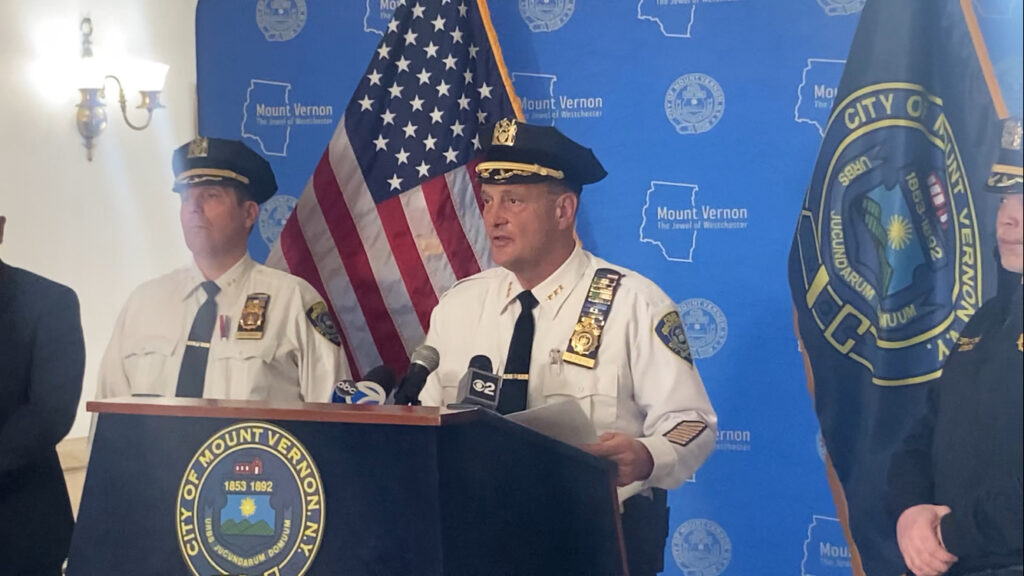
Mayers said the DOJ no longer taking on practice investigations and consent decrees reflects a “de-evolution” of police accountability rather than a “progressive evolution” that was seen following the 2020 social justice protests.
“I would say leading up until, you know, 2025 when this new administration took office, we did see a lot of leaps and bounds in police accountability,” Mayers said, calling post-2020 progress in DOJ oversight of police misconduct the “best ever prior to this administration.”
Now, advocates and lawmakers on the state level are looking at decertification as a way to hold officers and departments accountable amid gaps across the civil, criminal, administrative and federal landscape.
“We don’t have any of these levers that we typically rely on to hold law enforcement accountable like in our toolkit,” he said. “So, is there another lever? And there is, and that’s where decertification comes into play.”
About this project
This story is part of a series called Shielded From Consequence, looking at the decertification of law enforcement officers in New York. The series is produced in partnership with the USA Today Network, Central Current and Syracuse University with reporting students from the Newhouse School.

is a digital producer for The NewsHouse.

is a contributor for The NewsHouse.