
Inaccurate list of SU ‘sunset’ programs causes student, faculty confusion
Inaccurate SU ‘sunset’ programs causes confusion
The newly released list from the university still includes only 85 of 93 majors announced as closed or paused. The initial announcement mentioned programs that weren’t actually canceled.
Editor’s Note: This story was updated Tuesday, April 7, with confirmation from Newhouse School officials about the Academic Portfolio Review process.
Syracuse University has released an updated list of the programs it plans to sunset following an initial website release that caused confusion. The new list still only cites 85 of 93 impacted degree plans, but now addresses low enrollment, consolidation, whether the program was closed before the academic review or whether the program is “operational and demand alignment.”
A list of closed and paused programs announced by the university Thursday morning, which has since been taken down, listed 85 programs as closed or paused and had misleading and incorrect information. Programs were listed as closed, even if they weren’t. Others were listed as canceled even if they were only being renamed or had not been taught by the school for years.
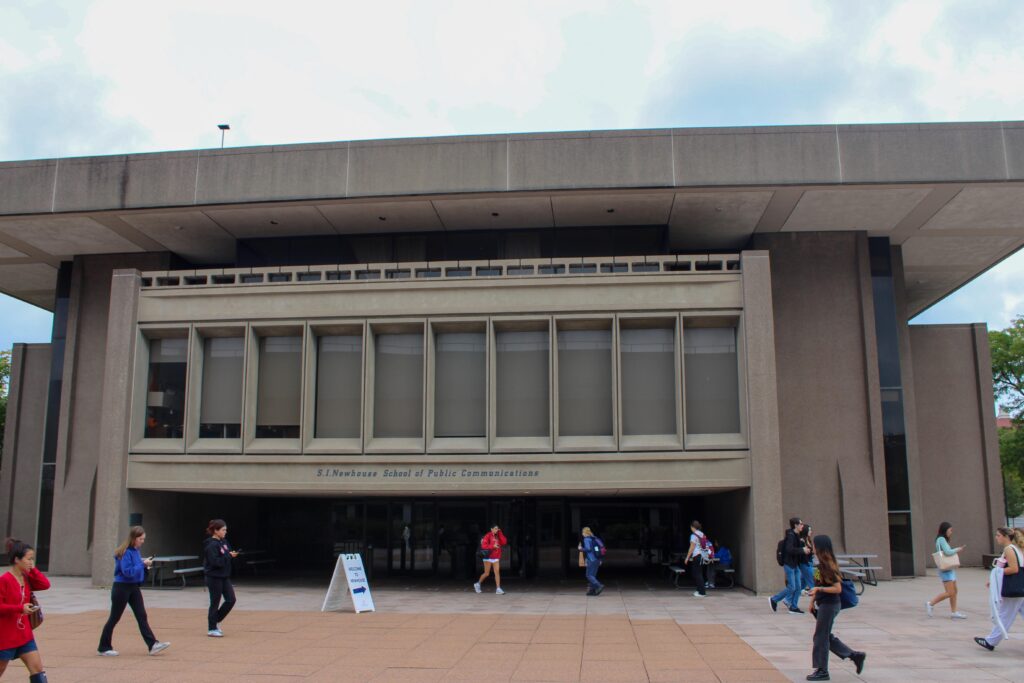
“ I think that it paints the wrong picture,” Associate Dean of Graduate Programs at the Newhouse School of Public Communications Carolyn Hedges said of the initially listed programs that lacked further information.
The list released on April 2 read that Advertising, New Media, Photography and Television, Radio and Film Masters programs in the Newhouse School were being closed or paused. The programs are actually either being consolidated or transitioning to different degree types.
Hedges confirmed the Newhouse programs originally listed were in the process of closing or matriculating into other degrees. Some of the programs, like advertising, were in the process of transitioning from a Master of Arts (M.A.) to a Master of Science (M.S.), Hedges and the university reported.
In the School of Education, the university’s initial press release listed the Inclusive Elementary and Special Education Teacher Prep bachelor’s program as “closing.” In reality, the program is changing its name to Inclusive Childhood Education.
Hedges said she doesn’t think the university intentionally tried to confuse colleges by releasing the list, but said she personally had no contact with the administration before the announcement.
Newhouse School Dean Mark Lodato said deans of the colleges on campus were aware of the review process and timeline as it was happening.
“The academic portfolio review process has been going on for more than eight months now,” Lodato said. “As a dean, I feel that I’ve been very plugged in and frankly participatory in all of these months since. The Provost’s office actually alerted deans as to the timeline of some of these announcements along the way.”
Hedges said the listed Newhouse programs had been closed for at least a year as they transitioned from an M.A. to an M..S., but were still offered to prospective students. She said some of the programs had to remain open for at least two years after their initial closure, with no enrollment, so current students could finish their degrees.
Newhouse did not officially submit any programs for closure during the portfolio review process, Hedges said. Lodato emphasized the Newhouse programs were already closed on the school’s end and were only included because they are closing at the state level.
She said programs, like the Advertising Master of Arts, have no active members. But the Master of Science program does have an active cohort.
The programs were still listed as active through the state, though they weren’t being offered at the university, spokespeople for both Newhouse and the School of Education said.
“I don’t know why that is,” Hedges said. “I do know that there is formal paperwork you have to submit when you close a program.”
Associate Dean of Academic Affairs Aileen Gallagher said a review of programs happens in order to keep accreditation for the university, where enrollment, class sizes and graduation rates are all reviewed. She said that process usually happens every eight years, and SU submits twice during that frame, typically.
“There is a mechanism for program review,” Gallagher said. “This particular round was the first time that there was the outcome of closing a lot of programs.”
The NewsHouse has reached out to the university for comment and is currently confirming the status of programs with the colleges.
The majors and programs announced as being sunset did not align with the School of Education’s internal reviews, said School of Education Director of Marketing and Communications Martin Walls. The school has been conducting a program review since 2021 and has already phased out some programs.
“They say we had nine programs closed, and that’s an inaccurate number,” Walls said. “The sum of what is listed in those bullet points does not reflect the current program review that we have been doing since 2021.”
The New York Times reported on the programs’ closures, causing concern for families visiting Friday for an Orange Preview day, aimed at prospective high school students, according to a visiting family speaking with The Newshouse. Hedges said graduate school applicants asked questions.
“ I actually had a couple of applicants say, ‘What am I gonna do now that my program isn’t offered?’” Hedges said. “I’m like, ‘Oh, no, it’s still being offered.”
Of the programs included in a new list published by the Office of Institutional Effectiveness, 13 were listed as “no student enrollment.” 55 programs were cited in the initial email from Provost Lois Agnew. Nine programs lacked clear reasoning for closure or pause and others listed reasons such as consolidation into other programs.
The new list also marks programs that were technically closed before the academic portfolio review, which started last August, but are now closing at the state level.
“As the university is going through and doing a little spring cleaning, these are programs that we don’t even have anymore,” Hedges said. “It’s not technically wrong, but those weren’t part of the practice of like, ‘Are we gonna reimagine something? Are we gonna pause it? Are we gonna get rid of it?’”
Hedges said the process is long and arduous, and wants to work on making it clearer for the future. She said she hadn’t spoken to faculty at other schools at Syracuse, but noted that this was a major process taken on by Agnew and other academic officials.
“At the end of the day, I don’t feel like I was left in the dark on something, but I do feel like it’s something I wanna clarify,” she said.
Lodato said processes like this help keep the university’s programs efficient and healthy.
“At the end of the day, faculty are very, very valuable resources and we want to deploy them in the strongest way possible to ensure that Syracuse University succeeds,” Lodato said. “Sometimes that means making changes that can be difficult for some, but our goal is to ensure that we’re meeting the needs of our students in 2026 and beyond.”
A full searchable list of affected programs is available in the table below, as provided by the university. Click here to view the full table in a new window.

is News Co-Lead Producer for The NewsHouse.

is a News Co-Lead Producer for The NewsHouse.