
All the world’s a stage and everyone is streaming it
All the world’s a stage and everyone is streaming it
What is considered one of the oldest forms of live performance is now making its way online through social media.
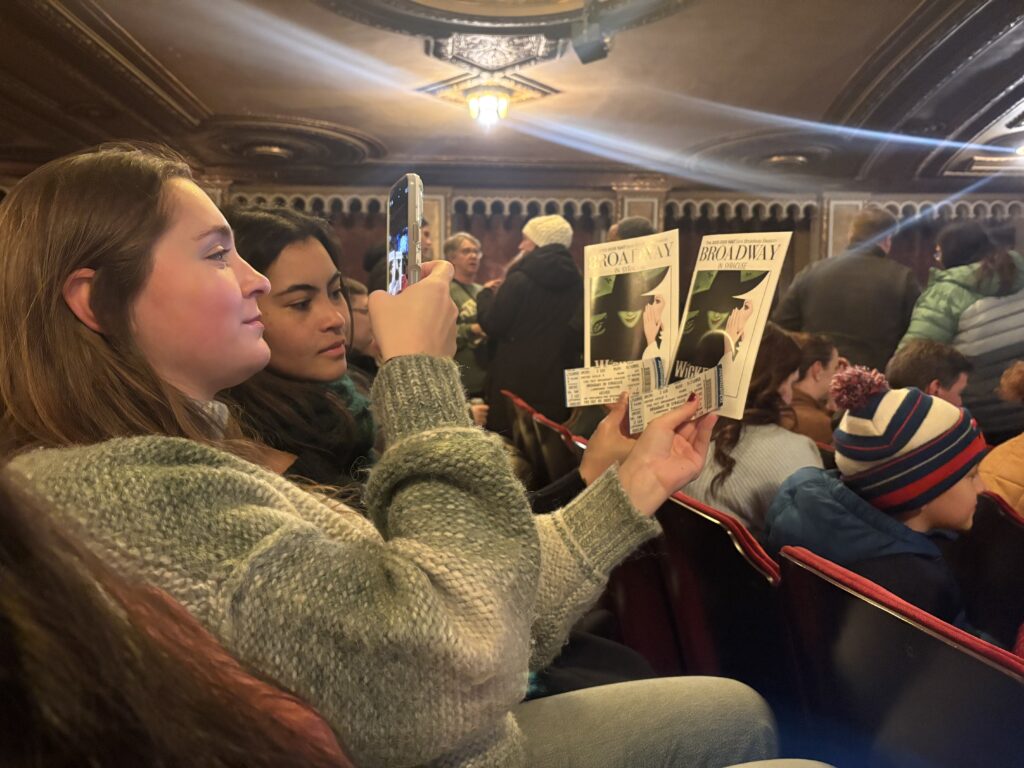
When Syracuse University’s First Year Players, a student-run theater group, posted TikToks promoting their production of “Legally Blonde,” they did not expect the videos to blow up.
One of the most popular videos on the organization’s TikTok features Tori Gill, the actress playing Elle Woods, in the iconic pink blazer set. Gill mouths along to a line from the movie before the camera pans to reveal the rest of the cast behind her as they dance along to the music. The video garnered over 4,000 likes, with many of the comments praising Gill’s performance.
Since the COVID-19 pandemic, the relationship between theater and social media has reached an all-time high, making theater more accessible to people who might not have interacted with it before. The pandemic also opened the door to new marketing opportunities for shows. Although social media has helped expand the theater community, people have raised concerns about how it may hurt regional theaters.
Due to the reach of platforms like TikTok, the FYP videos not only appeared on the social media of local SU students, but reached theater fans across the country.
“I heard from my friends at home that they saw our viral TikTok or this post,” said Mario Esteb, co-president of FYP. “So, (FYP) definitely grew outside of Syracuse, which we want to do as well.”
It’s not just FYP that has grown due to social media — the entire theater community has progressed. The epicenter of American theater, Broadway, was once only accessible to those who could afford a trip to New York City. Now, due to social media marketing and soundtrack album releases, Broadway and the theater community are more accessible than ever.
“That’s when I really started learning about Broadway, when social media grew and took off,” said Camille Jett, a Missouri State University Bachelor of Fine Arts musical theatre graduate and now NYC-based actor.
Growing up in Texas, Jett, like many theater kids, was first exposed to Broadway online. Since the rise of mainstream social media, many Broadway shows have leaned into social media marketing. If you scroll through a Broadway show’s social media page, you will come across a variety of photos and videos. This includes behind-the-scenes videos, the cast or crew members doing an online trend or clips of the show — all aiming to draw in audience members and boost ticket sales.
“Broadway is being marketed to Gen Alpha, like pretty explicitly. It’s really changing the landscape of the public image of these shows,” Jacob Kerzner, an associate professor of musical theater at Syracuse University, said.
One example Kerzner gave of Broadway marketing aimed at younger audiences is “Maybe Happy Ending” use of memes for marketing the show. These memes often center around HwaBoon, a non-sentient potted plant that one of the main characters often talks to. The show’s Instagram page features memes of HwaBoon, including edits that turn the plant into a balloon in the Macy’s Thanksgiving Day Parade, a mock Saturday Night Live line-up announcing HwaBoon as both host and musical guest and a parody of a People Magazine cover naming HwaBoon “The Sexiest Plant Alive.”
These posts not only entertain the community but require engagement. The memes are often the most commented posts on the official “Maybe Happy Ending” Instagram page. Fans of the show routinely repost, providing free marketing.
FYP going viral on TikTok not only drew in potential audience members and ticket sales, but also helped get people interested in the organization, FYP co-president Nirai Kabilan said.
“I think we lost a little bit of momentum with our growth in the COVID years and then I feel like it’s really coming back now,” said Kabilan. “We are really seeing that upward growth with ‘Legally Blonde’ from last year.”
While the intertwining of theater and social media has worked to grow the theater community online and off, there is concern about how social media marketing by large Broadway shows impacts smaller local and regional theaters who put on original productions.
“For example, where we live in Syracuse, New York, right now — ‘Hamilton’ was here on tour at the same time as the ‘Hello Girls’ at Syracuse Stage,” said Kerzner. “What do you think most people are going to go see in the city of Syracuse? They’re going to go see the thing that they’re seeing marketed to them on social media, this touring show where the money goes back to New York.”
Even though the majority of theater fans who interact with the theater community online are younger, they are not always the ones who make up the majority of attendees.
“I work in the box office and there you can (see) at Syracuse Stage and it’s really sad seeing like the groups of people that are buying tickets,” said SU student Aliana Aspesi. “Every single show, about 90% are older than 60.”
Now that theater fans across the world have unfiltered access to Broadway shows and performers via social media, a growing number of performers are receiving hate online for their performances.
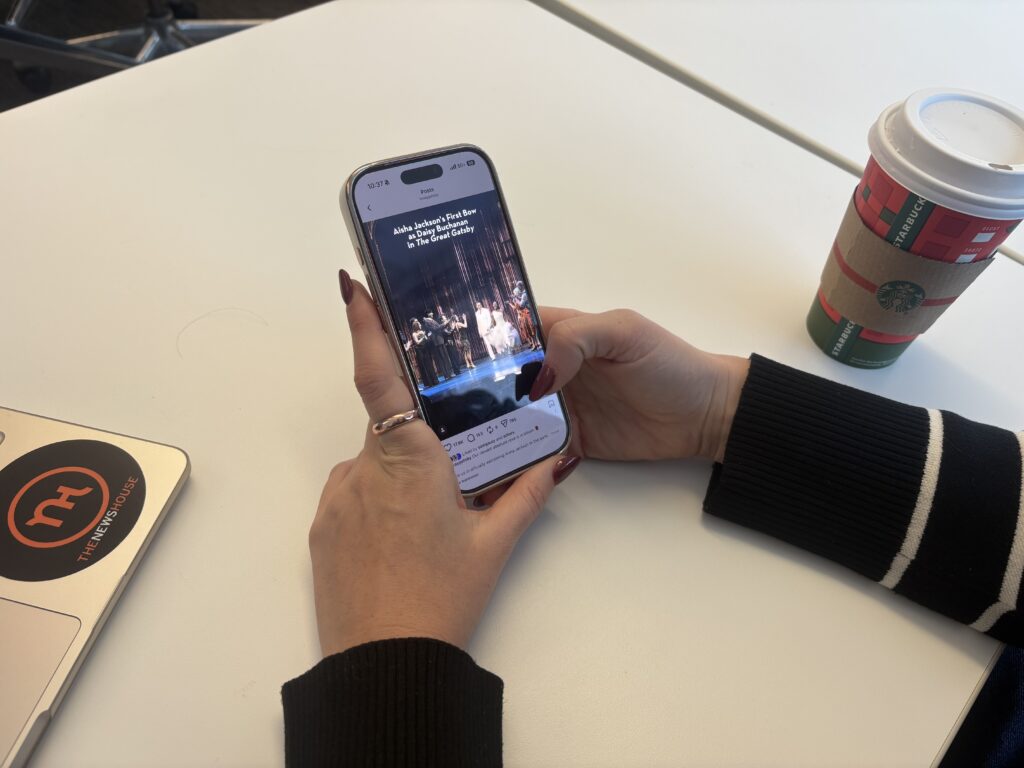
“I think of social media as a bit of an echo chamber. That can be great, and that can be terrible,” said Kerzner. “The humanity behind these people gets lost really quickly.”
When Carrie Hope Fletcher was announced as the lead in “Heathers: The Musical,” she faced a wall of online hate from people who claimed she was “too fat” for the role. Fletcher later stated the hateful messages made her question her ability to perform the role. She said she felt like “the most hated actor in London.”
The relationship between social media and theater has also led to conversations about stunt casting. Stunt casting occurs when producers cast a notable name, often someone who is not a theater performer, in a show to draw attention to it.
“People are being cast because of their notoriety, because of their fame. It’s not new,” Kerzner said. “I’m not claiming that social media has created this, but how does that change what expectations we have of famous actors to be engaging with their social media or not?”
An influencer-based stunt casting occurred at the beginning of December when “The Secret Life of Mormon Wives” star Whitney Leavitt was announced as the lead in “Chicago” on Broadway. Leavitt rose to fame on TikTok and has since appeared in the latest season of “Dancing with the Stars.” Although “Chicago” is known for its stunt casting, this is the first time they have casted a social media star.
The use of influencers in stunt casting is a form of marketing that aims to draw in audiences and boost revenue. However, it also has the potential to take away jobs from up-and-coming actors in an already competitive industry.
As social media continues to cement its place in theater marketing, some people worry that audiences may lose interest in seeing shows live and instead prefer watching clips of them online. Aspesi believes the people truly interested in theater will always favor seeing shows in person.
“I just think (Theater) is one of the most beautiful art forms,” Aspesi said. “It is so important because it’s so collaborative and it’s a live experience that you will never find anywhere else.

is Lead Entertainment Producer for The NewsHouse.