
SU non tenure-eligible faculty, postdoctoral researchers vote in favor of union
SU non-tenured faculty, postdoctoral researchers vote in favor of union
Three-quarters of eligible faculty voted this week to unionize in hopes of addressing workload and job protection issues.
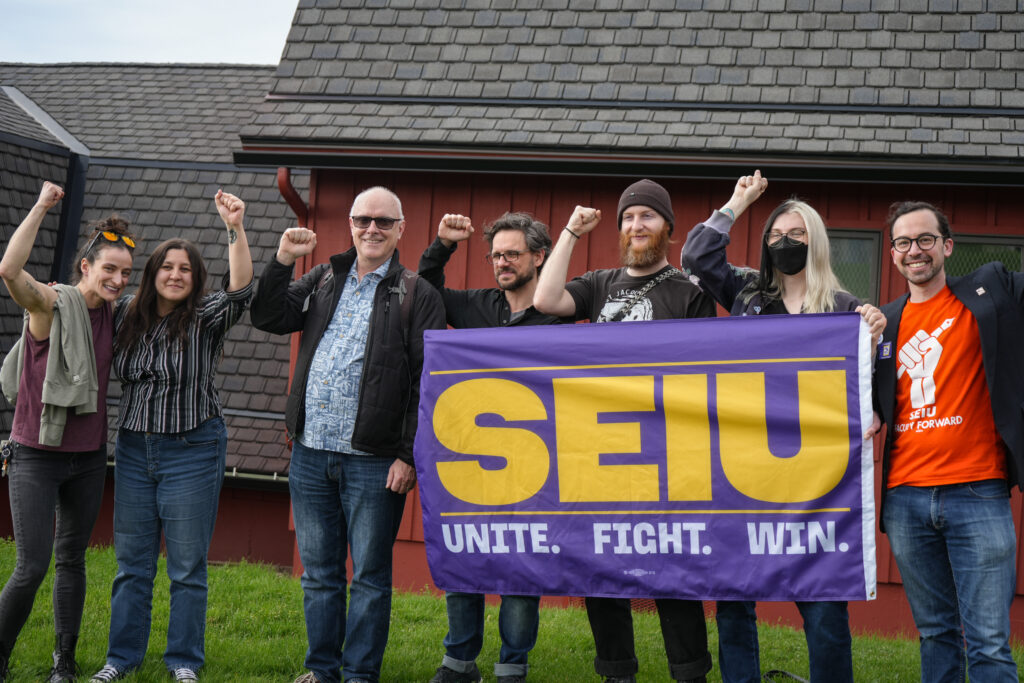
Syracuse University non tenure-eligible faculty and postdoctoral researchers voted Thursday in favor of unionizing following a two-day, campus-wide election.
The final results were announced as 168 in favor (76%) and 53 against (24%), forming a union representing 350 eligible faculty members. The election was facilitated by the American Arbitration Association.
“It’s really exciting knowing that the turnout was as positive as it was because you never know,” said Ryan Tabrizi, a union organizing committee member and communication and rhetorical studies assistant teaching professor. “Just seeing how many people came to vote yes made the organizing feel even better.”
Organizers of the efforts said the union’s goals would be to secure lighter workloads, increased job protections and more transparency for non tenure-eligible faculty members and postdoctoral researchers, who represent 20% of SU’s faculty. Non tenure-eligible faculty include professors of practice, teaching professors, and post-doctoral researchers. Other non-tenured faculty include adjunct faculty and tenure-track faculty. Adjunct faculty are represented by a different union, while tenure-track faculty are tenure eligible.
Though there are no formal demands of the administration, communication and rhetorical studies assistant teaching professor Ariel Gratch said the voters’ approval will enable them to collect the eligible faculty’s input on a plan to improve work conditions.
Union talks started last October after a document outlining non-tenured faculty and postdoctoral researchers’ expected workload circulated. Gratch said the document failed to take into account extra commitments like non-credit hour teaching hours, advising and internships.
In the past, non-tenured faculty and the tenured and tenure-track faculty had similar workloads. Now, non-tenure-track faculty have more classes to teach, whereas tenured faculty have had their teaching load reduced, Gratch said.
In a public support letter signed by more than 60 tenured and tenured-track SU faculty members, union organizers state that, as 19% of the faculty body, non-tenured track professors are responsible for 33% of credit hours. It also states that extra work like independent studies, training TAs, mentoring, supervising, and administrating programs is unpaid and unrecognized.
“In the last couple of years, there’s been lots of changes in higher education, and Syracuse has not been immune to those,” Gratch said. “Administration has been working to figure out how to deal with those changing tides in the country and in higher education, but I think that some of that work has felt so rushed that there was not adequate consultation with the faculty.”
Tenured track professors can be terminated only for cause or under extraordinary circumstances. They also can’t be fired for what they teach, said Matt Huber, former president of SU’s American Association of University Professors chapter, a faculty advocacy group.
Non-tenured faculty members, who work on a contract, don’t have these same protections. Without tenure, a union will allow collective bargaining rights, Huber added.
“They’re just sort of contingent and precarious faculty,” Huber said. “You are always fearful that if you say the wrong thing, you could be fired.”
For Mitchell Schiworski, a postdoctoral researcher in the physics department, the lack of protections for non-tenured staff looms large. Schiworski is Australian and relies on his contract being renewed annually to remain in the United States, he said.
Although Schiworski’s immigration status automatically renews with a new contract, and is legally in the United States, his visa status does not, he said. To renew his one-year visa, he would need to return home to Australia and schedule an appointment at the American embassy there.
“For me, the last I have been effectively trapped here,” he said. “I can’t afford to fly all the way back to Australia. It’s $2,000 in flights and 36 hours each way. And I can’t do that just for a 10 minute visa appointment.”
Schiworksi has not seen his family since beginning as a post-doctoral researcher at SU in July 2024. He has been unable to attend international conferences and believes that the university should offer more assistance with visa renewals.
Schiworksi, a member of the union’s organizing committee, argued that his one-year contract would negatively affect his work and students.
He works with graduate students whose projects span four or five years, without knowing whether he will be there for the entirety of their projects.
“I only have one year of security and so it’s hard to engage with them on a project that might take two year’s time because I can’t even promise that I’ll be here,” Schiworksi said.
Adjuncts United Union, which formed in 2005 to represent part-time faculty, now has academic freedom language in their contract after unionizing, Huber said.
Non-tenured union organizers worked with Service Employees International Union Local 200United, or SEIU. The organization aided in SU’s prior unionization efforts — representing graduate students, who unionized in 2023, and administrative, technical and professional workers, who unionized in 2024.
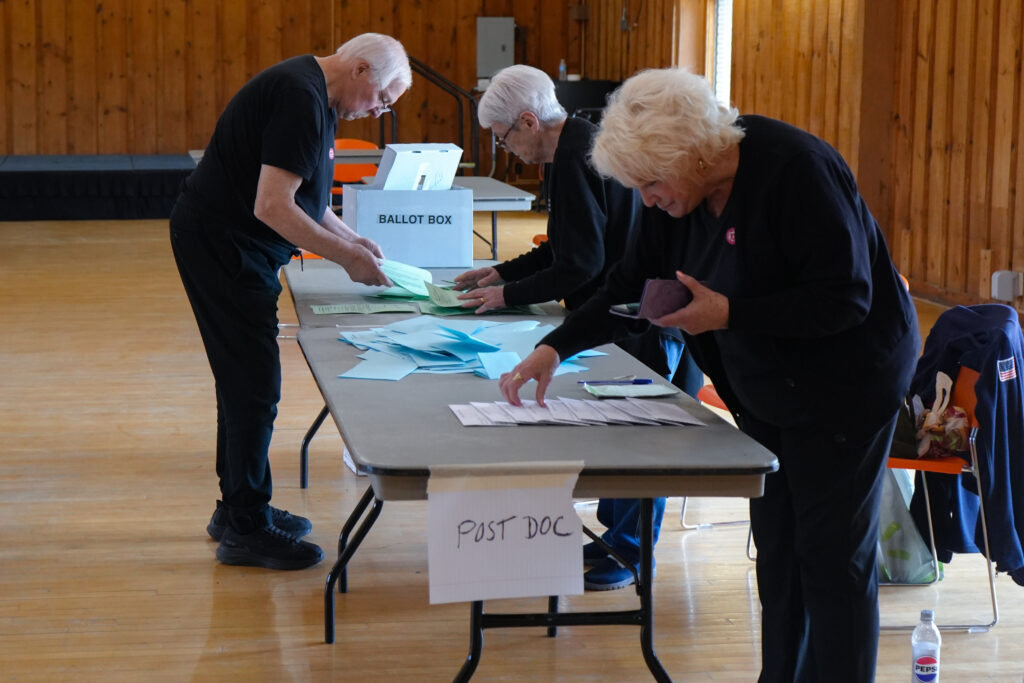
The union vote also comes during a shift in administration as Mike Haynie begins his term as chancellor after former Chancellor Kent Syverud stepped down last week due to a brain cancer diagnosis. Haynie served as Vice Chancellor during SU’s previous two unionizing efforts.
On Wednesday morning, Karen A. Doherty, the Senior Associate Dean of the College of Arts & Sciences, sent an email to the school’s faculty. It encouraged faculty to vote, but outlined “benefits provided by the university” and included “some additional considerations.”
The email focused on risks to union membership, particularly that joining a union will not guarantee improved pay, benefits or working conditions. It also stated that problems taken to a union representative could be instead addressed by SU department supervisors.
“In any collective bargaining, employees may get more, may get less, or pay and benefits may stay the same,” the email, obtained by The NewsHouse, reads. “Regardless of whether bargaining results in better, the same, or worse employment terms, you will likely still be required to pay dues to the union.”
The union organizing committee believes that the email from Doherty violated the University-Union election agreement, a private election agreement obtained by The NewsHouse that non-tenured faculty and postdoctoral researchers negotiated with the university on April 10.
“The parties agree that neither will conduct itself or communicate in a negative, derogatory or demeaning way about the other party, or about labor unions or employers generally,” the private election agreement reads. “Furthermore, neither party will engage in conduct, threats, misrepresentation or delaying tactics.”
The agreement does state, however, that “nothing in this Agreement will preclude the University from issuing electronic messaging to the University community.”
“It’s very clearly anti-union messaging,” Rusty Bartels, an associate teaching professor in the College of Arts & Sciences and member of the union organizing committee, said.
Now that the non-tenured faculty have voted to unionize, union representatives will distribute a “bargaining survey” where members can share what they would like to see in a union contract. Then, union members will elect a bargaining team made up of representatives from each school of study at SU. The bargaining team will first negotiate a “tentative agreement” with the university, which can take around a year. Then, the union membership will vote to either approve or deny the tentative agreement.
Mitchell Schiworksi understands that negotiating a new contract will take years, likely barring him from leaving the United States indefinitely, but he is hopeful for the future.
“It might not come in time to help me personally, but the next person in my shoes is definitely not going to have to deal with the same visa uncertainty,” he said.

is the assistant executive producer for TheNewsHouse.

is a News Co-Lead Producer for The NewsHouse.