Anthropic wants to go public. What does that mean for students?
Anthropic wants to go public. What does that mean for students?
The company behind Claude is preparing to go public, raising questions about AI spending, profits and what investors are willing to pay.
Last September, Syracuse University announced a partnership with Anthropic, expanding students’ access to Claude, an AI tool that can help break down difficult topics, organize notes and write computer code. In May, Anthropic was valued at $965 billion. Now, the company is preparing to let investors own a piece of the pie.
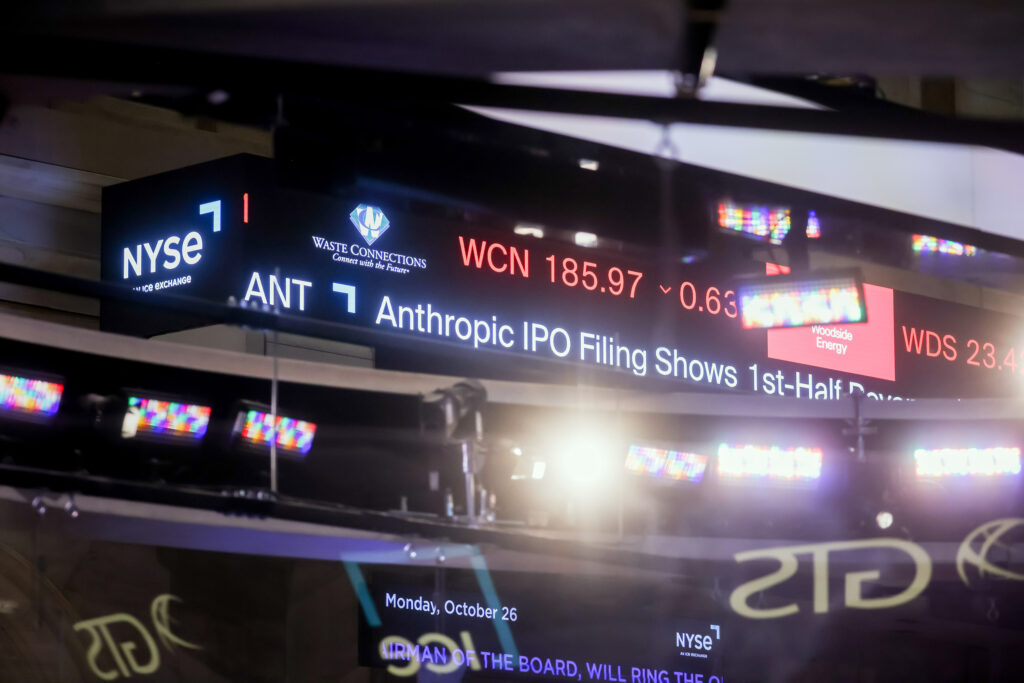
On Oct. 26, Anthropic announced that it had filed paperwork for an initial public offering (IPO), planning to list its shares on the Nasdaq Composite under the Ticker Symbol “ANT.” Its updated Nov. 2 filing left the share price and offering size unspecified, and filing paperwork does not mean the IPO will be completed.
Are potential shareholders buying a stake in the future of AI, or a money pit?
An IPO is when a company first offers shares to the public. Each share represents a small ownership stake. Selling new shares raises money for the company. Existing shareholders may also sell their holdings, but the money from those sales goes to them rather than to Anthropic.
For SU students preparing to enter the workforce, Anthropic’s potential IPO raises questions about how investors value AI and bet on its future. Those bets could help shape the tools students use and the skills future employers expect from graduates.
Building AI is expensive. Anthropic disclosed nearly $900 billion in future spending commitments, primarily for computing and infrastructure, with roughly $70 billion due to be spent within the next 12 months.
Tyler Neary, co-founder of United AI, a student-led AI organization at Syracuse University, believes that Anthropic’s spending strategy carries significant risks despite its potential benefits.
“I think the strategy overall makes sense, but the scale of the commitments is potentially very, very dangerous,” Neary said.
Those commitments represent future payments under purchase agreements and leases, rather than money already spent. Many of Anthropic’s major computing agreements are noncancelable, meaning the company must pay even if it does not use all the capacity it reserved.
The company reported $17 billion in revenue from July through September 2026, alongside a $567 million operating loss, meaning operating expenses exceeded revenue. That loss narrowed from $3.1 billion during the same quarter last year.
“Seeing people consistently use and pay for tools that help them take on tasks that would otherwise require years of training would give me confidence that the value can support the computing investment,” Neary said.
Anthropic isn’t alone. OpenAI, ChatGPT’s parent company, saw a $12.3 billion operating loss during the second quarter this year, according to The Wall Street Journal. OpenAI is a private company, but both illustrate that demand for AI does not automatically translate into profits.
How, then, do investors decide how to evaluate these businesses? Investors can compare a company’s value with its revenue, although revenue does not account for expenses.
Neary explained that Anthropic’s valuation reflects investors’ expectations about what AI could eventually accomplish, rather than just its current financial performance.
“It’s all about the promises that Anthropic is making, right? Anthropic is promising that AI is going to be smarter than humans, and that is a very profitable promise,” Neary said.
SpaceX (SPCX) illustrates how high those expectations can climb. At its June IPO price, the company was valued at roughly 94 times its previous year’s revenue, according to Reuters. Investors were paying about $94 for each dollar of annual sales.
Excitement can also fade. Figma went public in Q2 2025 at $33 and closed its first trading day at $115.50. A year later, the stock was trading at $18.09, according to Forge’s IPO review.
These examples show why a popular company and an attractive investment are two completely different things. A business can grow while its stock disappoints investors who paid too much.
PitchBook analyst Harrison Rolfes has estimated Anthropic’s value at $1.42 trillion, below the roughly $2 trillion valuation previously discussed for its IPO. He warned that the company’s enormous future computing costs pose a risk to investors. Neary echoed those concerns, saying Anthropic needs to demonstrate “real, actionable use of AI in the workforce” to justify its valuation.
For students, the stakes extend far beyond buying shares. Anthropic’s filing describes products for education, coding and professional work. These tools could become part of their future workplaces.
The IPO will give investors another opportunity to assess the business behind the technology. The big question is whether future growth can justify today’s high expectations and eventually generate lasting profits that will satisfy investors.