
Do NY police get away with misusing social media? What records reveal
Do NY police get away with misusing social media? What records reveal
A joint USA TODAY Network-Syracuse University investigation found police in New York face limited discipline for social media misconduct.
A joint investigation between the S.I. Newhouse School of Public Communications, Central Current and USA TODAY Network-New York.
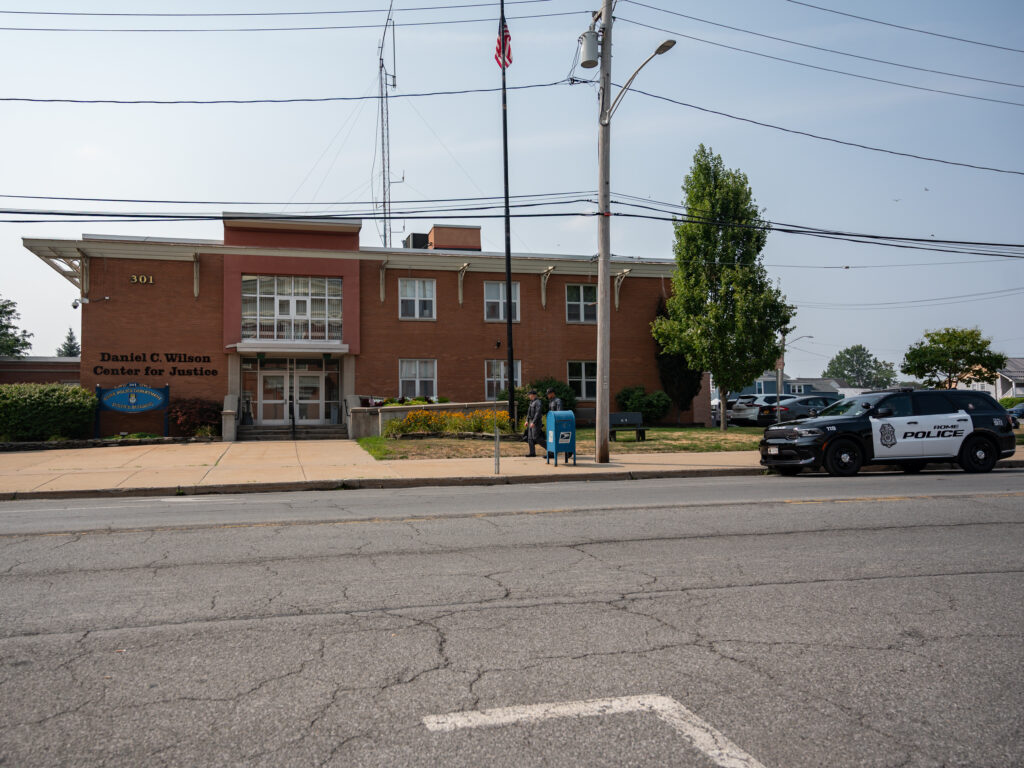
As the historic social justice movement gripped the nation in 2020, Sgt. Ferdinando “Fred” Pacicca III and his fellow Rome police officers were dispatched to a Black Lives Matter protest in a small city in upstate New York.
It wasn’t long before demonstrators found Pacicca’s public Facebook posts and read them over a loudspeaker, inflaming tensions as some in the crowd called him a “racist” and “pig,” records show.
After an internal investigation, the police department identified one of Pacicca’s posts on his personal Facebook account as racist. It involved him describing a Middle Eastern gas station employee as “Mr. Camel Man,” making fun of his accent while referencing the phrase “Allahu Akbar” and joking about placing a Post-it note to the worker on a “Scud missile.”
At the social justice rally, Pacicca had also inadvertently told a man — described by protesters as a known white supremacist — about future rallies and police department staffing levels, investigators noted, citing a social media livestream of their exchange.
Pacicca ultimately lost five vacation days and was required to attend sensitivity training as a result of the probe — a disciplinary outcome only fully coming to light now as part of a yearslong joint USA TODAY Network-Syracuse University investigation of police misconduct records.
A reporter reached Pacicca, who remains on the force today.
“There’s a lot more to the story than what was out there,” he said before declining to answer any further questions.
Rome Police Department’s current leadership didn’t respond to multiple requests for comment.
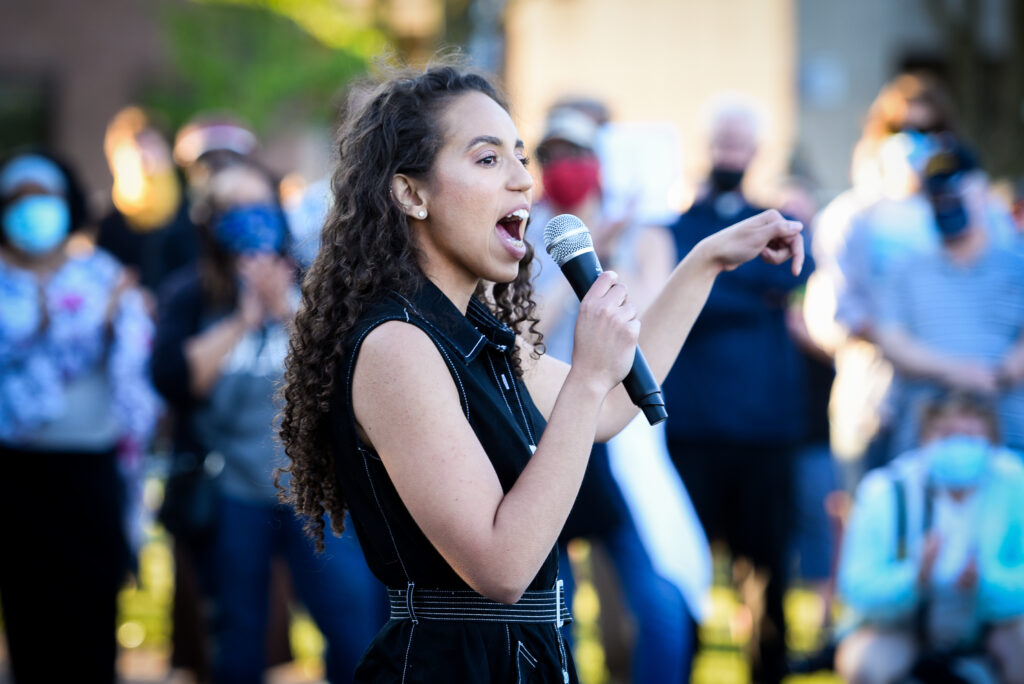
NY police face limited discipline for social media misconduct
Pacicca’s case, however, is not an anomaly. Through analyzing almost 150 pages of misconduct records and 50 pages of internal social media policies at New York police departments, journalists found that officers generally face minimal discipline for social media misconduct.
The finding stood in stark contrast to industries outside of law enforcement, such as education and entertainment, where employees have recently faced quicker and more severe punishments for their personal social media commentary.
The discrepancy becomes clear when looking at the wave of social media-related firings and suspensions that unfolded across the country after the killing of conservative activist Charlie Kirk in 2025. Over 100 people — around half of them educators — faced varying repercussions for posting controversial comments about Kirk’s death, USA TODAY reported.
At the same time, many police departments have vague guidelines for breaches in social media conduct, making decisions on a case-by-case basis. Policies are further muddled by the separation of an officer as an employee and as a private citizen themselves.
Some state lawmakers have also raised new concerns about the laws and regulations involved in firing police officers for misconduct, citing USA TODAY Network reporting on the process, called decertification.
New York police discipline records first became available after George Floyd’s death at the hands of Minneapolis police officers in 2020 sparked national protests. Amid that movement, New York legislators voted to repeal a law that had kept officer misconduct secret for decades, called section 50-a of the New York State Civil Rights Law.
For state Sen. Luis Sepúlveda, one of the 50-a repeal’s co-sponsors, it helped push police toward a “higher level of accountability” that he believes should be the expectation for any public servant.
Police should also expect to meet this level of accountability when it comes to their speech, Sepúlveda said in a recent interview.
“They should be the role models for our community,” he said. “If you have someone who has violent rhetoric in their social media or you have a white supremacist on social media who suddenly wants to be a police officer, do I want that person policing a community of color?”
What NY police records show about social media misconduct
Of the more than 2,500 records included in USA TODAY Network’s database of police disciplinary records, 13 cases involved officer misconduct on social media as a primary factor. Six out of the 13 occurred between March 2020 and October 2021 — during the height of the social justice movement.
Just one of these cases, in which an officer contacted a suspect’s wife on Facebook amid an investigation into a mobile methamphetamine lab, resulted in termination.
The remaining cases — ranging from one officer posting “vulgar language” to another making a post alluding to the police killing of an unarmed Black man in an allegedly mocking tone — resulted in suspensions lasting no more than a single week, written reprimands, verbal warnings, two days of sensitivity training and loss of vacation days.
In one case, an officer from the Greenburgh Police Department was reported by a civilian to the town supervisor for having published “sexist, insensitive and racist” tweets. The officer received no disciplinary action following the series of posts, which an internal investigation deemed weren’t “sufficient for discipline,” records show.
How New York police craft social media policies
Policing policies overall are generally decided on a department-by-department basis, and some departments work with outside agencies to help develop their internal policies, said Mike Ranalli, a former Glenville Police Department chief.
In turn, when crafting social media policies, he said, police departments must “balance the rights of employees with the rights of the agency.”
Ranalli currently works as a market development manager for Lexipol, a Texas-based company hired by thousands of public safety entities across the country to draft departmental policy. About one-third of the policies this investigation obtained were made using Lexipol’s services.
“[Police officers] also exist as private citizens, and so we have to be careful that our guidance to agencies doesn’t unduly restrict that of a private citizen,” Ranalli said.
Generally, departments allow their officers to post on personal social media accounts, Ranalli said. However, he said some private speech — such as when officers make “unsubstantiated allegations” about their department while off-duty — can cause issues.
In two misconduct cases from the Syracuse Police Department, officers posted content on Facebook criticizing other officers and the department, records show. These posts were seen as negatively impacting public perception of the department, and one officer received a written reprimand while the other lost two vacation days.
Are NY police held to a higher standard?
While many police officials, academics and legislators say police officers should generally be held to a “higher standard” of public behavior, the discipline they face for social media misconduct falls below the levels faced by some other professions.
In New York, a Naples school staff member was placed on leave for allegedly posting to a personal social media account a derogatory reference to Charlie Kirk’s death. In Rockland, a South Orangetown school trustee resigned after facing scrutiny for a post on Kirk. A school staffer in the Beekmantown district, near New York’s northern border, was also suspended for posting “inappropriate and insensitive” remarks about the assassination.
Private employees, journalists, lawyers, first responders and government workers have also faced repercussions after speaking publicly an on social media about Kirk.
Notably, talk show host Jimmy Kimmel was briefly suspended from ABC for his comments on Kirk after Federal Communications Commission chairman Brendan Carr addressed the situation. This move sparked intense backlash from the entertainment industry, and Kimmel was reinstated a few days after being removed.
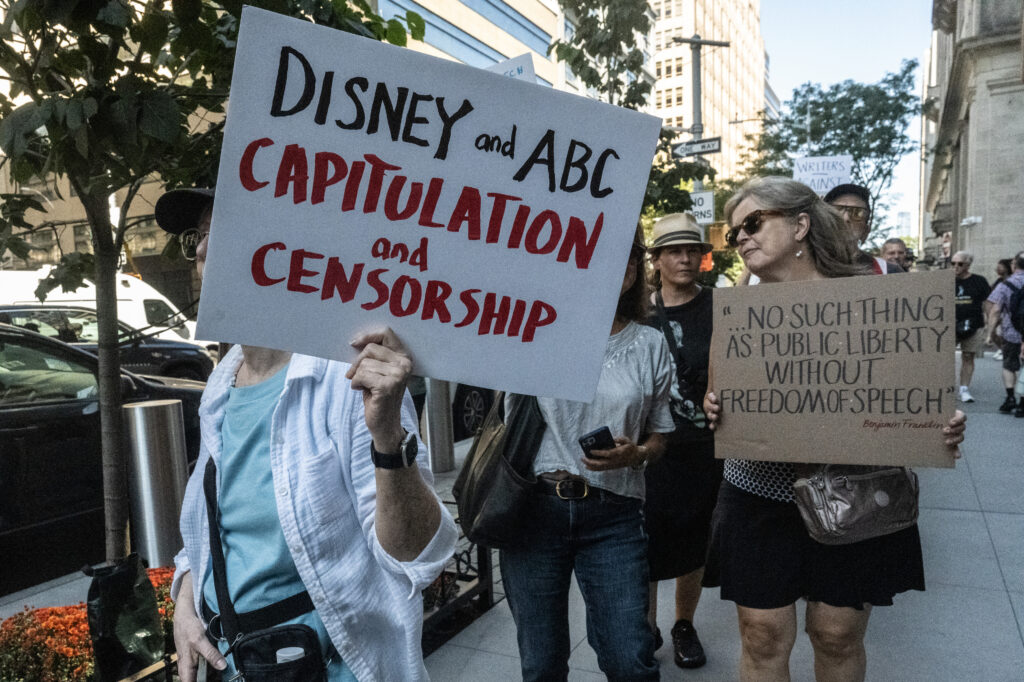
Instances of police officer misuse of social media have led researchers to question the cultural motivations behind them.
“(Social media) has provided some police officers with a belief that because they have this power in terms of interaction with the public, that they can use it to put things online and get away with it,” said Colin Rogers, a professor of policing with the University of South Wales. “The reality is that they can’t, and they shouldn’t.”
In many ways, the rise of social media has been the biggest explosion in the world of policing, Rogers said, although evolving technology has always been a factor.
But the recent change in public discourse has resulted in a knowledge disparity between newer police officers, who have grown up with social media, and their older supervisors.
“(Police officers) have a responsibility not to show partiality towards one section of the community or another,” Rogers added. “I think that’s a cornerstone of the democratic policing model.”
One police department’s social media standards
Still, the handling of a Cheektowaga police officer’s criticism of a town-run event in the Buffalo suburb underscored the varying standards for social media use by those in law enforcement.
Referring to small fights among teenagers and reports of vandalism at the town park’s July 4 fireworks show in 2014, the officer posted on Facebook wishing the event would be cancelled the next year.
The post was seen by the town board as negative and led to a two-day suspension for the officer, records show.
Capt. Jeffrey Schmidt, the public information officer for the Cheektowaga Police Department, said his agency regularly reviews its social media policies for officers.
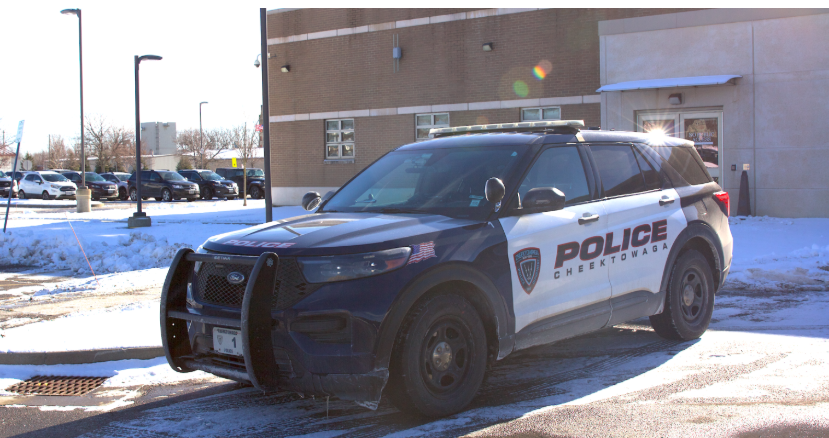
Its policy, first issued in 2018, was recently reviewed in August 2025. The guidelines prohibit officers from posting political endorsements, hate speech or anything that could jeopardize the safety of its department’s members.
“Police officers do get held to a bit of a higher standard than the public. That’s just the way it is,” Schmidt said. “They do have the same type of freedom of speech that any other person does, but per the policy, there is conduct that can be prohibited.”
Cheektowaga’s police policy reserves the right to restrict speech made by officers that “identify themselves in any way that could be reasonably perceived as representing the department.”
However, it can’t limit officers’ speech as private citizens — such as while speaking as a member of a union or “about matters of public concern.”
The police department, Schmidt said, often encourages officers to make their social media accounts anonymous to prevent their personal speech from being misconstrued as department speech.
This preference for anonymity, which isn’t required in its internal policies, also helps protect officers from doxxing — the public dissemination of personal identifying information like an officer’s Social Security number, address or phone number, he added.
Fixing flaws in social media policies to restore public trust in police
The 2020 social justice movement and the legislative changes that followed highlight the potential for social media to impact public perception of policing.
In response to a rally following Daniel Prude’s death in Rochester in September of 2020, a Monroe County officer posted comments on Facebook disparaging protestors and said “they should have used plastic bags [on] their head to protest.” Prude died after police attempted to restrain him, wrestling him to the ground and covering his head with a mesh spit hood.
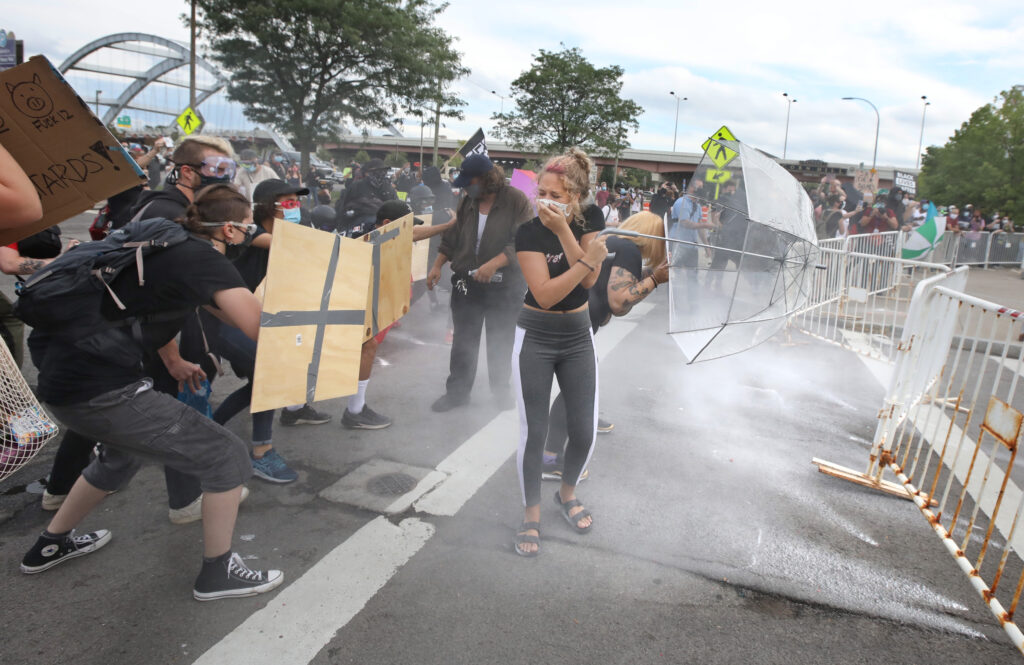
The officer who posted received a five-day suspension and two days of sensitivity training.
At least five of the misconduct cases involve statements officers made while off-duty, including the 2020 incident involving Pacicca in Rome.
In his investigative report of the incident, former Rome police Capt. David Collins wrote that the department couldn’t punish Pacicca for the racist and insensitive posts because of New York’s Civil Service Law’s statute of limitations. This statute states that employers can’t discipline employees for infractions that occurred more than a year and a half before discovery.
Collins also wrote that the incident “revealed a flaw” in the department’s social media policy. The department updated its policy a month prior to the incident and adjusted it again at the start of 2021, according to its Police Reform and Reinvention Collaborative report from 2021.
“We are in a time where police officers and law enforcement agencies are scrutinized for their actions,” Collins wrote in his report. “With a more defined and stricter (social media) policy, we as a police department can deter these types of allegations from being made.”
The national company behind many NY police social media policies
Ranalli, the Lexipol employee, said the company doesn’t use “turnkey” policy manuals across departments; rather, it reviews “every single word” with agencies in a back and forth, collaborative process.
Lexipol’s legal teams ensure policies align with active legislation, and they also consider law enforcement trends — such as adding policies related to artificial intelligence and body-camera usage, he added.
“Almost half of the law enforcement agencies in the country have 10 officers or fewer,” Shannon Pieper, Lexipol’s senior director of marketing content, noted. “They don’t have huge legal teams sitting around writing policy.”
Lexipol lists several New York law enforcement governing bodies — including the state’s Public Employer Risk Management Association, New York State Association of Chiefs of Police and the New York State Sheriffs’ Association — as partners.
Lexipol doesn’t create policies on disciplinary action, Ranalli said, as that decision is “entirely up to the local agency” and typically decided on a case-by-case basis.
Echoing Ranalli, Schmidt said Cheektowaga’s police agency does not have a standardized punishment for violating its social media policy. The department uses “progressive discipline” — considering the officer’s history with the department, past infractions and the severity of the violation itself.
That lack of clarity seemingly played out in 2016, when an officer from the Ithaca Police Department posted on Instagram a photo of himself in uniform in a high school cafeteria, tagging two 15-year-old female students in the caption, “Where’s my squad at?”
The students told their parents the post alarmed them, and the parents complained to school officials. The officer later stated he simply wanted to show that police could be approachable. The incident resulted in a verbal warning.
Rogers, the policing expert, believes there is a “deep lack of understanding” of what is appropriate for police officers to post on social media, both in an official capacity and personally.
People follow laws in their society because of their belief in the validity of both the laws and the agencies enforcing them, Rogers said, but inappropriate use of social media can harm this belief.
Put simply, social media misconduct may have the potential to undermine policing as a whole.
“Anything that undermines that big bundle is a danger to democratic policing,” Rogers said. “Social media is a double-edged sword. It can be good, and it can keep people in touch, it can save lives, but it can also damage organizations like the police.”
About this project
This story is part of a series called Shielded From Consequence, looking at the decertification of law enforcement officers in New York. The series is produced in partnership with the USA Today Network, Central Current and Syracuse University with reporting students from the Newhouse School.

is a digital producer for The NewsHouse.

is a contributor for The NewsHouse.

is a digital producer for The NewsHouse.

is a digital producer for The NewsHouse.

is a contributor for The NewsHouse.

is a contributor for The NewsHouse.