
Bulgarian coach was ‘en garde’ for a new beginning
Bulgarian coach was ‘en garde’ for a new beginning
Immigrant Lubomir Kalpaktchiev is fulfilling his dream with the Syracuse Musketeers Fencing Club.
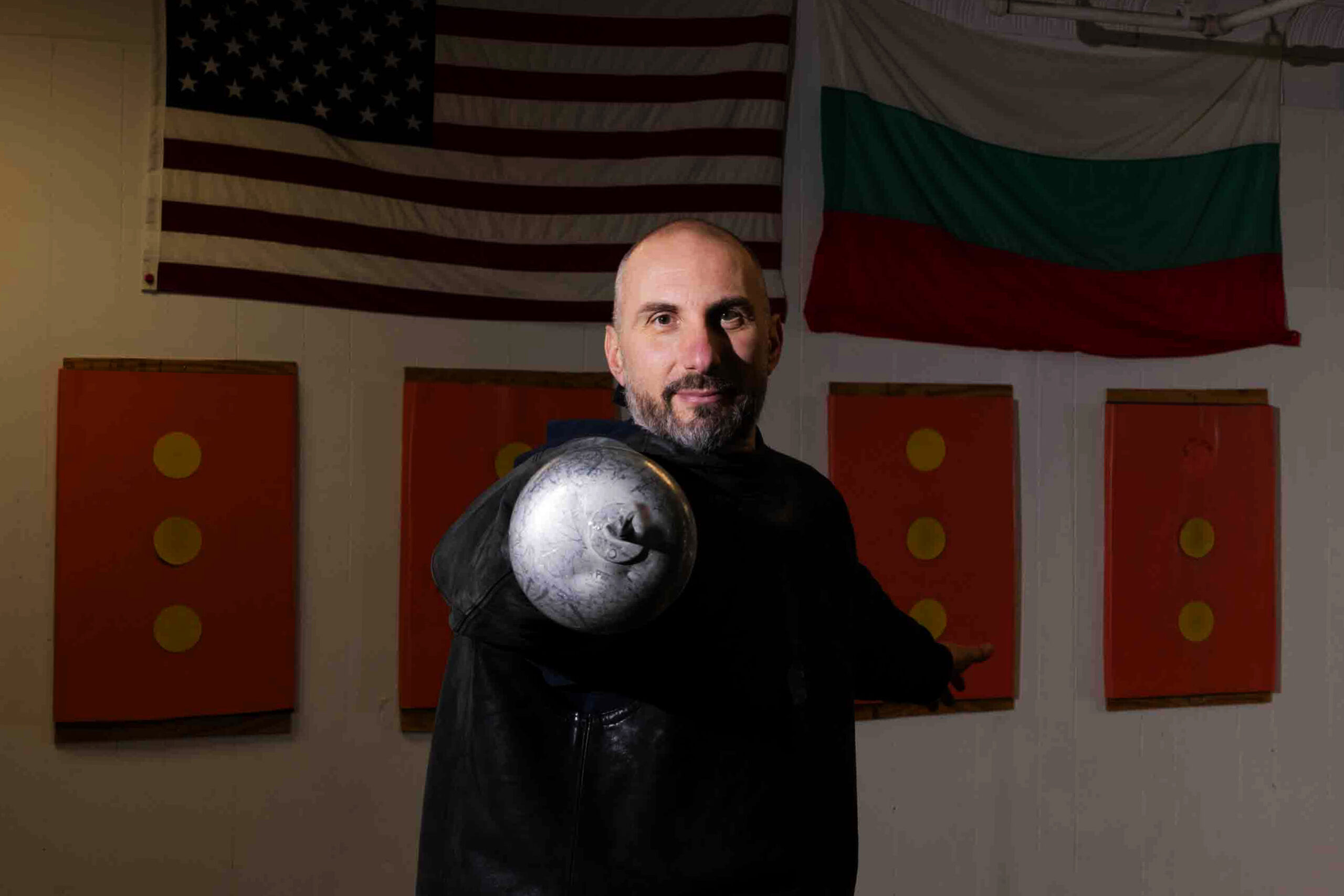
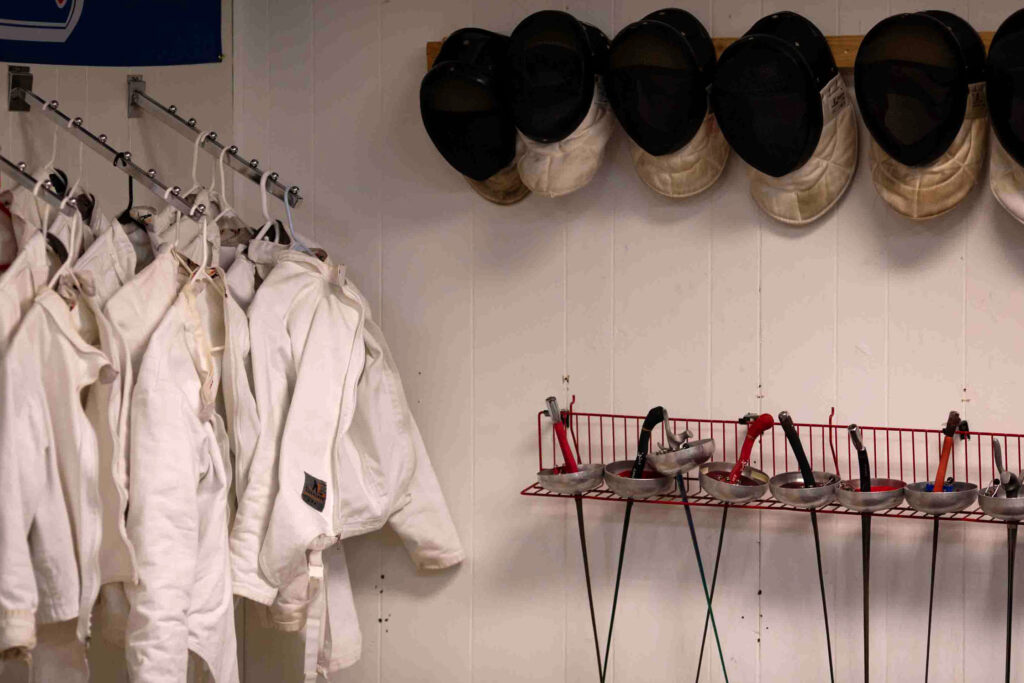
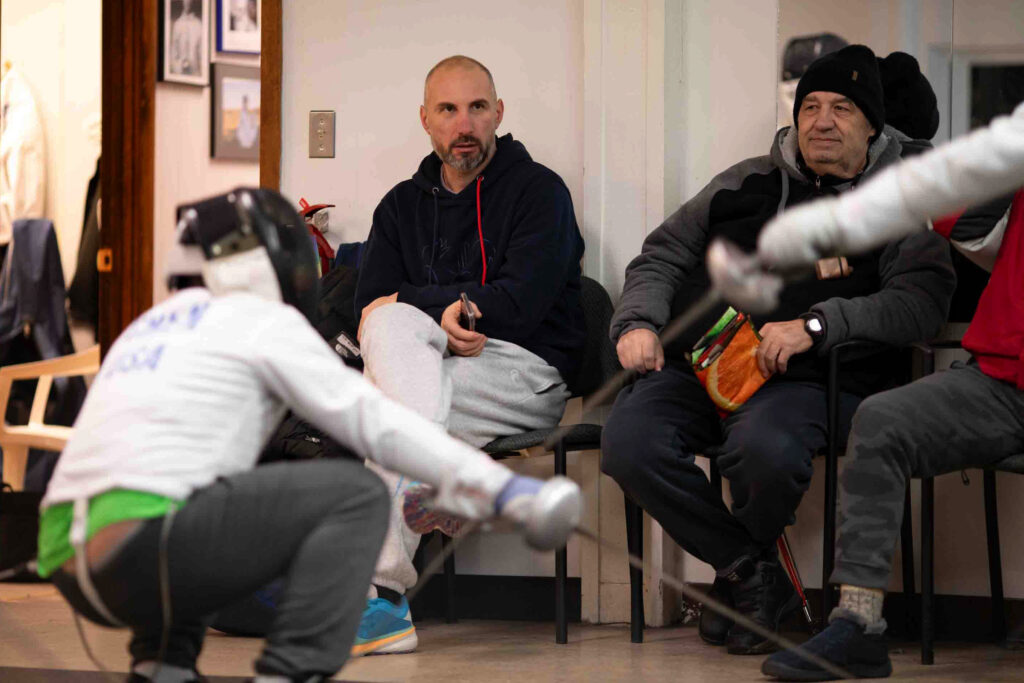
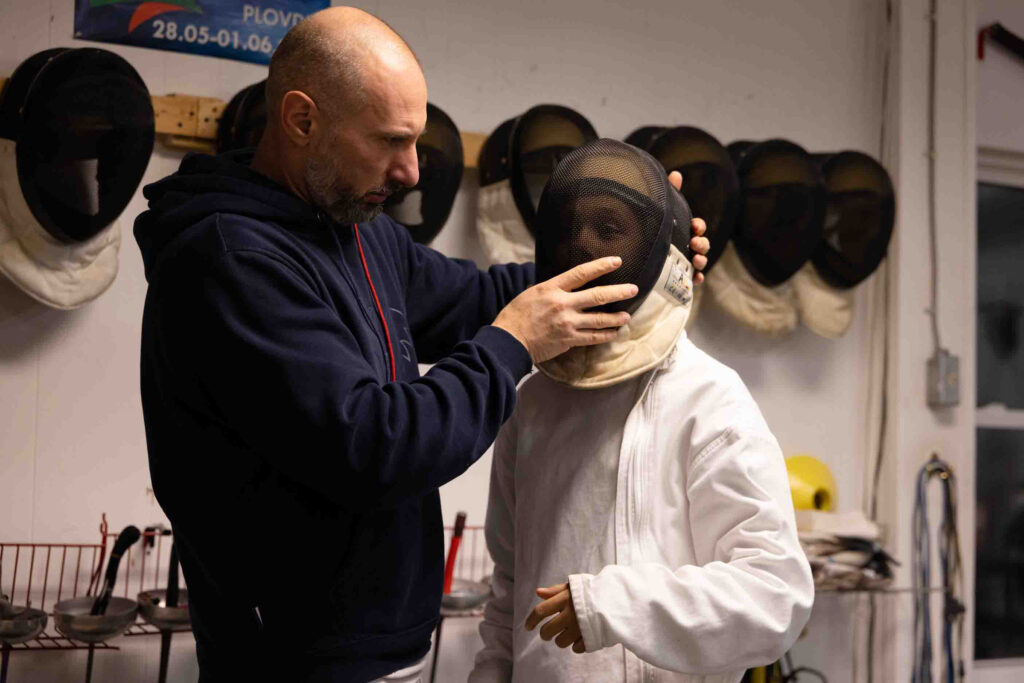
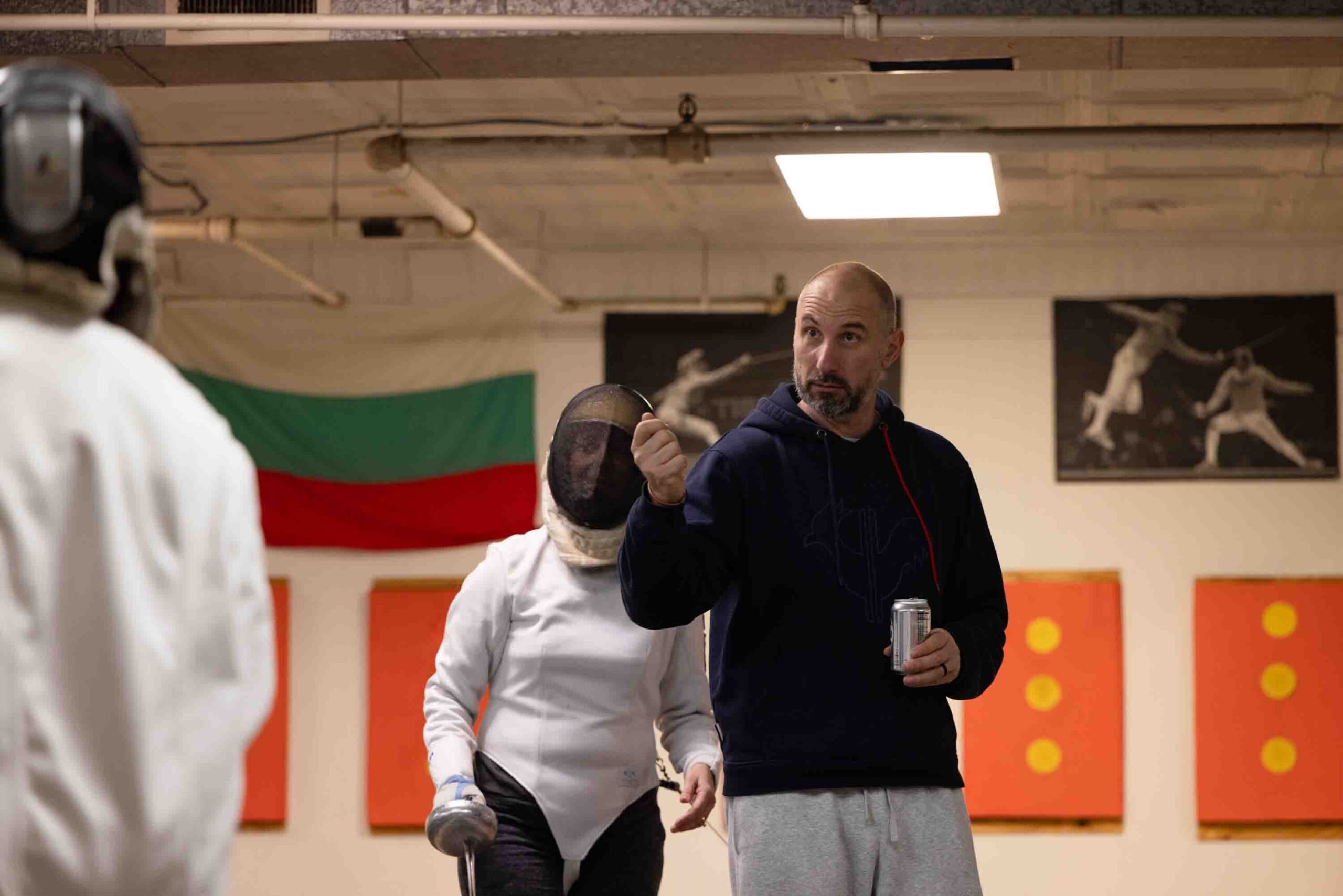
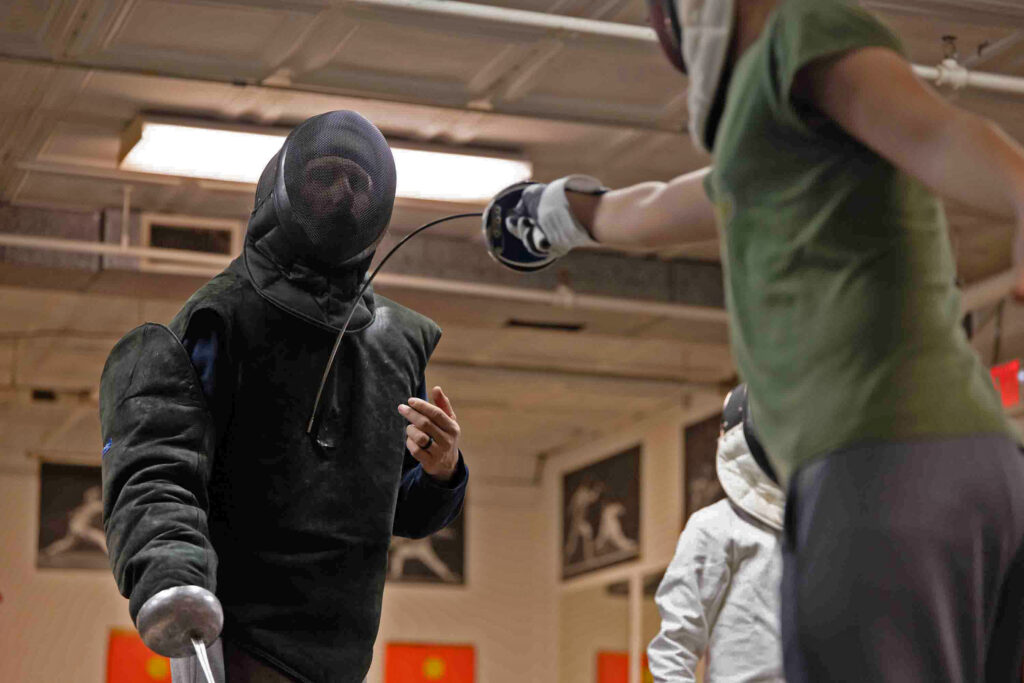
On the top floor of a small building in East Syracuse, the sharp clang of swords echoes through a cramped gym lined with medals, fencing masks and photos from past competitions. Lubomir Kalpaktchiev, better known as Coach Lubo to his students, stands in the middle of the strip, tossing yellow agility cones towards young fencers.
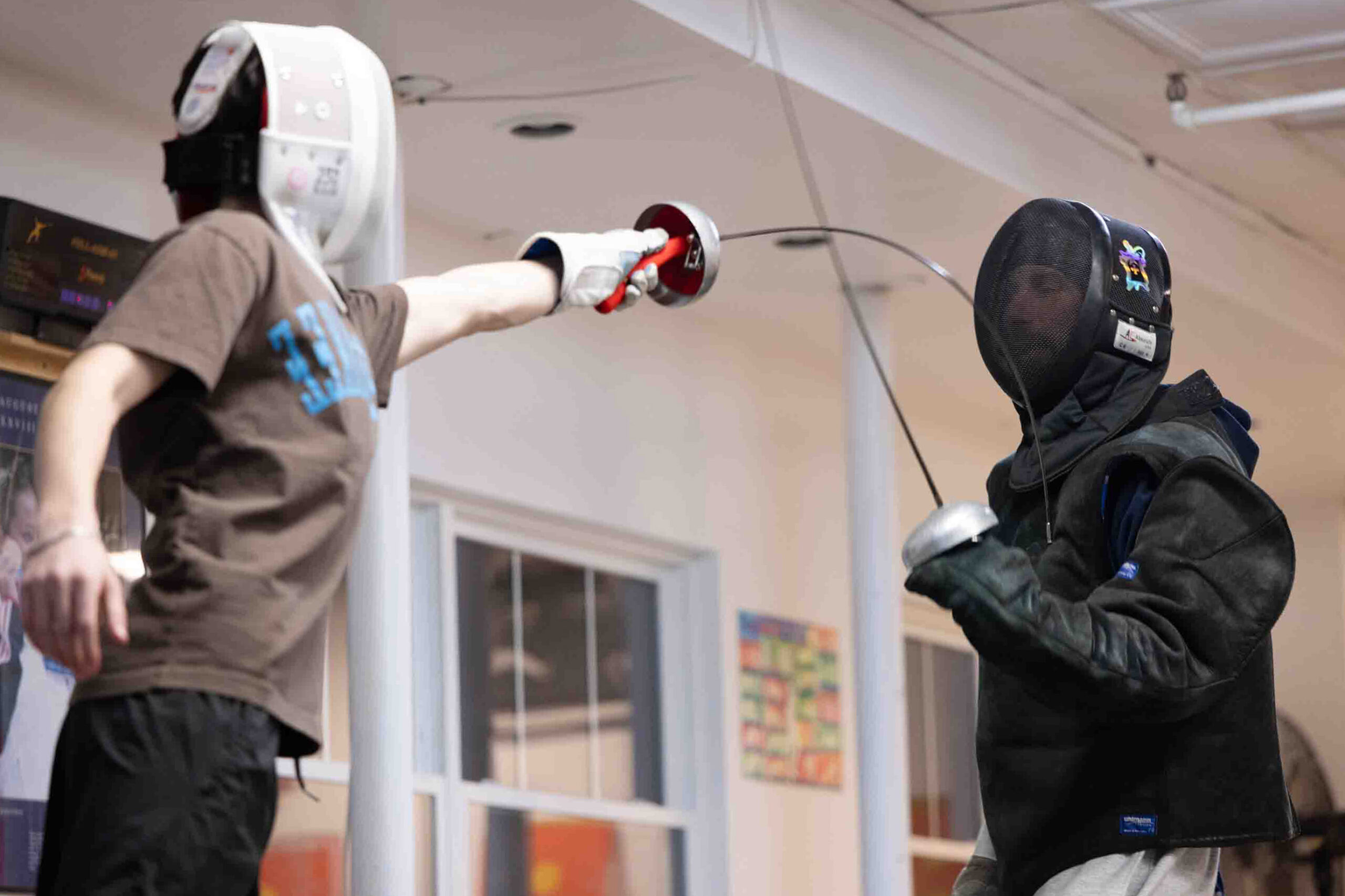
The fencers lunge forward, focusing on footwork and point control, as they work to slip the cones down the blade. Next, they raise their blades and, with laser focus, try to bounce the cones off the blades.
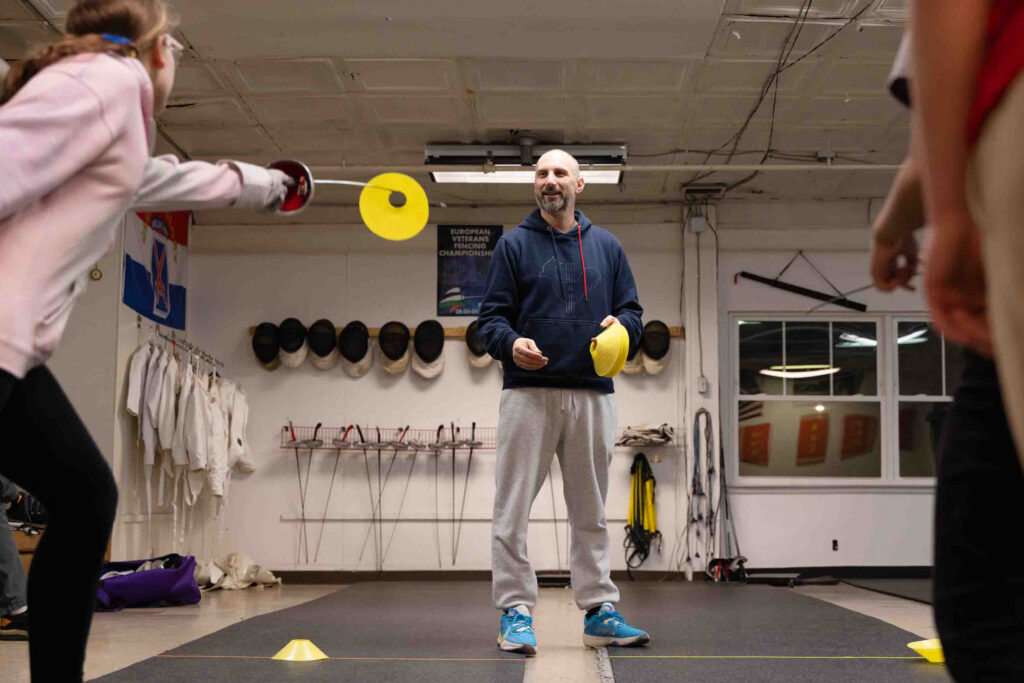
Kalpaktchiev coaches with a poised, calm disposition, laughing with his students during the drills and encouraging them to get one more bounce on the blade than they managed in the last round.
“I try to make it so they love the sport and have fun when they come to the club,” Kalpaktchiev said.
Kalpaktchiev is the founder and coach of the Syracuse Musketeers Fencing Center, where he is growing the sport of fencing in Central New York and inspiring younger athletes to get involved in the non-traditional sport.
Kalpaktchiev fenced for his home country, Bulgaria, on the Bulgarian National Team and had aspirations to compete in the Olympics before immigrating to the United States in 1999.
His passion for sports did not begin with fencing. Kalpaktchiev’s grandfather introduced him to swimming at a young age because it was healthy and good for the body, he said.
From fifth to eighth grade, Kalpaktchiev attended the National Olympic Academy of Bulgaria in his home city of Sofia. He had a rigorous schedule, balancing up to five hours of training and school every day. But his mom felt the training was exhausting and that he was swimming too much, so he left at the end of eighth grade and transferred to a traditional high school.
The break from elite training did not last long. After one year, Kalpaktchiev’s father introduced him to pentathlons, a five-event competition designed to test all-around athleticism.
At 14, Kalpaktchiev became skilled in running, horseback riding, shooting, fencing and swimming, eventually returning to an Olympic training school to compete.
“My father did it when he was a kid, but I didn’t know anything about pentathlons,” Kalpaktchiev said. “Obviously, it’s not popular.”
Kalpaktchiev suffered a significant setback in his training just a couple years later. While waiting at the trolley stop one afternoon, he noticed two older women struggling with their grocery bags. He helped the women onto the trolley, but the driver didn’t shut the door properly, and Kalpaktchiev fell backwards. His left leg was cut, and his right foot was caught under the wheel. Metal fragments were stuck in his toes. Complications developed, hospitalizing Kalpaktchiev for four months.
“That’s how I switched to fencing because my results went down for swimming and running, and I couldn’t get back to what they were,” Kalpaktchiev said. “ I was not on the national team anymore.”
Kalpaktchiev took a year to train and became one of the top four competitors in the country, earning a spot on the Bulgarian Junior National Team. Kalpaktchiev fenced all over Europe, traveling with the national team and winning five gold medals from 1993 to 1995.
The dedication and discipline Kalpaktchiev learned from his time in the Bulgarian athletic world translated to his time with the Bulgarian Air Force. He graduated from high school and served two years as a guard, responsible for protecting the bunker where they kept the planes, maps and military strategies.
“It helped me with my consistency,” Kalpaktchiev said. “Everything in the Air Force is so consistent and organized.”
When Kalpaktchiev immigrated to the United States after the fall of the communist government, he brought his degree in fencing and physical education from the National Sports Academy and set out to open a fencing club and bring the sport to America.
A major challenge Kalpaktchiev faced when he came to the United States was learning to speak English. He spent six months learning to read and write at a refugee school and by watching TV. At first, speaking was difficult, as he had picked up slang and incorrect grammar from his friends.
“It’s like you’re reborn,” Kalpaktchiev said. “The culture is different. When you’re a foreigner, it’s hard, and you’re scared because you don’t know anything.”
The process of opening his fencing club and getting clients was difficult for Kalpaktchiev. He worked four jobs, as a landscaper, lifeguard, swim coach, and then cleaning Jewish temples to make enough money.
“The first six or seven months were really tough,” Kalpaktchiev said. “I really wanted to go back, but I knew I needed to stay here and work for a better life. I bought an electric box. I bought a couple jackets, masks, and little by little I built it up.”
Fencing is not a popular sport in Syracuse, with the next closest fencing club 90 minutes away in Rochester, Kalpaktchiev said. His athletes travel from all over Central New York, like Cortland and Watertown, to train and compete under him.
Kalpaktchiev coaches all age groups and demographics. Mark Raush, 73, began fencing at age 50, around the time Kalpaktchiev and his father first opened the club.
Raush saw an ad in the Syracuse New Times for fencing classes at the Syracuse Musketeers Fencing Center. He had no prior experience in fencing, but had wanted to try it since he was 30 years old, since it is “so romantic,” Raush said.
“In the old days, he (Kalpaktchiev) was strict because he had a very different vision of coaching,” Raush said.
Kalpaktchiev was at a competition with a student and was angry when the student kept losing points and wasn’t performing up to his standards, Raush said. He started yelling at the student, telling them to focus more and concentrate. The referee went over to Kalpaktchiev and told him he couldn’t do that, and he was out of line.
“He was still in the mindset of Bulgaria or Eastern Europe,” Raush said.
Kalpaktchiev’s ability to coach students to be confident athletes and sharp, precise fencers was influenced by his time with strict coaches. Growing up, Kalpaktchiev trained under intense Bulgarian coaches who had been trained under the Russian system. They used to hit the athletes with weapons and yell at them for minor mistakes.
“They didn’t care about our feelings,” Kalpaktchiev said. “They got a salary for how you performed, so if I didn’t perform good, they’re going to get fired or not get a salary.”
But Kalpaktchiev’s coaching style has changed over the years.
“You don’t have to be mean, nasty, and hard on the kid,” he said. “There are other ways to encourage kids and make it effective.”
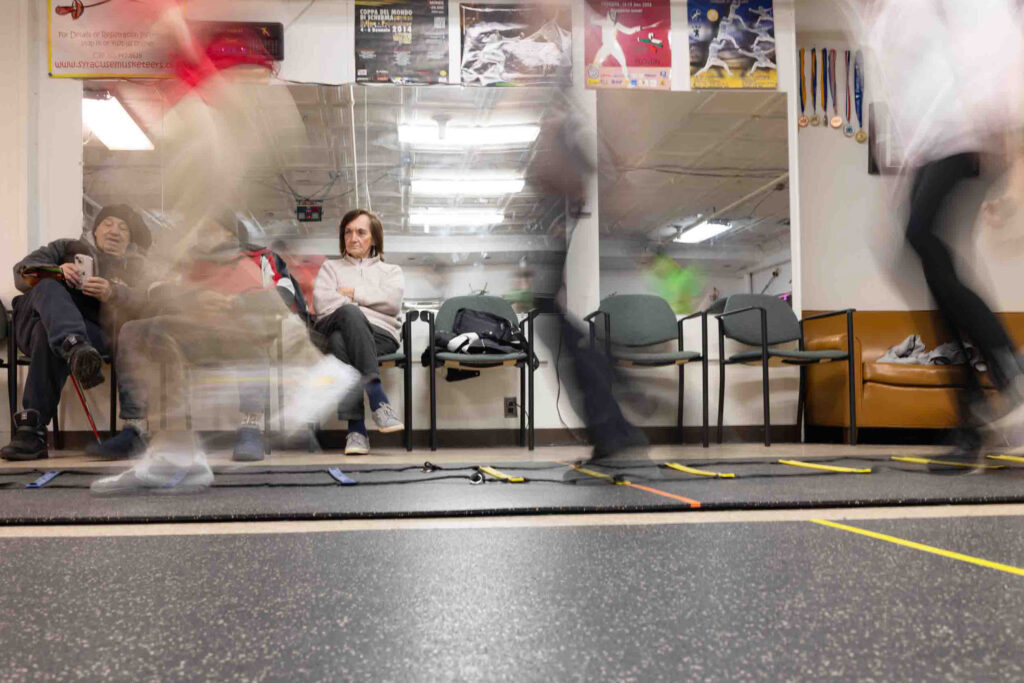
Don Lough, a parent of one of Kalpaktchiev’s fencers, sits on the plastic chairs lined on the walls and watches all of his 11-year-old daughter Abigail’s practices at the club. Some of the young children struggle to stay on track during practice, goofing around and not focusing, he said.
“He (Kalpaktchiev) gets them engaged and gets them to be interested,” Lough said. “To me, that’s a talent, and you can’t really learn that. That’s something you just have.”
Lough’s daughter first became interested in fencing when she watched “Wednesday” on Netflix, where Wednesday Adams takes up the sport at her new boarding school. Lough constantly drove past the bright neon sign for the fencing club on his way to his parents’ house, so he decided to enroll his daughter with Kalpaktchiev two and a half years ago.
“She says it’s like chess with muscles,” Lough said. “You’re doing a lot of thinking and trying to guess what the other person’s going to do, or do something to make the other person react so you can get in there.”
In his effort to continue growing the sport of fencing in Central New York, Kalpaktchiev taught a beginners fencing class at Syracuse University.
Syracuse student-athletes on the football and basketball teams took the class, thinking it would be a simple sport to pick up and a filler on their schedules, Kalpaktchiev said.
“They thought it was going to be easy,” Kalpaktchiev said. “They tried it and said, ‘Oh my gosh, it’s totally different.’”
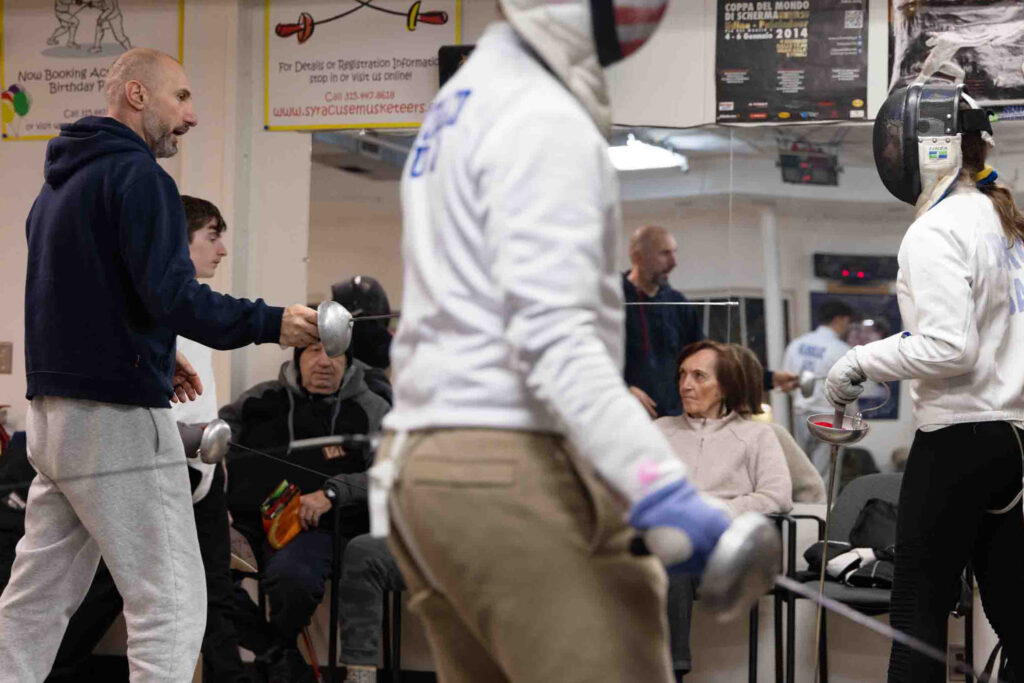
The Syracuse Musketeers Fencing Club is continuing to grow, with 15-20 students attending every weeknight for training. Kalpaktchiev continues to share the joy and determination of fencing he felt growing up with his students.
“Fencing teaches you how to be disciplined, how to be persistent, and how to never give up because you never know what is going to come up,” Kalpaktchiev said.

is the Sports Co-Lead Producer for The NewsHouse.

is Assistant Visuals Producer for The NewsHouse.